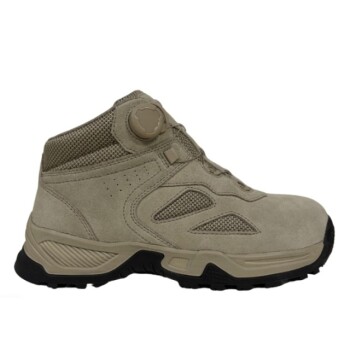
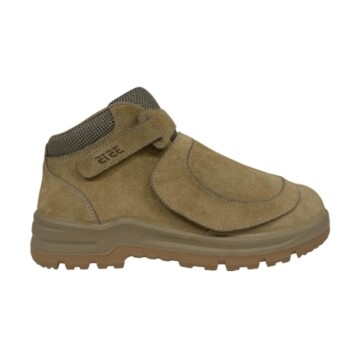
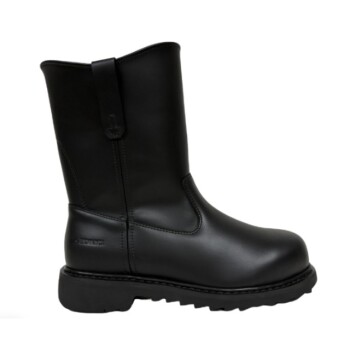
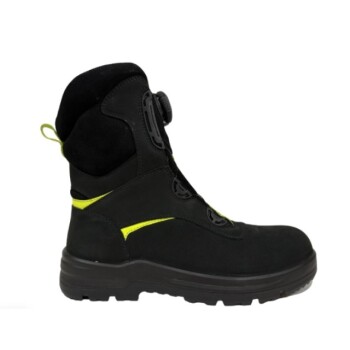
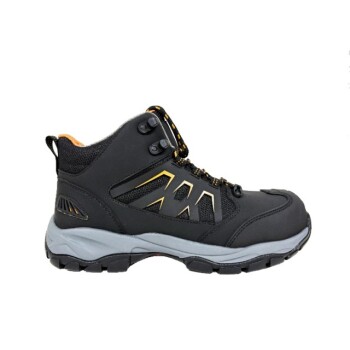
In safety boots, EVA provides significant benefits in comfort and fatigue reduction. The core advantages are its light weight, superior shock absorption, and flexibility, which work together to cushion the foot and reduce stress during long periods of standing or walking on hard surfaces.
The central role of EVA in safety footwear is to introduce a crucial layer of comfort and ergonomic support without compromising the boot's primary protective functions. It addresses the physical strain on the wearer, which is itself a critical, though often overlooked, aspect of workplace safety.
The Role of Comfort in Workplace Safety
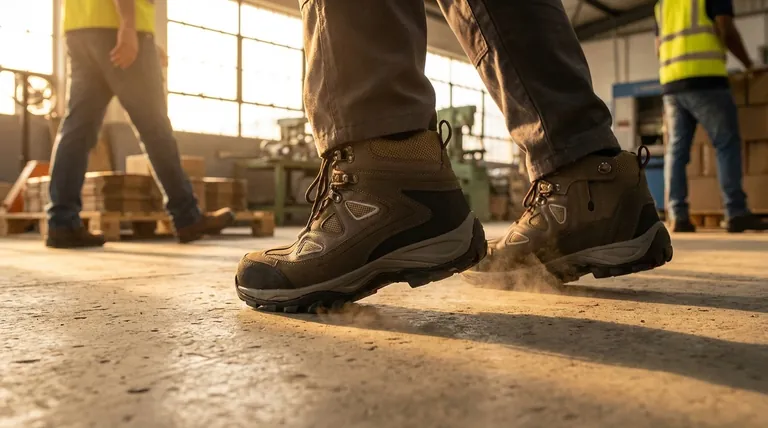
When selecting safety boots, we often focus on explicit safety features like toe caps and puncture-resistant soles. However, wearer fatigue is a significant contributor to workplace accidents. A heavy, rigid, and uncomfortable boot can increase physical strain, leading to a loss of focus and a higher risk of trips, slips, and other injuries.
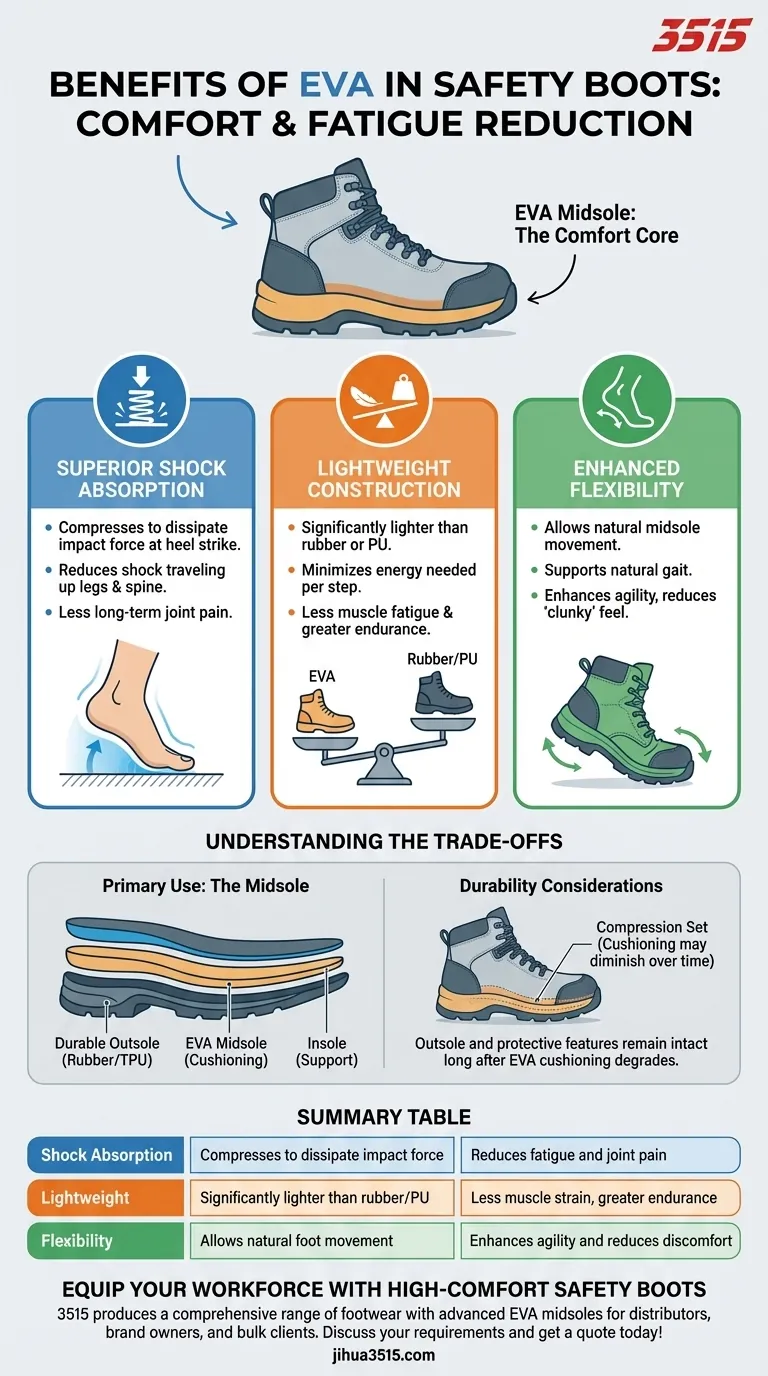
Benefit 1: Superior Shock Absorption
EVA (Ethylene Vinyl Acetate) is a foam-like copolymer known for its excellent cushioning properties. Its structure is filled with tiny air bubbles that compress under impact.
This compression dissipates the force from each step, particularly at the heel strike. This reduces the shock that travels up through your feet, ankles, and spine, which is a major cause of fatigue and long-term joint pain.
Benefit 2: Lightweight Construction
Every ounce matters when it's attached to your feet for an eight to twelve-hour shift. EVA is significantly lighter than traditional sole materials like solid rubber or PU (Polyurethane).
This reduction in weight minimizes the energy required to lift your feet with each step. Over thousands of steps, this translates directly to less muscle fatigue and greater endurance throughout the workday.
Benefit 3: Enhanced Flexibility
Rigid boots can force your feet into unnatural movement patterns, causing strain and discomfort. EVA's inherent flexibility allows the boot's midsole to bend and move more naturally with your foot.
This improved articulation supports a more natural gait, reducing the "clunky" feeling often associated with heavy-duty work boots and enhancing overall agility.
Understanding the Trade-offs
EVA is an exceptional material for its intended purpose, but it's important to understand its limitations within the context of a safety boot's construction.
Primary Use: The Midsole
You will almost never find EVA used as the outsole of a safety boot—the part that contacts the ground. It is primarily used for the midsole and insole.
The outsole requires extreme durability, slip resistance, and resistance to oil and heat. Materials like rubber or TPU are used for this. The EVA midsole is then sandwiched between this durable outsole and the footbed to provide its signature cushioning.
Durability Considerations
Compared to denser materials like PU, EVA can have a shorter lifespan. The air bubbles that provide its cushioning can break down over time, a process known as "compression set."
This means the boot's shock-absorbing capabilities may diminish faster. However, in a well-constructed boot, the critical outsole and protective features remain intact long after the EVA's cushioning has begun to degrade.
Making the Right Choice for Your Goal
The inclusion of an EVA midsole is a clear indicator that a safety boot is designed with wearer comfort as a high priority, alongside its required protective features.
- If your primary focus is reducing daily fatigue: Look for safety boots that explicitly mention an EVA midsole for maximum cushioning and a lightweight feel.
- If your primary focus is maximum durability in harsh environments: An EVA midsole is still highly beneficial, but ensure the boot has a robust, high-traction rubber or TPU outsole to handle the abrasive conditions.
- If your primary focus is all-around performance: A hybrid construction featuring a durable outsole, a shock-absorbing EVA midsole, and a supportive insole offers the best balance of safety, comfort, and longevity.
Ultimately, choosing a safety boot with EVA is an investment in reducing the physical toll of your work, which is a fundamental component of staying safe and productive on the job.
Summary Table:
| Benefit | Key Advantage | Impact on Wearer |
|---|---|---|
| Shock Absorption | Compresses to dissipate impact force | Reduces fatigue and joint pain |
| Lightweight | Significantly lighter than rubber/PU | Less muscle strain, greater endurance |
| Flexibility | Allows natural foot movement | Enhances agility and reduces discomfort |
Ready to equip your workforce with high-comfort safety boots?
As a large-scale manufacturer, 3515 produces a comprehensive range of footwear for distributors, brand owners, and bulk clients. Our production capabilities encompass all types of safety shoes and boots, including models with advanced EVA midsoles designed for maximum comfort and fatigue reduction.
We can help you source or develop the perfect safety footwear that balances protection with all-day comfort for your team. Contact us today to discuss your requirements and get a quote!
Visual Guide
Related Products
- High Performance Fire-Retardant Waterproof Safety Boots
- Premium Wholesale Waterproof Safety Boots High Performance Protection for Industrial Markets
- Premium Wholesale Wheat Nubuck Safety Boot with Rapid Lacing System
- Premium Waterproof High-Cut Industrial Safety Boots for Wholesale and Bulk Orders
- Premium Suede Metatarsal Guard Safety Boots Work Shoes
People Also Ask
- Why are waterproof safety boots recommended for certain work environments? Essential Protection for Wet & Hazardous Jobs
- What roles do 3D vision systems and industrial robots play in the manufacturing of fire safety boots? Smart Automation
- How can you ensure your feet stay dry during winter walks? A Two-Part Defense System for Total Comfort
- What is the difference between waterproof, water-resistant, and water-repellent boots? Choose the Right Protection for Your Feet
- What are the drawbacks of waterproof boots? The Breathability vs. Protection Trade-Off