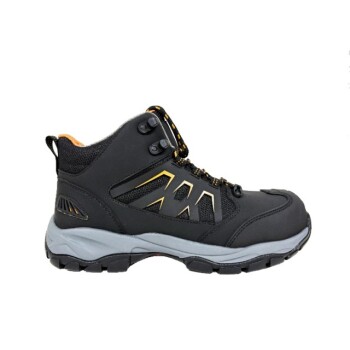
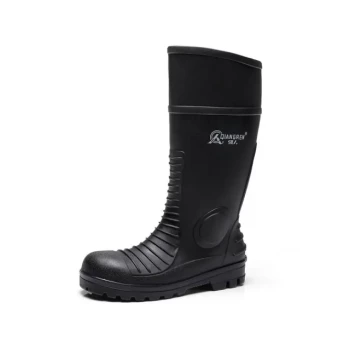
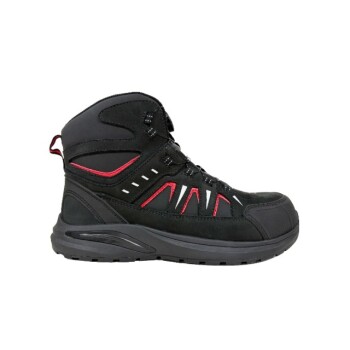
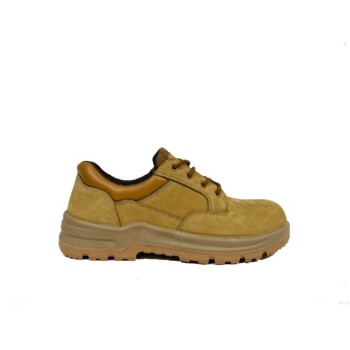
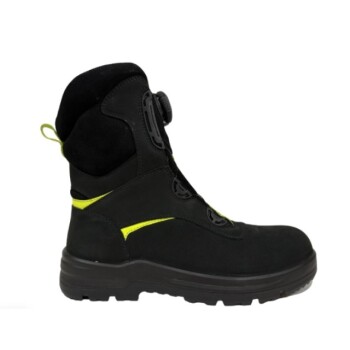
Steel toe caps provide a proven combination of maximum impact protection, durability, and cost-effectiveness. For decades, they have served as the industry standard for safeguarding feet against severe crushing and compression hazards. Their high tensile strength and resistance to deformation make them the most robust option for high-risk environments.
The core benefit of steel is its superior strength against impact and compression. However, the best choice in safety footwear requires balancing this raw protection against the practical trade-offs of weight, conductivity, and specific workplace conditions.
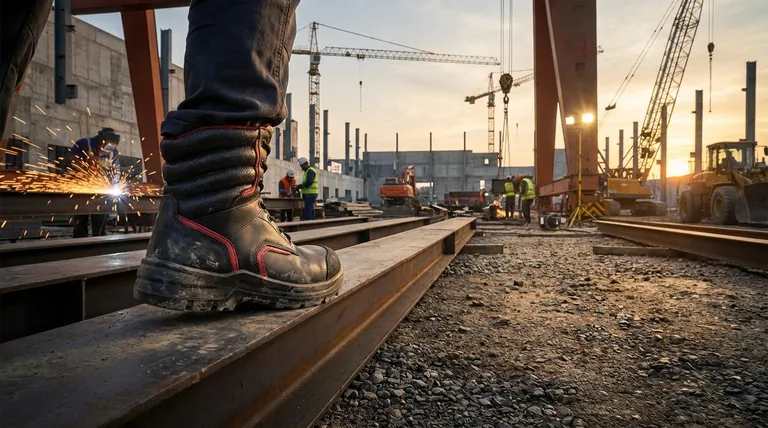
The Core Strengths of Steel Protection
To understand why steel toe caps remain a dominant choice, we must look at their fundamental material properties. These properties translate directly into on-the-job safety and reliability.
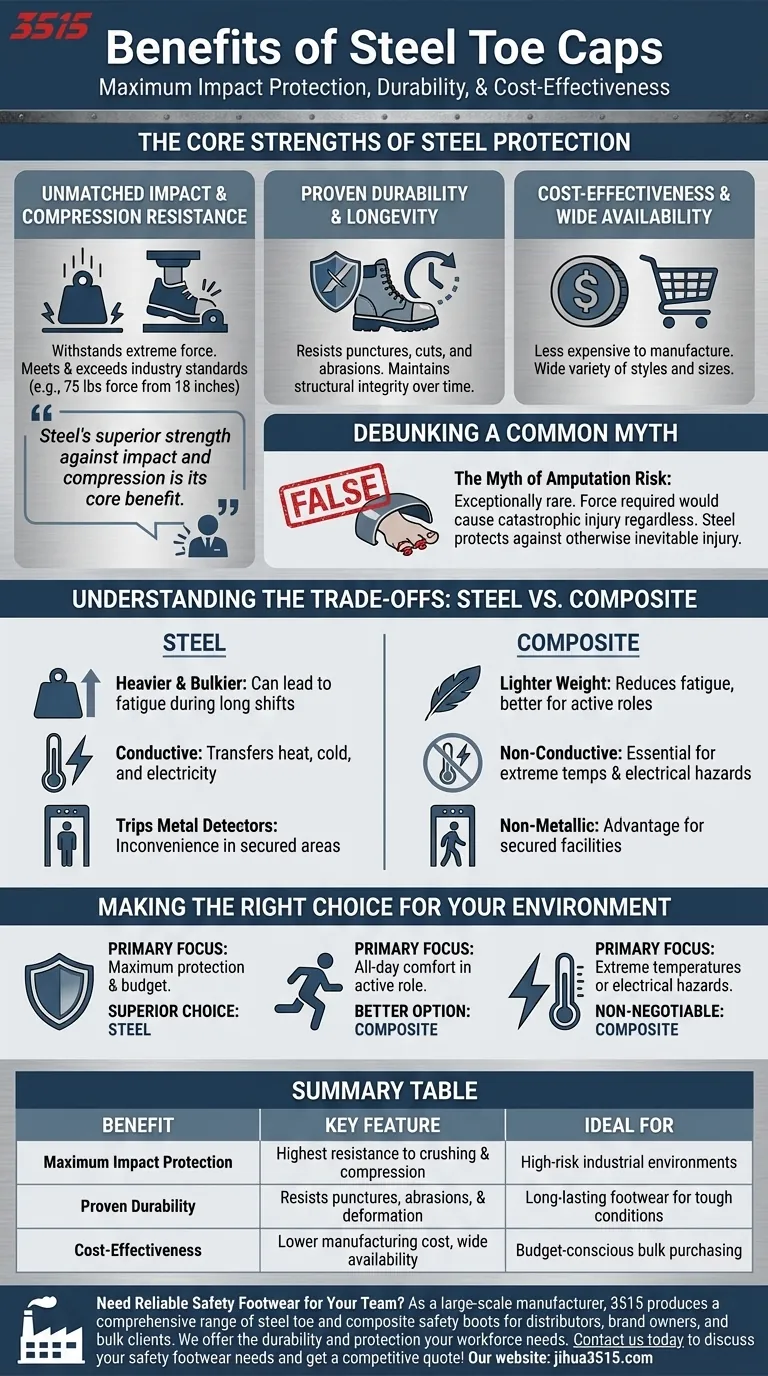
Unmatched Impact and Compression Resistance
A steel toe cap is designed to withstand extreme force. It provides the highest level of protection against both sudden impacts from falling objects and steady compression from heavy machinery.
Industry standards often test for resistance against up to 75 pounds of force dropped from a height of 18 inches. Steel's inherent strength allows it to meet and exceed these standards reliably.
Proven Durability and Longevity
Steel is exceptionally durable. It resists punctures, cuts, and abrasions, ensuring the protective cap maintains its structural integrity over the lifespan of the footwear.
This time-tested resilience is why steel has been the trusted material in safety footwear for generations.
Cost-Effectiveness and Wide Availability
From a practical standpoint, steel toe caps are typically less expensive to manufacture than their composite counterparts.
This cost advantage often translates to a lower price point for the consumer and ensures a wide variety of styles and sizes are available on the market.
Debunking a Common Myth
A persistent myth can cause hesitation when choosing steel. It's crucial to address this with facts.
The Myth of Amputation Risk
The fear is that a severe impact could bend the steel cap and trap or sever the toes. However, this scenario is exceptionally rare.
The level of force required to deform a steel toe cap to such a degree would cause a catastrophic injury regardless of the footwear. In nearly all documented cases, the steel cap provides protection against an injury that would have otherwise occurred.
Understanding the Trade-offs: Steel vs. Composite
No single solution is perfect for every situation. Objectivity requires comparing steel to its main alternative, the composite toe cap, which is made from materials like kevlar, carbon fiber, or plastic.
Weight and Comfort
Steel is significantly heavier and often bulkier than composite materials. This added weight can lead to fatigue and discomfort during long shifts, especially in roles that require constant walking or movement.
Thermal and Electrical Conductivity
As a metal, steel readily conducts heat and cold. In extreme temperatures, this can make feet uncomfortably hot or cold.
Crucially, steel also conducts electricity, making it an unsuitable choice for electricians or others working in environments with a high risk of electrical hazards.
Workplace Environment Considerations
The metallic nature of steel toe caps means they will set off metal detectors. This can be a daily inconvenience in secured facilities or airports, where non-metallic composite options are a clear advantage.
Making the Right Choice for Your Environment
Your decision should be based on a clear-eyed assessment of your daily tasks and potential hazards.
- If your primary focus is maximum protection and budget: Steel is the superior choice, offering the highest level of impact resistance at a more accessible price point.
- If your primary focus is all-day comfort in an active role: Composite's lighter weight will significantly reduce fatigue and is the better option.
- If you work in extreme temperatures or around electrical hazards: Composite is non-negotiable, as its non-conductive properties are essential for both comfort and safety.
Ultimately, understanding these key differences empowers you to select the safety footwear that best serves your specific needs and environment.
Summary Table:
| Benefit | Key Feature | Ideal For |
|---|---|---|
| Maximum Impact Protection | Highest resistance to crushing & compression | High-risk industrial environments |
| Proven Durability | Resists punctures, abrasions, and deformation | Long-lasting footwear for tough conditions |
| Cost-Effectiveness | Lower manufacturing cost, wide availability | Budget-conscious bulk purchasing |
Need Reliable Safety Footwear for Your Team?
As a large-scale manufacturer, 3515 produces a comprehensive range of steel toe and composite safety boots for distributors, brand owners, and bulk clients. We offer the durability and protection your workforce needs, with the production capabilities to meet any volume requirement.
Contact us today to discuss your safety footwear needs and get a competitive quote!
Visual Guide
Related Products
- Advanced KPU Athletic Safety Shoe with Steel Toe Cap Anti-Slip Rotary Lacing System
- Wholesale Safety Footwear Manufacturer for Bulk & Custom OEM Orders
- Wholesale Durable Breathable Safety Boots Custom OEM Manufacturer
- Durable Steel Toe Safety Boots Wholesale & Custom Manufacturing
- Puncture-Resistant Velcro Safety Boots for Wholesale & Custom Manufacturing
People Also Ask
- What are the key differences between steel toe and composite toe caps? Choose the Right Safety for Your Job
- What impact do steel toe caps have on toe skin health? Prevent Friction and Pressure in Your Safety Shoes
- What are the primary protective functions of safety shoes with steel toes in the automotive repair industry?
- What type of safety shoe is recommended for workers exposed to heavy machinery? Steel Toe Boots for Ultimate Protection
- How does defining specific friction interface models in FEA assist in predicting safety shoe toe cap failure modes?