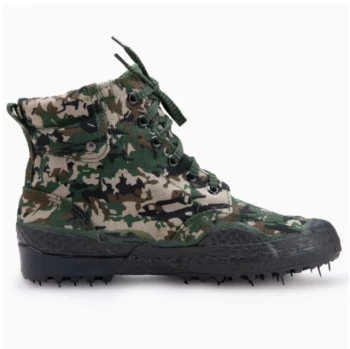
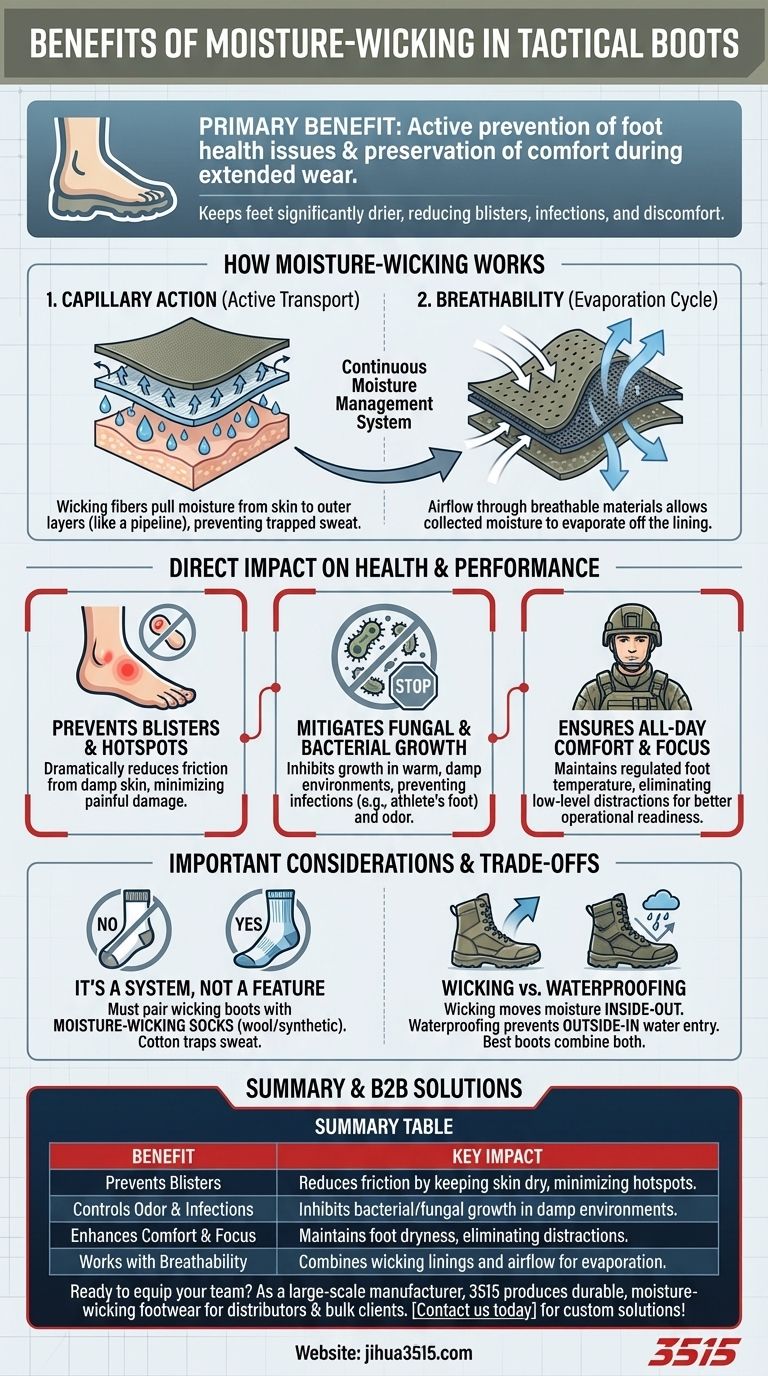
The primary benefit of moisture-wicking properties in tactical boots is the active prevention of foot health issues and the preservation of comfort during extended wear. By pulling sweat away from the skin and allowing it to evaporate, these boots keep feet significantly drier, which directly reduces the risk of blisters, fungal infections, and distracting discomfort.
Beyond simple dryness, moisture-wicking is a critical performance system. It manages the microclimate inside your boot, preventing the two biggest enemies of operational readiness: friction from damp skin and the growth of odor-causing bacteria.
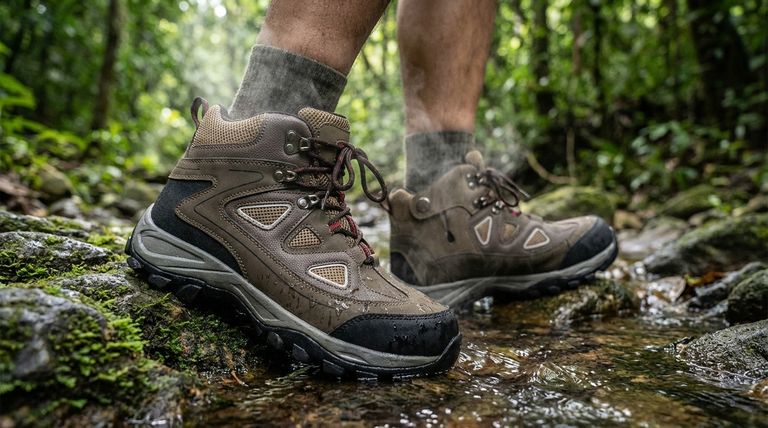
How Moisture-Wicking Works
Moisture-wicking is an active process, not a passive one. It relies on specific materials and construction to create a system that constantly works to keep your feet dry.
The Principle of Capillary Action
At its core, wicking uses capillary action. The fibers in the boot's lining are engineered to pull moisture away from your skin, moving it from an area of high concentration (your sweaty sock) to an area of lower concentration (the outer layers of the lining).
Unlike absorbent materials like cotton which simply trap moisture against your skin, wicking fabrics act like a pipeline, transporting sweat outward.
The Critical Role of Breathability
Wicking is only half of the equation. Once moisture is pulled to the outer surface of the lining, it needs somewhere to go. This is where breathability comes in.
Materials like breathable mesh linings or perforated fabrics allow air to circulate. This airflow helps the collected moisture evaporate off the lining and out of the boot, completing the moisture management cycle.
The Direct Impact on Health and Performance
A dry foot is a healthy and effective foot. Managing moisture has tangible benefits that you will feel throughout the day, whether on a long haul or in a demanding environment.
Preventing Blisters and Hotspots
Blisters are caused by a combination of friction and moisture. Damp skin is softer and far more susceptible to damage from rubbing.
By keeping the skin's surface dry, moisture-wicking materials drastically reduce the friction that leads to painful hotspots and debilitating blisters.
Mitigating Fungal and Bacterial Growth
Warm, damp, and dark environments—like the inside of a boot—are ideal breeding grounds for fungus (like athlete's foot) and odor-causing bacteria.
Maintaining a drier internal environment directly inhibits the growth of these microorganisms. This not only prevents infections but also significantly reduces foot odor.
Ensuring All-Day Comfort and Focus
Wet feet feel uncomfortable, cold in cool weather, and swampy in the heat. This constant, low-level discomfort can be a significant distraction.
Boots that effectively manage moisture keep your feet feeling regulated and comfortable, allowing you to focus on the task at hand rather than your feet.
Understanding the Trade-offs
While essential, moisture-wicking is part of a larger system and has certain limitations. Understanding them helps you choose the right boot for your specific needs.
It's a System, Not a Single Feature
The most advanced moisture-wicking boot will fail if you wear cotton socks. Cotton acts like a sponge, holding sweat directly against your skin and preventing the boot's lining from doing its job.
To get the full benefit, you must pair wicking boots with moisture-wicking socks made from materials like wool or synthetics.
Wicking vs. Waterproofing
Moisture-wicking is designed to move moisture from the inside out. It does not prevent water from the outside from getting in.
For protection from rain or puddles, you need a separate waterproof membrane. The best all-weather boots combine a waterproof membrane with a moisture-wicking liner to manage threats from both inside and out.
How to Apply This to Your Purchase
Your specific goal should dictate how you prioritize this feature.
- If your primary focus is all-day comfort in a dry environment: Prioritize boots with highly breathable elements, like mesh panels, to maximize airflow and sweat evaporation.
- If your primary focus is preventing blisters and foot fatigue: Treat a quality moisture-wicking liner and sock combination as a non-negotiable requirement.
- If your primary focus is performance in unpredictable weather: Look for a boot that explicitly combines a proven waterproof membrane with a dedicated moisture-wicking lining.
Ultimately, choosing a boot with effective moisture management is a foundational requirement for anyone who relies on their feet to perform safely and effectively.
Summary Table:
| Benefit | Key Impact |
|---|---|
| Prevents Blisters | Reduces friction by keeping skin dry, minimizing hotspots. |
| Controls Odor & Infections | Inhibits bacterial/fungal growth in damp environments. |
| Enhances Comfort & Focus | Maintains foot dryness, eliminating distractions during long wear. |
| Works with Breathability | Combines wicking linings and airflow for optimal moisture evaporation. |
Ready to equip your team with high-performance tactical boots? As a large-scale manufacturer, 3515 produces durable, moisture-wicking footwear designed for distributors, brand owners, and bulk clients. Our boots integrate advanced linings and breathable materials to ensure comfort and reliability in any condition. Contact us today to discuss custom solutions for your operational needs!
Visual Guide
Related Products
- Wholesale Waterproof Tactical Boots Custom Suede & High-Traction Soles
- Durable Leather Tactical Boots Wholesale & Custom Manufacturing for Brands
- High-Traction Suede Tactical Boots Wholesale & Custom Manufacturing
- Durable Leather High-Ankle Tactical Boots for Wholesale & Custom Manufacturing
- Durable Mid-Cut Tactical Boots for Wholesale & Private Label
People Also Ask
- What waterproof technology is used in tactical boots? Unlock All-Weather Performance & Protection
- What are the advantages and disadvantages of waterproof tactical boots? A Guide to the Key Trade-Offs
- What is the significance of waterproof functionality in tactical boots? Essential for Health & Performance
- What is the role of professional 3D medical imaging software in optimizing tactical boot design and performance?
- What features enhance breathability and comfort in tactical boots? A Guide to Superior Footwear Performance