
The primary benefits of lightweight work shoes are a significant reduction in physical fatigue and a lower risk of chronic foot problems. By minimizing the weight you lift with every step, these shoes lessen the cumulative impact on your joints and muscles over a full workday, allowing you to stay focused and comfortable.
The decision to wear lightweight work shoes is fundamentally about managing energy. Reducing the weight on your feet, even by a small amount, translates into a substantial decrease in physical strain over thousands of steps, directly impacting your daily endurance and long-term joint health.
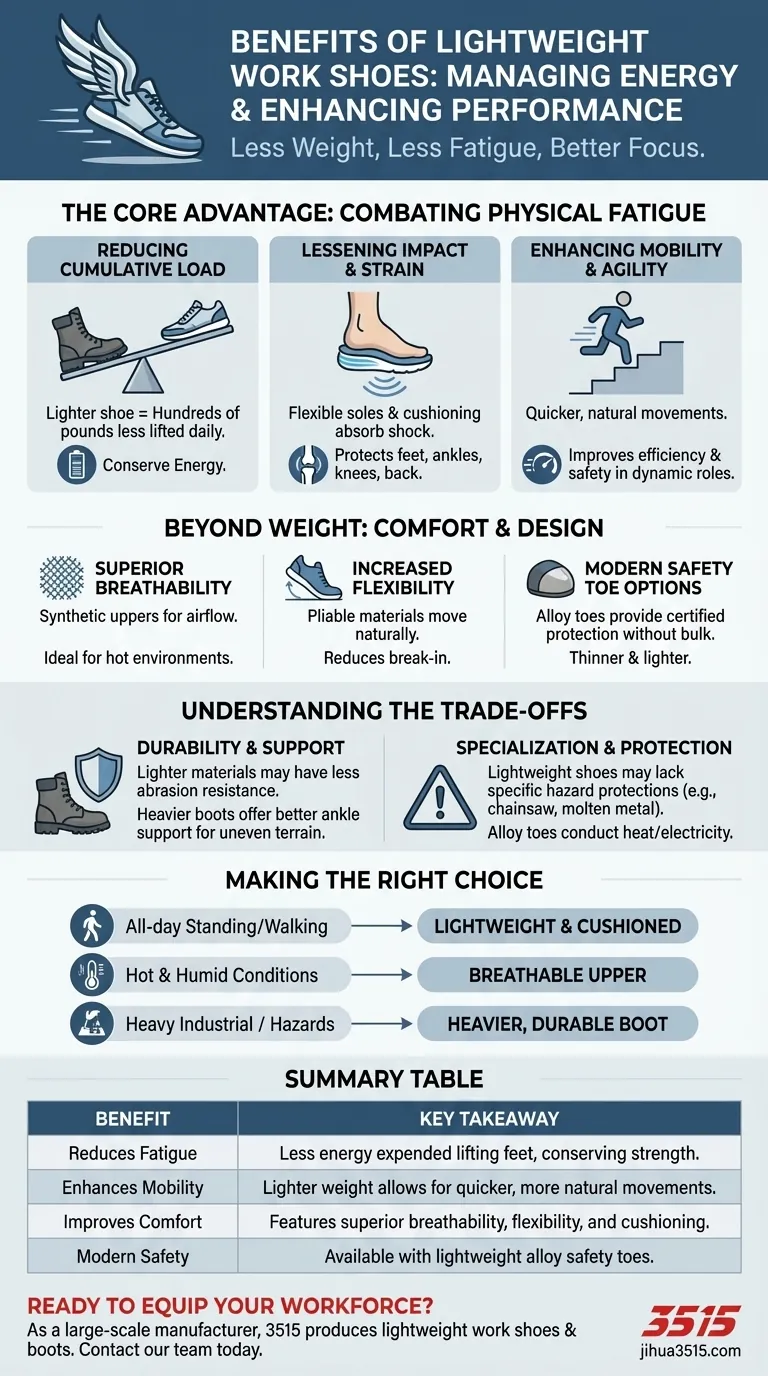
The Core Advantage: Combating Physical Fatigue
The most impactful benefit of lightweight footwear is its direct effect on your body's energy expenditure. This isn't just about comfort; it's a matter of occupational performance and safety.
Reducing Cumulative Load
With every step, you lift the weight of your shoe. While this seems trivial, an average worker takes thousands of steps per day. A lighter shoe reduces the total weight lifted over a shift by hundreds of pounds, conserving energy.
Lessening Impact and Strain
Lighter shoes often correspond with more flexible soles and modern cushioning systems. This combination helps absorb shock, reducing the strain not just on your feet, but also on your ankles, knees, and lower back.
Enhancing Mobility and Agility
Less weight on your feet allows for quicker, more natural movements. For jobs that require constant walking, climbing stairs, or rapid changes in direction, this increased mobility can improve both efficiency and safety.
Beyond Weight: Key Comfort and Design Factors
Modern lightweight shoes achieve their status through advanced materials and construction that offer benefits beyond simple weight reduction.
Superior Breathability
Many lightweight shoes utilize synthetic materials like nylon or mesh. These uppers are far more breathable than traditional heavy leather, making them ideal for hot and humid environments by keeping feet cooler and drier.
Increased Flexibility
Lighter materials tend to be more pliable, allowing the shoe to bend and move with your foot's natural motion. This prevents the stiff, restrictive feeling common with heavier boots and reduces the break-in period.
Modern Safety Toe Options
You no longer have to equate safety with extreme weight. Alloy safety toes, for instance, provide certified impact protection but are significantly lighter and thinner than traditional steel toes, offering a more comfortable fit with more room for your toes.
Understanding the Trade-offs: When Lighter Isn't Better
Objectivity requires acknowledging that a lightweight shoe is not the universal solution. The choice involves balancing benefits against potential limitations based on your specific work environment.
Durability and Support
Lighter, synthetic materials may not offer the same long-term durability against abrasion, chemicals, or extreme wear-and-tear as heavy-duty leather. Similarly, heavier boots often have a more rigid structure that provides superior ankle support, which is critical on uneven terrain or when carrying heavy loads.
Protection Limitations
While materials like alloy toes are excellent, they have specific limitations. They can conduct heat and electricity and will trigger metal detectors. This makes them unsuitable for certain specialized roles where composite, non-metallic safety toes would be required.
Lack of Specialization
Heavier boots are often built for highly specific hazards (e.g., logger boots for chainsaw protection, foundry boots for molten metal). Lightweight shoes are typically designed for more general work environments and may lack these critical specialized protections.
Making the Right Choice for Your Workday
Selecting the correct footwear is a crucial decision for your daily performance and long-term health. Use your primary job function as your guide.
- If your primary focus is all-day standing or walking in a controlled environment (logistics, healthcare, light manufacturing): A lightweight shoe with excellent cushioning is the ideal choice to minimize fatigue.
- If your primary focus is working in hot or humid conditions: Prioritize a shoe with a breathable mesh or synthetic upper to ensure comfort and prevent foot-related health issues.
- If your primary focus is heavy industrial work with impact or abrasion hazards (construction, mining): A slightly heavier, more durable boot is likely the necessary trade-off for superior protection and ankle support.
Ultimately, the right work shoe is a tool that allows you to perform your job effectively without being distracted by discomfort or pain.
Summary Table:
| Benefit | Key Takeaway |
|---|---|
| Reduces Fatigue | Less energy expended lifting feet, conserving strength over thousands of steps. |
| Enhances Mobility | Lighter weight allows for quicker, more natural movements and better agility. |
| Improves Comfort | Often features superior breathability, flexibility, and modern cushioning. |
| Modern Safety | Available with lightweight alloy safety toes for protection without the bulk. |
Ready to equip your workforce with high-performance footwear that reduces fatigue and boosts productivity?
As a large-scale manufacturer, 3515 produces a comprehensive range of lightweight work shoes and boots for distributors, brand owners, and bulk clients. Our production capabilities encompass all types of occupational footwear designed for comfort, safety, and durability.
Let us help you find the perfect lightweight solution for your specific needs. Contact our team today for a consultation and discover the 3515 advantage.
Visual Guide
Related Products
- Premium Lightweight Safety Shoes for Wholesale & Bulk Orders
- Lightweight Breathable Training Shoes for Wholesale & Custom OEM Manufacturing
- Lightweight Breathable Sneakers with Wet-Traction Grip for Wholesale & Private Label
- Wholesale Lightweight Cushioned Athletic Sneakers for Custom Bulk Production
- Wholesale Lightweight Tactical Boots with Dial Closure OEM & Bulk Orders
People Also Ask
- What is a recommended alternative to using hairspray for slip resistance? Ditch Unreliable Hacks for Real Safety
- What role does blockchain play in footwear supply chain transparency? Enhance Safety Shoe Traceability and Verification
- How is the absence of PPE (safety shoes & helmets) categorized in construction motion data labeling? Unlock Real-Time Safety Insights!
- What workplace hazards indicate the need for safety shoes? Identify risks to protect your workforce.
- What role do specialized safety shoes play in preventing falls? Engineering Stability in Industrial Environments
















