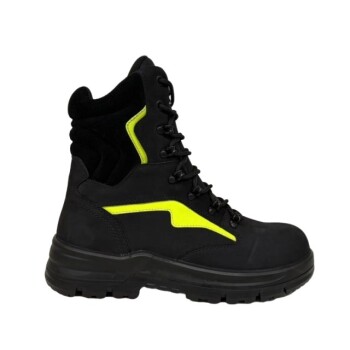
The benefits of a heel on a work boot extend far beyond aesthetics. They are an engineered component designed to enhance safety and provide critical biomechanical support. A proper heel offers superior ankle and arch support, acts as a shock absorber by distributing pressure evenly, and significantly improves stability when walking on uneven surfaces or climbing.
The heel on a work boot is a functional feature designed to improve stability, support your posture, and reduce fatigue. Its primary purpose is to create a locking point for your foot, especially when climbing or navigating rough terrain, making it a crucial element for both safety and long-term health.
The Functional Purpose of the Heel
Understanding why a heel is included in a work boot's design is key to appreciating its value. It serves specific mechanical and physiological purposes that directly impact your performance and well-being on the job.
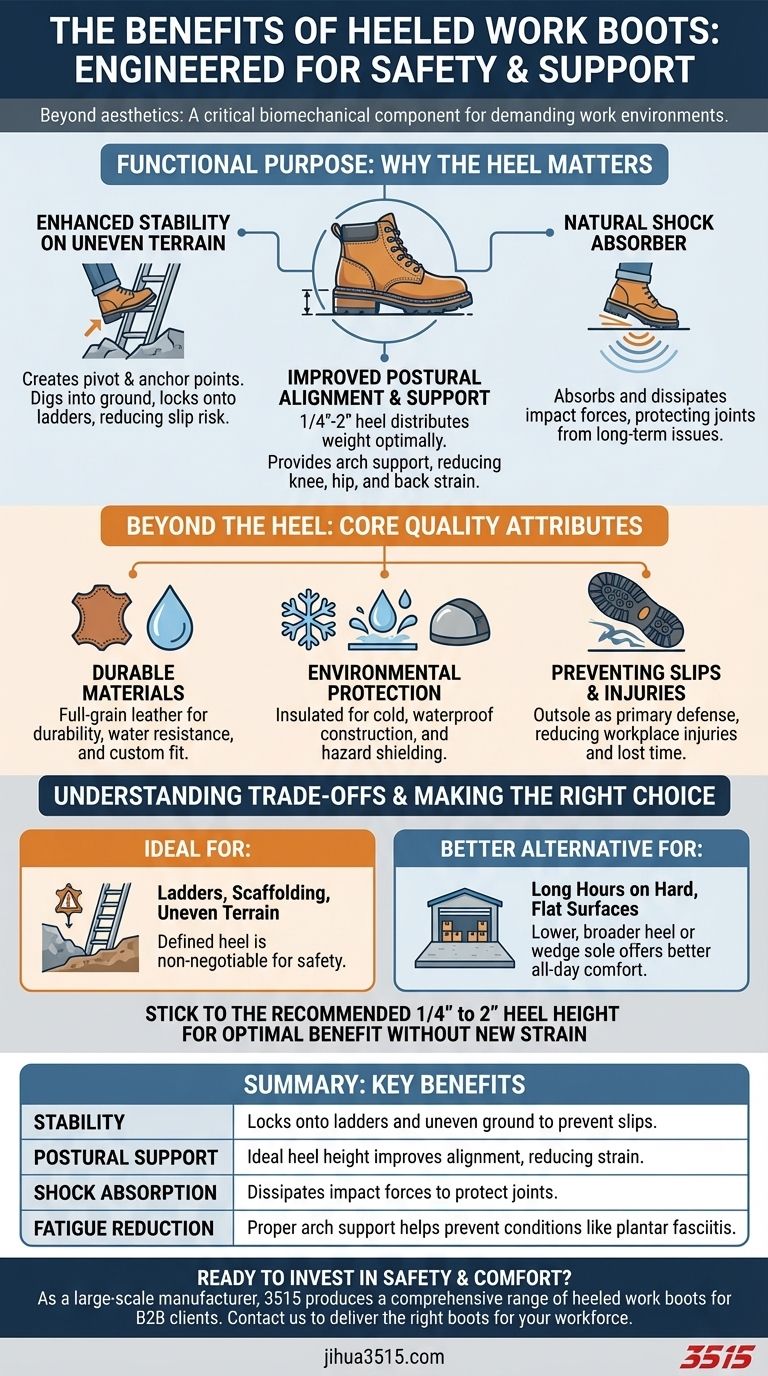
Enhancing Stability on Uneven Terrain
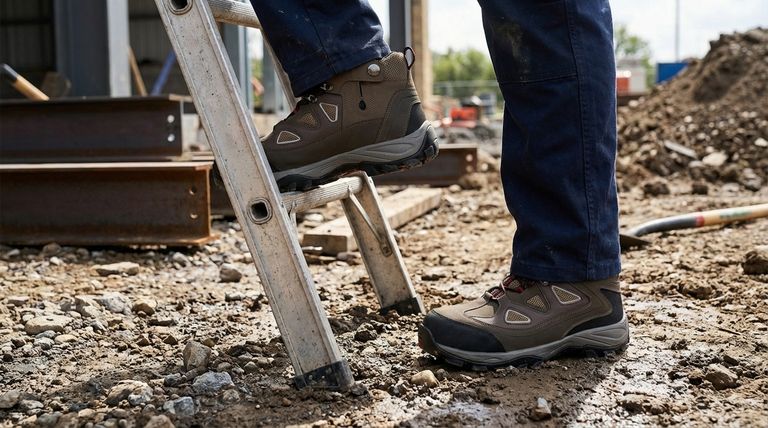
A defined heel creates a clear pivot and anchor point. This is essential when walking on rocky ground, loose gravel, or navigating structural elements.
The edge of the heel can dig into soft ground for better traction and "lock" onto ladder rungs or scaffolding, dramatically reducing the risk of a slip.
Improving Postural Alignment and Support
A modest heel, typically between 1/4 and 2 inches, helps distribute your body weight more optimally across the foot.
This elevation provides excellent arch support, which is critical for preventing foot fatigue and conditions like plantar fasciitis. Proper support helps maintain healthy posture, reducing strain on your knees, hips, and back over a long day.
Acting as a Natural Shock Absorber
Every step you take sends impact forces up through your body. A well-constructed heel helps absorb and dissipate a significant portion of this shock.
This reduces the cumulative stress on your joints, preventing both immediate pain and long-term musculoskeletal issues.
Beyond the Heel: Core Attributes of Quality Work Boots
While the heel is a key feature, it works in concert with other elements to provide comprehensive protection and comfort. The overall construction of the boot is just as important.
The Role of Durable Materials
High-quality work boots are often made from full-grain leather, which is prized for its exceptional durability and resistance to water.
Leather has the unique ability to mold to the shape of your foot after a break-in period, providing a custom fit that enhances comfort and support.
Protection from Environmental Hazards
The right materials protect you from more than just impacts. They can be insulated to shield you from extreme cold, preventing serious conditions like frostbite.
Many boots feature waterproof leather and construction methods to keep your feet dry, which is essential for preventing blisters, circulation issues, and discomfort.
Preventing Slips and Injuries
Beyond the heel's stability, the boot's outsole provides the primary defense against slips. Proper footwear is a fundamental piece of personal protective equipment.
It reduces the frequency of workplace injuries, which in turn cuts down on lost work hours and improves overall productivity and morale.
Understanding the Trade-offs
An objective evaluation requires acknowledging that a heeled boot is not the universal solution for every task. The design is specific to certain challenges.
Not Ideal for All Surfaces
For workers who spend their entire day on hard, flat surfaces like concrete warehouse floors, a pronounced heel can sometimes concentrate pressure on the ball of the foot.
In these environments, a boot with a lower, broader heel or a "wedge" sole might provide more even weight distribution and be more comfortable for continuous standing.
The Importance of Correct Height
The benefit comes from a heel within the correct biomechanical range. A heel that is too high can create the very postural problems it is meant to solve.
Sticking to the recommended 1/4 to 2-inch range ensures you get the support and stability benefits without introducing new points of strain.
Making the Right Choice for Your Work
Selecting the right boot requires matching its design features to the primary demands of your job.
- If your primary focus is working on ladders, scaffolding, or uneven terrain: A defined heel is non-negotiable for the safety and stability it provides.
- If your primary focus is long hours on hard, flat surfaces: A lower, broader heel or a wedge sole will likely offer better all-day comfort by distributing pressure more evenly.
- If your primary focus is protection from specific hazards: Prioritize features like waterproofing, insulation, or a protective toe cap that directly address the environmental risks you face.
Investing in the correct footwear is a direct investment in your daily safety, comfort, and long-term well-being.
Summary Table:
| Benefit | Key Takeaway |
|---|---|
| Stability | Locks onto ladders and uneven ground to prevent slips and falls. |
| Postural Support | Ideal heel height (1/4"-2") improves alignment, reducing strain on knees and back. |
| Shock Absorption | Dissipates impact forces with every step to protect joints. |
| Fatigue Reduction | Proper arch support helps prevent conditions like plantar fasciitis. |
Ready to invest in safety and comfort? As a large-scale manufacturer, 3515 produces a comprehensive range of heeled work boots for distributors, brand owners, and bulk clients. Our production capabilities ensure durable, supportive footwear designed for demanding work environments. Contact us today to discuss your specific needs and discover how we can deliver the right boots for your workforce.
Visual Guide
Related Products
- Durable Leather Moc Toe Work Boots for Wholesale & Custom Manufacturing
- Wholesale Customizable Safety Boots Durable & Protective Footwear Manufacturing
- Wholesale Durable 6-Inch Work Boots | Custom & Private Label Manufacturer
- Wholesale Durable Safety Boots Manufacturer Customizable Steel Toe Work Boots
- Wholesale Heavy-Duty Waterproof Steel Toe Work Boots OEM Manufacturer
People Also Ask
- What are moc toe work boots designed for? Superior Comfort and Mobility for Tradespeople
- What are the key features to look for when purchasing moc toe boots? A Guide to Durability & Fit
- How did moc toe boots originate? A Legacy of Workwear Durability and Style
- What clothing items complement the Outdoorsman/Heritage Look with moc toe boots? Build a Timeless, Rugged Wardrobe
- What types of outfits can moc toe boots be worn with? Versatile Style Guide