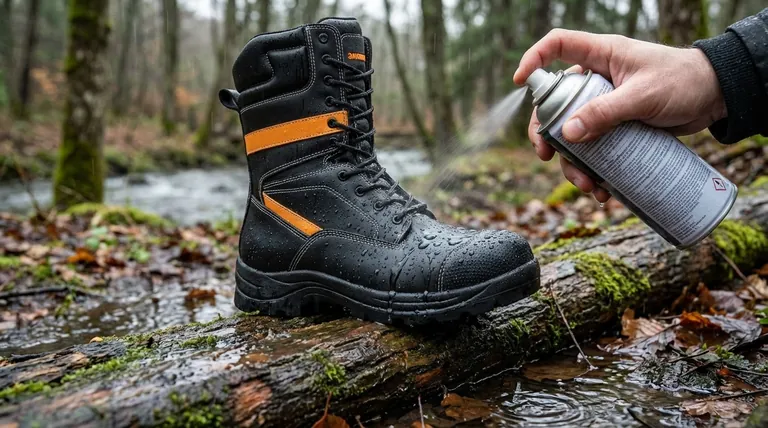
At their core, the primary advantages of using a waterproof spray are its speed, simplicity, and versatility. It provides a quick and easy way to add a layer of water resistance to a wide range of footwear materials, from leather to synthetics, helping to protect both the boot and your feet from moisture.
The true value of waterproofing—whether through a spray or a built-in membrane—is not just about repelling water. It's about protecting your investment in your footwear and, more importantly, protecting your health and comfort in wet conditions.
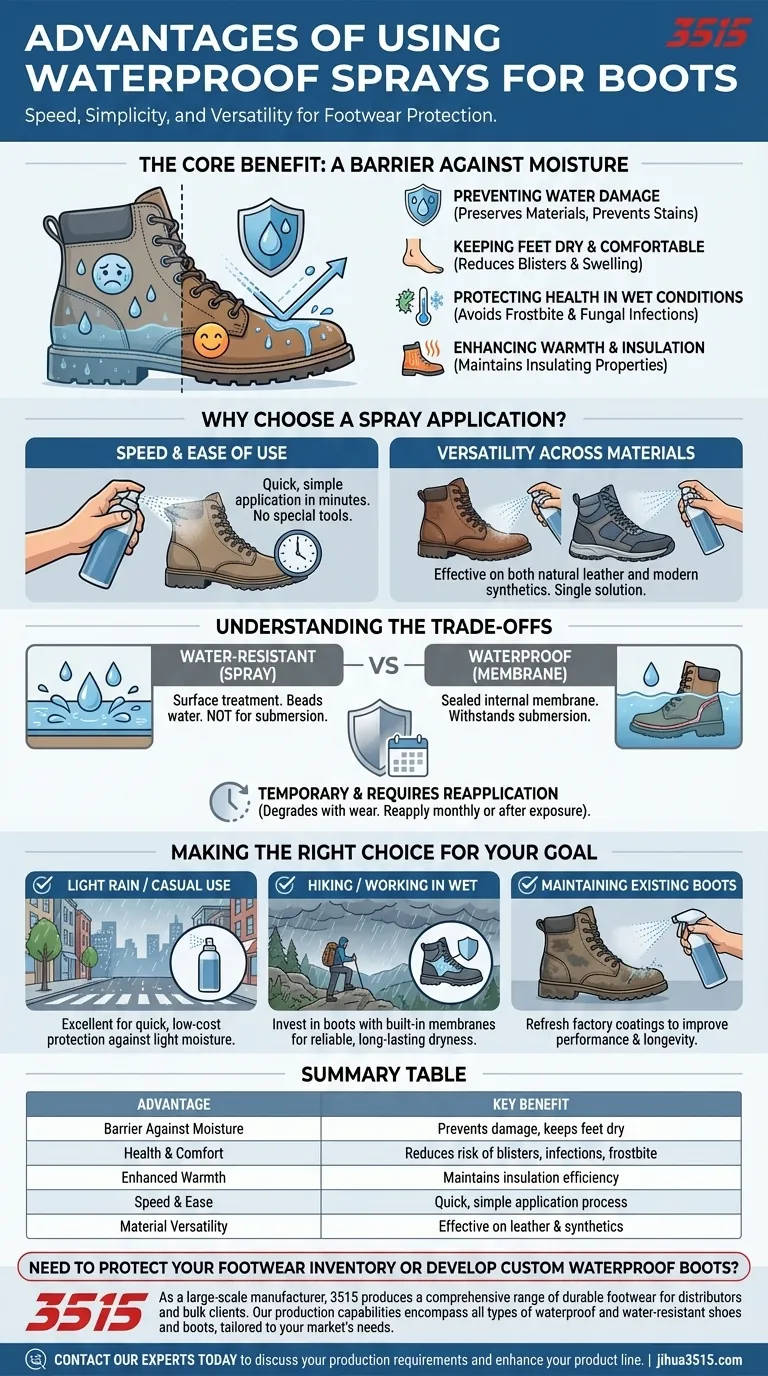
The Core Benefit: A Barrier Against Moisture
Waterproofing your boots is a critical step in preparing for wet or snowy environments. The fundamental goal is to create a barrier that prevents water from penetrating the boot's material.
Preventing Water Damage to Your Boots
Moisture is a primary enemy of footwear. Applying a waterproof spray helps shield your boots from water damage, preventing stains and preserving the integrity of the materials, which is essential for maintaining them through rainy or snowy seasons.
Keeping Your Feet Dry and Comfortable
Wet feet are uncomfortable and can quickly lead to painful blisters and swelling. By preventing water from seeping in, waterproofing ensures your feet remain dry, which is the first step toward comfort during any outdoor activity.
Protecting Your Health in Wet Conditions
The consequences of wet feet go beyond simple discomfort. Prolonged exposure can lead to serious health issues like frostbite in cold weather or fungal infections such as athlete's foot. A reliable waterproof barrier is essential for anyone working or spending significant time in consistently wet environments.
Enhancing Warmth and Insulation
Dry feet are warm feet. Even boots with insulation lose much of their effectiveness when wet. Waterproofing helps maintain the boot's insulating properties by keeping moisture out, providing crucial warmth in cold conditions.
Why Choose a Spray Application?
While many boots are designed with built-in waterproof membranes, sprays offer a distinct set of advantages for applying or renewing a protective layer.
Speed and Ease of Use
The most cited advantage of waterproof sprays is their convenience. The application process is incredibly fast and straightforward, allowing you to treat your boots in minutes without any special tools or skills.
Versatility Across Materials
Unlike some waxes or creams that are material-specific, many waterproof sprays are formulated to work effectively on both natural leather and modern synthetic fabrics. This makes them a versatile single solution for different types of footwear.
Understanding the Trade-offs
While convenient, it is critical to understand that a waterproof spray offers a different level of protection than an inherently waterproof boot.
Water-Resistant vs. Waterproof
A spray typically adds water resistance to the outer surface of the boot. This means it will cause water to bead up and roll off. However, this is not the same as being waterproof, which implies the boot can withstand submersion thanks to features like a sealed internal membrane.
A Temporary Surface Treatment
A spray creates a coating that sits on the surface of the material. This coating degrades over time with flexing, abrasion, and exposure to the elements. It is not a permanent solution.
The Need for Frequent Reapplication
Because the barrier wears away, sprays require consistent maintenance. As a general rule, they should be reapplied about once a month or after any significant exposure to wet conditions to remain effective.
Making the Right Choice for Your Goal
To decide if a waterproof spray is right for you, consider your specific needs and the conditions you'll face.
- If your primary focus is quick protection for casual boots in light rain: A waterproof spray is an excellent, low-cost solution to prevent light water damage and keep your feet dry.
- If your primary focus is reliable dryness for hiking or working in wet conditions: You should invest in boots with a built-in waterproof membrane and sealed seams for true, long-lasting protection.
- If your primary focus is maintaining existing waterproof boots: A spray can be used to refresh the factory-applied water-repellent coating on the outer material, improving its performance and longevity.
Ultimately, choosing the right level of protection ensures your footwear serves you well, keeping you safe, dry, and comfortable.
Summary Table:
| Advantage | Key Benefit |
|---|---|
| Barrier Against Moisture | Prevents water damage to boots and keeps feet dry. |
| Health & Comfort | Reduces risk of blisters, fungal infections, and frostbite. |
| Enhanced Warmth | Maintains insulation by keeping boots dry. |
| Speed & Ease | Quick, simple application process. |
| Material Versatility | Effective on leather, synthetics, and various fabrics. |
Need to protect your footwear inventory or develop custom waterproof boots?
As a large-scale manufacturer, 3515 produces a comprehensive range of durable footwear for distributors, brand owners, and bulk clients. Our production capabilities encompass all types of waterproof and water-resistant shoes and boots, tailored to your market's needs.
Contact our experts today to discuss your production requirements and enhance your product line with reliable, high-performance footwear.
Visual Guide
Related Products
- Premium Flame-Retardant Waterproof Safety Boots and Shoes
- High Performance Fire-Retardant Waterproof Safety Boots
- Premium Wholesale Waterproof Safety Boots High Performance Protection for Industrial Markets
- Wholesale Premium Waterproof Nubuck Safety Shoes Boots
- Premium Waterproof High-Cut Industrial Safety Boots for Wholesale and Bulk Orders
People Also Ask
- Why are waterproof safety boots recommended for certain work environments? Essential Protection for Wet & Hazardous Jobs
- What materials are commonly used in waterproof boots? The Complete Guide to Durable, Breathable Protection
- How does boot construction affect waterproofing? The Science Behind Truly Dry Feet
- What should you look for to ensure boots are fully waterproof? The Essential 2-Part System
- What is the advantage of one-piece construction in waterproof boots? Unbeatable Seamless Protection