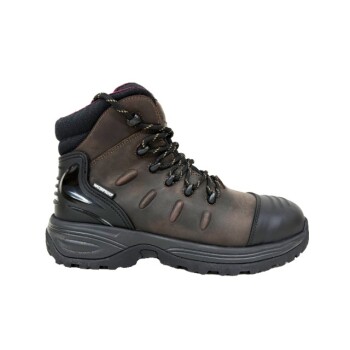
Industrial spray coating offers superior precision and efficiency when applying superhydrophobic treatments to footwear. By utilizing high-pressure air to atomize specialized slurries, this method achieves a level of uniformity and thickness control that is often unattainable with traditional dipping methods, making it ideal for treating canvas and leather substrates.
Unlike immersion techniques that can lead to uneven coverage, spray coating enables the rapid, controlled deposition of protective layers. This results in finished footwear that is not only self-cleaning but also highly resistant to wear and UV radiation.
Precision and Application Quality
Achieving Uniform Coverage
The primary advantage of industrial spray coating is the ability to atomize the coating material. High-pressure air breaks down slurries containing hydrophobic agents and nanopowders into fine particles.
This process ensures the material is deposited evenly across the surface. It eliminates the drips or pooling often associated with dipping methods.
Control Over Layer Thickness
Spray coating gives manufacturers granular control over how much material is applied. Operators can fine-tune the process to build up the specific layer thickness required for the shoe's intended use.
This efficiency reduces waste while ensuring the coating is thick enough to provide robust protection without compromising the shoe's flexibility.
Performance in Harsh Environments
Enhanced Wear Resistance
For safety and outdoor footwear, durability is paramount. The spray method effectively bonds waste nanopowders, such as rice husk ash, onto the substrate.
This creates a wear-resistant layer capable of withstanding the abrasion common in hiking or industrial work environments.
UV Resistance and Self-Cleaning
Outdoor footwear is constantly exposed to the elements. The superhydrophobic layers created via spray coating offer significant UV resistance, protecting the underlying material from degradation.
Additionally, the hydrophobic nature of the coating creates a self-cleaning surface. Dirt and moisture bead up and roll off, keeping the footwear functional and visually clean.
Production Versatility
Suitability for Finished Products
One of the distinct logistical advantages is the ability to treat finished shoes. Manufacturers do not need to disassemble the footwear or treat components in isolation.
This streamlines the production line, allowing for final-stage weatherproofing.
Scalability for Bulk Materials
Beyond finished items, this method is highly effective for large-scale upper materials. Whether treating rolls of canvas or sheets of leather, spray coating maintains consistency across large surface areas.
Understanding the Trade-offs
Equipment Dependencies
While efficient, this method relies on specific high-pressure air systems to achieve proper atomization. This requires a more complex equipment setup compared to simple immersion tanks.
Material Formulation Requirements
The success of this method hinges on the correct formulation of the slurry. It requires a precise mix of nanopowders (like rice husk ash) and hydrophobic agents (like silanes) to function correctly, meaning material preparation is critical.
Making the Right Choice for Your Production
To determine if industrial spray coating aligns with your manufacturing goals, consider the following specific needs:
- If your primary focus is product consistency: Choose spray coating to ensure uniform thickness and eliminate uneven pooling on complex shoe shapes.
- If your primary focus is outdoor durability: Utilize this method to rapidly build wear-resistant and UV-resistant layers essential for safety boots.
- If your primary focus is process efficiency: Leverage spray coating to treat finished shoes or large-scale materials without interrupting the assembly workflow.
By mastering the control offered by spray atomization, you can elevate standard footwear into high-performance equipment capable of withstanding the toughest elements.
Summary Table:
| Feature | Industrial Spray Coating | Traditional Dipping Methods |
|---|---|---|
| Application Precision | High (atomized fine particles) | Moderate (prone to pooling/drips) |
| Thickness Control | Granular & adjustable | Limited control |
| Durability | High wear & UV resistance | Variable based on absorption |
| Production Timing | Ideal for finished products | Often limited to components |
| Efficiency | Rapid, automated scalability | Manual intensive/Higher waste |
Elevate Your Footwear Standards with 3515
As a large-scale manufacturer serving distributors and brand owners, 3515 offers comprehensive production capabilities for all footwear types, anchored by our flagship Safety Shoes series. Our advanced industrial coating processes ensure that every pair—from work and tactical boots to sneakers and formal shoes—meets the highest standards of water repellency and durability.
Partner with us to leverage our extensive portfolio and provide your customers with high-performance, weather-resistant footwear. Contact us today to discuss your bulk manufacturing requirements and see how our expertise adds value to your brand.
References
- Maria Cannio, Rosa Taurino. Superhydrophobic Materials from Waste: Innovative Approach. DOI: 10.3390/cleantechnol6010015
This article is also based on technical information from 3515 Knowledge Base .
Related Products
- Premium Wholesale Waterproof Safety Boots High Performance Protection for Industrial Markets
- Premium Oil Wax Leather Safety Boots for Bulk Purchase
People Also Ask
- What weather and chemical protections do premium boots offer? Your Complete Guide to Safety & Performance
- Why are waterproof safety boots recommended for certain work environments? Essential Protection for Wet & Hazardous Jobs
- What are the primary protective functions of industrial safety boots in oil palm plantations? Master Rough Terrain Safety
- Why are oil-resistant and anti-slip properties critical for industrial safety boots? Expert Outsole Engineering Guide
- What are the best types of shoes for different gardening conditions? Find Your Perfect Match.