
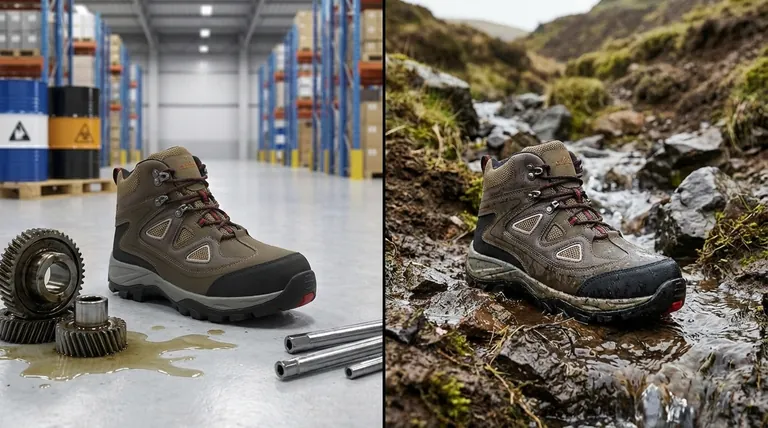
When selecting footwear for demanding environments, the choice between a Thermoplastic Polyurethane (TPU) outsole and a traditional rubber outsole is critical. TPU outsoles hold a distinct advantage in their lighter weight and superior resistance to abrasion, oils, and chemicals, making them a modern solution for specific industrial and work-related hazards.
The core decision hinges on your primary environment. TPU excels in controlled, harsh settings where chemical resistance and low weight are paramount, while rubber remains the benchmark for all-around durability and superior grip on unpredictable, natural surfaces.
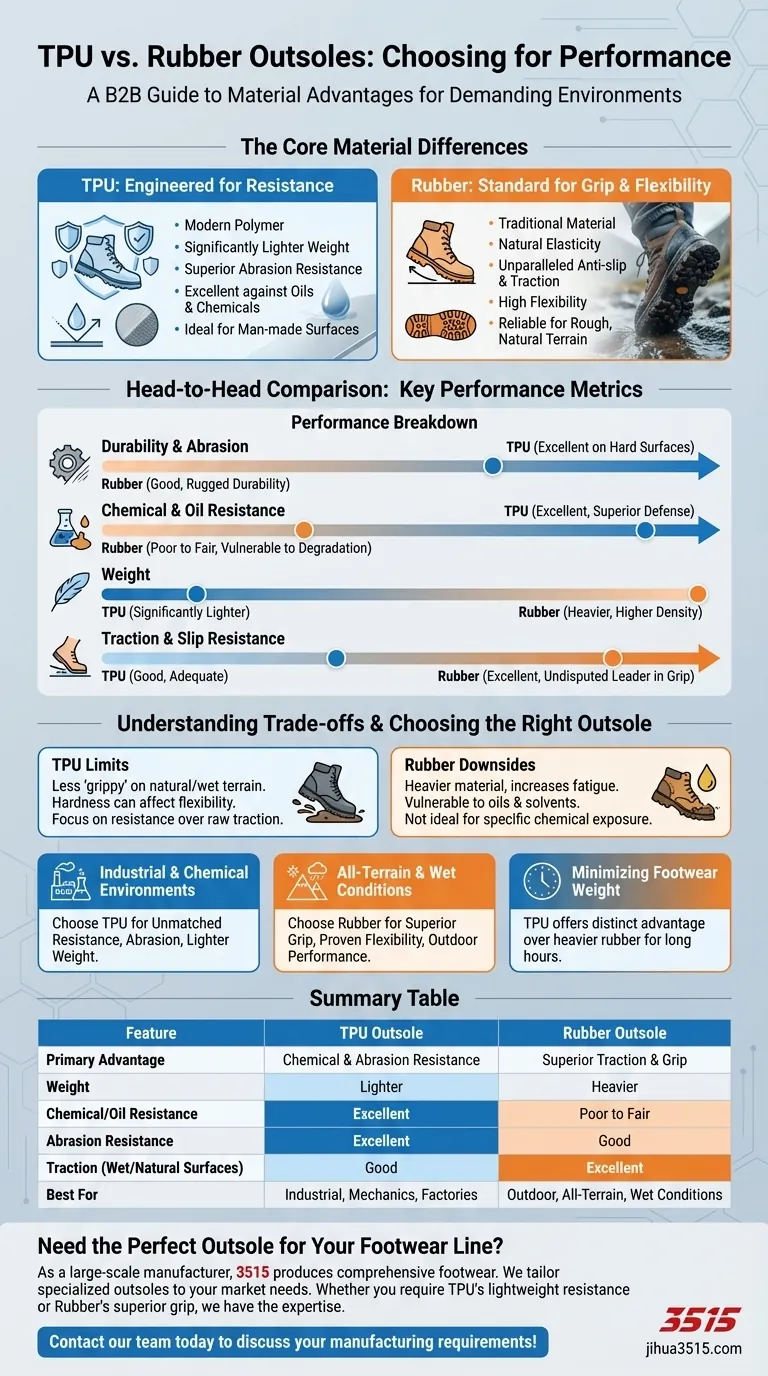
The Core Material Differences
To understand the advantages of each, we must first recognize their fundamental properties. These materials are engineered for different types of performance and protection.
TPU: Engineered for Resistance
TPU is a modern polymer designed for specific challenges. Its key characteristic is its exceptional resistance to punishment.
This material is significantly lighter than rubber and provides superior defense against scrapes, scuffs, and degradation from contact with oils or industrial chemicals.
Rubber: The Standard for Grip and Flexibility
Rubber is the traditional, time-tested material for outsoles. It is prized for its natural elasticity and high coefficient of friction.
This translates to outstanding flexibility and unparalleled anti-slip properties, especially in wet or slick conditions. Its general durability makes it a reliable choice for rough, varied terrain.
Head-to-Head Comparison: Key Performance Metrics
Breaking down performance by category reveals where each material truly shines.
Durability and Abrasion
TPU is specifically designed to withstand more wear and tear from abrasion than average rubber outsoles. It excels at resisting scuffs on hard, man-made surfaces like concrete.
Rubber is also highly durable but in a more rugged, all-purpose sense. It can withstand constant flexing and impact over rough outdoor ground.
Chemical and Oil Resistance
This is the clearest advantage for TPU. It offers superior resistance to a wide range of oils and chemicals that can degrade and break down rubber over time.
This makes TPU the ideal choice for mechanics, factory workers, and anyone in harsh industrial settings.
Weight
TPU is significantly lighter than rubber. This reduction in weight can lead to less fatigue over a long workday or extensive use.
Rubber's higher density makes it a heavier material, which can be a drawback in footwear where minimizing weight is a priority.
Traction and Slip Resistance
Rubber is the undisputed leader in this category. Its material properties provide a superior grip, particularly on wet, slick, or uneven natural surfaces.
While TPU provides adequate traction for most work environments, specialized rubber compounds (like Vibram) are engineered specifically for maximum grip and safety.
Understanding the Trade-offs
Neither material is perfect for every situation. Acknowledging their limitations is key to making an informed choice.
The Limits of TPU
While highly durable against abrasion, TPU may not offer the same "grippy" feel as rubber on natural terrain like wet rocks or mud. Its focus on chemical resistance and hardness can sometimes come at the expense of raw, flexible traction.
The Downsides of Rubber
The primary trade-off for rubber is its weight. It is a heavier material compared to modern polymers. Furthermore, standard rubber is vulnerable to degradation from prolonged exposure to certain oils and solvents, making it less suitable for specific industrial jobs.
Choosing the Right Outsole for Your Needs
Your decision should be guided entirely by your intended application and the environment you face most often.
- If your primary focus is working in industrial environments with chemical or oil exposure: Choose TPU for its unmatched resistance, abrasion performance, and lighter weight.
- If your primary focus is all-terrain traction, especially in wet or natural conditions: Choose rubber for its superior grip, proven flexibility, and reliable outdoor performance.
- If your primary focus is minimizing footwear weight for long hours on your feet: TPU offers a distinct advantage over the heavier, traditional rubber outsole.
Ultimately, understanding the specific strengths of each material empowers you to select footwear that performs as a specialized tool for your task.
Summary Table:
| Feature | TPU Outsole | Rubber Outsole |
|---|---|---|
| Primary Advantage | Chemical & Abrasion Resistance | Superior Traction & Grip |
| Weight | Lighter | Heavier |
| Chemical/Oil Resistance | Excellent | Poor to Fair |
| Abrasion Resistance | Excellent | Good |
| Traction (Wet/Natural Surfaces) | Good | Excellent |
| Best For | Industrial settings, mechanics, factories | Outdoor, all-terrain, wet conditions |
Need the Perfect Outsole for Your Footwear Line?
As a large-scale manufacturer, 3515 produces a comprehensive range of footwear for distributors, brand owners, and bulk clients. Our production capabilities encompass all types of shoes and boots, including specialized outsoles tailored to your specific market needs.
Whether your target customers require the lightweight durability and chemical resistance of TPU or the superior all-terrain grip of rubber, we have the expertise to deliver. Let us help you create the perfect footwear solution.
Contact our team today to discuss your manufacturing requirements!
Visual Guide
Related Products
- Wholesale Waterproof Tactical Boots Custom Suede & High-Traction Soles
- High-Traction Suede Tactical Boots Wholesale & Custom Manufacturing
- Durable Rubber Sole Outdoor Shoes Wholesale & Custom Manufacturing
- Wholesale Durable Camouflage Canvas Shoes with High-Traction Cleated Rubber Sole
- Durable Leather Tactical Boots Wholesale & Custom Manufacturing for Brands
People Also Ask
- What waterproof technology is used in tactical boots? Unlock All-Weather Performance & Protection
- What are the advantages and disadvantages of waterproof tactical boots? A Guide to the Key Trade-Offs
- What is the significance of waterproof functionality in tactical boots? Essential for Health & Performance
- What is the role of professional 3D medical imaging software in optimizing tactical boot design and performance?
- What features enhance breathability and comfort in tactical boots? A Guide to Superior Footwear Performance








