
To put it simply, natural rubber is considered durable for footwear because its unique molecular structure gives it exceptional elasticity, high resistance to daily wear, and the ability to maintain its shape and performance over time. This inherent toughness allows it to withstand repeated stress and various environmental conditions without breaking down.
Durability in footwear is more than just resisting abrasion; it's the result of a material's combined ability to flex, grip, absorb shock, and maintain its integrity, all of which are natural strengths of rubber.
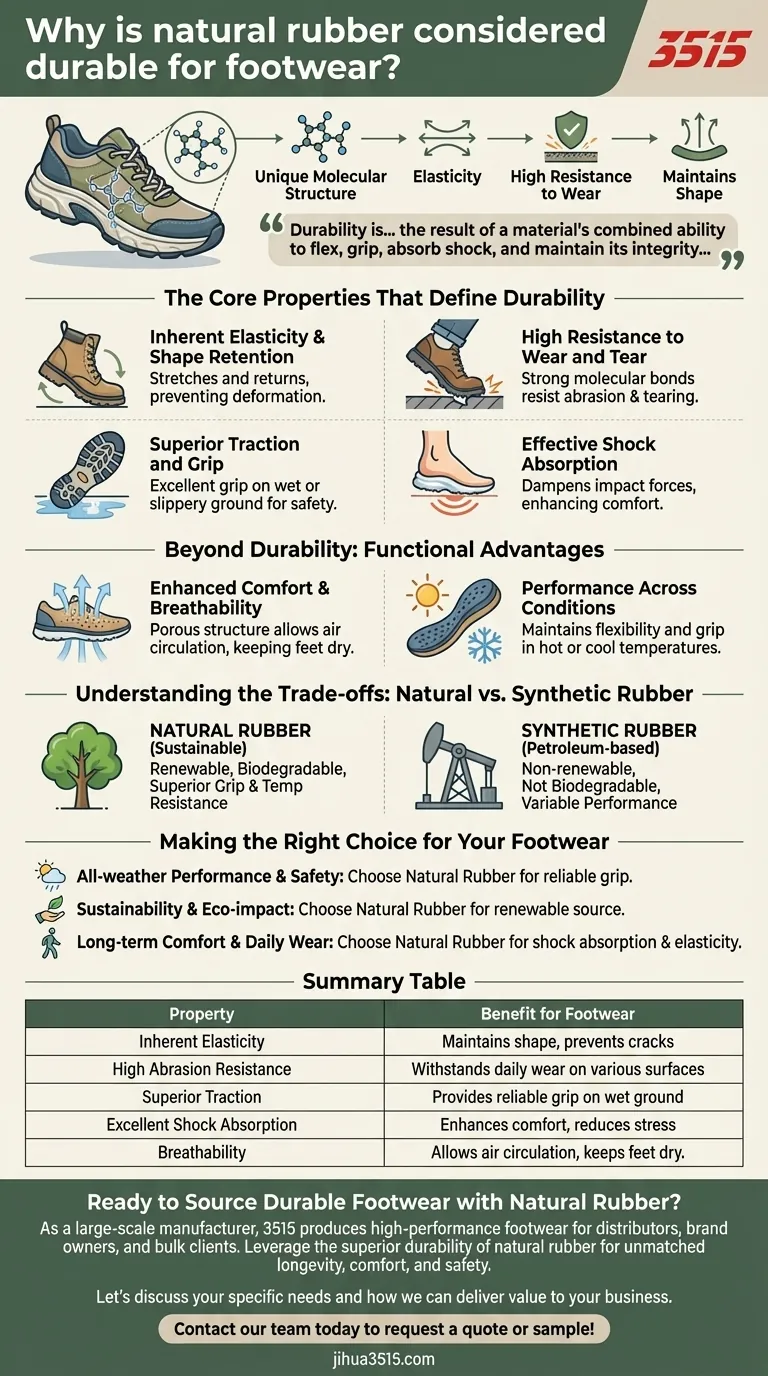
The Core Properties That Define Durability
The term "durability" encompasses several key performance characteristics. Natural rubber excels due to a combination of physical and structural properties that work together.
Inherent Elasticity and Shape Retention
Natural rubber has a remarkable ability to be stretched or compressed and then return to its original shape.
This elasticity prevents the material from becoming permanently deformed or brittle after repeated use, which is critical for the constant flexing a shoe sole endures.
High Resistance to Wear and Tear
The strong molecular bonds in natural rubber make it highly resistant to abrasion and tearing.
This means it can handle the constant friction of walking on surfaces like pavement and rough terrain, leading to a longer lifespan for the shoe's outsole.
Superior Traction and Grip
Natural rubber’s unique structure provides an excellent grip on a wide variety of surfaces.
This is a crucial durability factor, as consistent traction on wet or slippery ground ensures the footwear remains functional and safe throughout its life.
Effective Shock Absorption
The material naturally dampens impact forces, absorbing much of the shock generated from walking or running.
This not only enhances comfort but also reduces the stress on the rubber itself and the shoe's construction, contributing to its overall longevity.
Beyond Durability: The Functional Advantages of Natural Rubber
While its physical toughness is key, other inherent benefits make natural rubber a superior material for footwear, enhancing the user's experience.
Enhanced Comfort and Breathability
Natural rubber has a porous structure that allows for air circulation.
This breathability helps prevent moisture build-up inside the shoe, keeping feet dry, regulating temperature, and reducing the risk of odors or fungal issues.
Performance Across Conditions
Compared to many synthetic alternatives, natural rubber maintains its flexibility and grip across a wider range of temperatures.
It performs reliably on both hot asphalt and cool, wet pavement without becoming overly stiff or soft.
Understanding the Trade-offs: Natural vs. Synthetic Rubber
While both material types are used in footwear, they have fundamental differences that impact performance and sustainability.
Source and Sustainability
Natural rubber is a renewable resource, harvested as latex from rubber trees. It is also biodegradable, breaking down over time.
Synthetic rubber, in contrast, is a petroleum product derived from non-renewable petrochemicals and is not biodegradable.
Key Performance Differences
Natural rubber generally offers superior grip and higher temperature resistance compared to many common synthetic rubbers.
The performance of synthetic rubber can vary widely by type, but it often cannot match the all-around combination of traction and comfort found in its natural counterpart.
Making the Right Choice for Your Footwear
Understanding these properties allows you to select footwear that aligns with your specific needs.
- If your primary focus is all-weather performance and safety: Choose natural rubber for its superior, reliable grip on wet and slippery surfaces.
- If your primary focus is sustainability and environmental impact: Natural rubber is the clear choice due to its renewable source and biodegradability.
- If your primary focus is long-term comfort and daily wear: The combination of shock absorption, elasticity, and breathability makes natural rubber ideal for extended use.
Ultimately, natural rubber's durability is a direct result of its well-rounded and resilient natural properties.
Summary Table:
| Property | Benefit for Footwear |
|---|---|
| Inherent Elasticity | Maintains shape after repeated flexing, preventing cracks. |
| High Abrasion Resistance | Withstands daily wear and tear on various surfaces. |
| Superior Traction | Provides reliable grip on wet and slippery ground. |
| Excellent Shock Absorption | Enhances comfort and reduces stress on the shoe. |
| Breathability | Allows air circulation, keeping feet dry and comfortable. |
Ready to Source Durable Footwear with Natural Rubber?
As a large-scale manufacturer, 3515 produces a comprehensive range of high-performance footwear for distributors, brand owners, and bulk clients. Our production capabilities encompass all types of shoes and boots, leveraging the superior durability of natural rubber to ensure your products offer unmatched longevity, comfort, and safety.
Let's discuss your specific needs and how we can deliver value to your business.
Contact our team today to request a quote or sample!
Visual Guide
Related Products
- Durable Rubber Sole Outdoor Shoes Wholesale & Custom Manufacturing
- Wholesale Durable Camo Canvas Shoes with High-Traction Rubber Soles
- Durable Leather Work Boots for Wholesale & Custom Manufacturing
- Durable Leather Work Boots for Wholesale & Custom OEM Manufacturing
- Wholesale Leather Work Boots with Customizable Wedge Sole for Brands
People Also Ask
- What is the function of the sole in outdoor shoes? Find the Perfect Grip and Support
- What role do outdoor shoes and sneakers play in navigating external terrains? Engineered Stability for Every Surface
- How is AI utilized in the design of outdoor and safety footwear? Harnessing Big Data for Market-Driven Shoe Innovation
- Why is durability important when selecting outdoor shoes? A Guide to Safety & Long-Term Value
- What are the key components of outdoor shoes that affect comfort and sturdiness? A Guide to Durable, High-Performance Footwear
















