
At their core, neoprene-lined wellingtons offer significant advantages in warmth, comfort, and fit over standard designs. This is achieved by bonding a layer of neoprene—a synthetic rubber foam—to the inside of the waterproof outer shell, creating an insulated and cushioned barrier that molds to your foot.
The decision to choose a neoprene-lined wellington is fundamentally a choice for specialized performance. While they provide unparalleled warmth and comfort in cold, damp conditions, these same insulating properties become a liability in warmer weather.
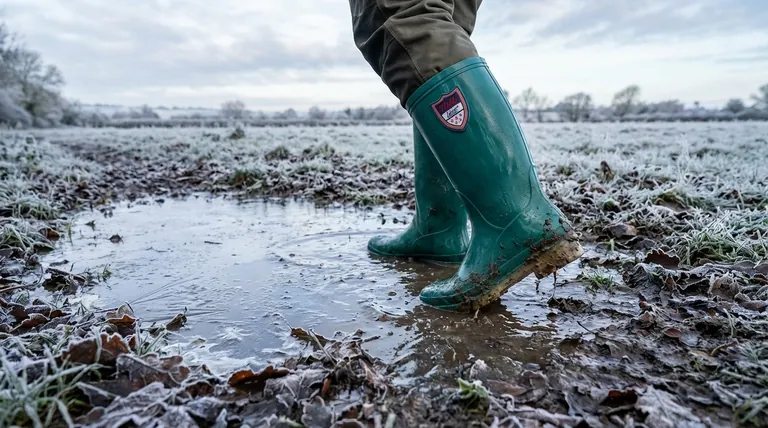
How Neoprene Transforms the Wellington Boot
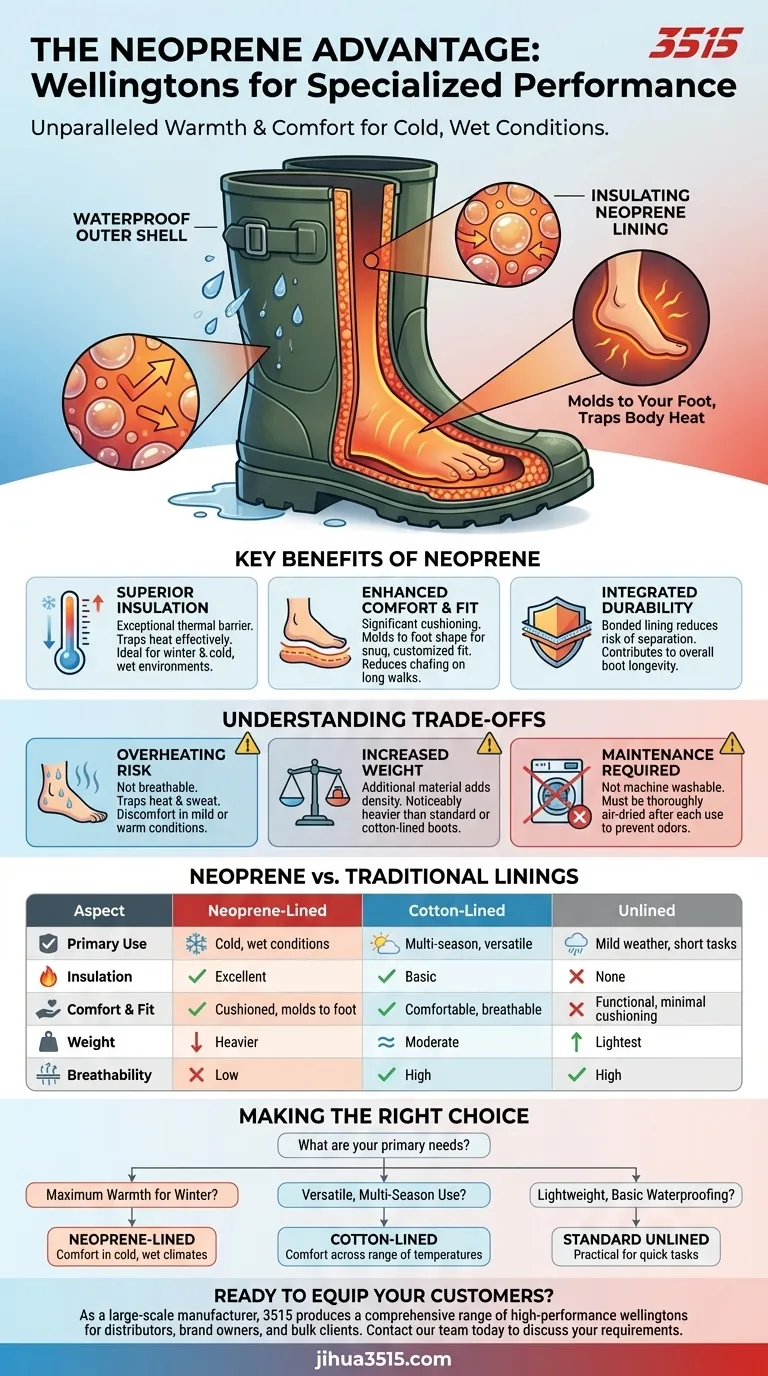
Neoprene is a synthetic rubber filled with microscopic air bubbles. This structure is key to its performance, as these bubbles trap air, dramatically slowing the transfer of heat from your foot to the cold environment outside.
Superior Insulation for Cold Weather
The primary benefit of a neoprene lining is its exceptional thermal insulation. It effectively traps your body heat, keeping your feet warm even in very low temperatures. This makes them the ideal choice for winter use or for anyone who works in consistently cold and wet environments.
Enhanced Comfort and a Snug Fit
Unlike a standard, unlined boot, the soft and flexible neoprene provides significant cushioning. This material also molds around the shape of your foot and ankle over time, creating a snug, customized fit that reduces internal movement and prevents chafing during long walks.
Integrated Durability
Because the neoprene liner is bonded directly to the inside of the rubber outer, there is a reduced risk of the lining separating or tearing. This integrated construction contributes to the overall longevity of the boot.
Understanding the Trade-offs
No single material is perfect for every situation. To make an informed choice, you must understand the inherent limitations of neoprene linings.
Overheating in Milder Conditions
The same insulation that makes neoprene excellent for the cold makes it a poor choice for warm weather. The material is not breathable, meaning it will trap heat and sweat, leading to discomfort in milder or summer conditions.
Increased Weight
The additional layer of neoprene adds material and density to the boot. This results in a final product that is noticeably heavier than a simple rubber or cotton-lined wellington.
Maintenance and Care
Neoprene linings are generally not machine washable and can retain odors if not dried properly. They require you to air them out thoroughly after each use to ensure they remain fresh and hygienic.
Neoprene vs. Traditional Linings
Your choice of lining should be dictated entirely by the conditions you expect to face most often.
Cotton Linings
Cotton is a breathable and lightweight alternative. Boots with a cotton lining are well-suited for general-purpose use across three seasons, offering basic comfort without the intense insulation of neoprene.
Standard Rubber Linings
A standard rubber inner lining offers no extra insulation or cushioning. These boots are purely functional, providing a waterproof barrier for short-term tasks in mild conditions where warmth and long-term comfort are not primary concerns.
Making the Right Choice for Your Needs
Selecting the right boot means matching its features to your specific activities and environment.
- If your primary focus is maximum warmth for winter: Neoprene-lined wellingtons are the unequivocal best choice for comfort in cold, wet climates.
- If your primary focus is versatile, multi-season use: A boot with a more breathable cotton lining will provide greater comfort across a wider range of temperatures.
- If your primary focus is lightweight, basic waterproofing: A standard, unlined rubber boot is the most practical and economical option for quick tasks in the garden or yard.
Ultimately, choosing the right wellington is about selecting the correct tool for the job.
Summary Table:
| Aspect | Neoprene-Lined | Traditional Cotton-Lined | Standard Unlined |
|---|---|---|---|
| Primary Use | Cold, wet conditions | Multi-season, versatile use | Mild weather, short tasks |
| Insulation | Excellent | Basic | None |
| Comfort & Fit | Cushioned, molds to foot | Comfortable, breathable | Functional, minimal cushioning |
| Weight | Heavier | Moderate | Lightest |
| Breathability | Low | High | High |
Ready to equip your customers with the right footwear for the job?
As a large-scale manufacturer, 3515 produces a comprehensive range of high-performance wellingtons for distributors, brand owners, and bulk clients. Whether your market demands the superior warmth of neoprene-lined boots or versatile multi-season options, our production capabilities ensure top-quality footwear tailored to your needs.
Contact our team today to discuss your specific requirements and explore our full catalog.
Visual Guide
Related Products
- Durable Waterproof Rain Boots | Custom Manufacturer for Wholesale & Brands
- Wholesale Durable & Breathable Training Shoes for Custom Brands
- Lightweight Breathable Training Shoes for Wholesale & Custom OEM Manufacturing
- Custom OEM Training Shoes Wholesale Manufacturer Durable & Breathable
- Wholesale Breathable Training Shoes Custom Athletic Footwear Manufacturer
People Also Ask
- What are the main materials for waterproof rain boots? Choose the Right Material for Durability & Comfort
- What is the overall recommendation for choosing rain boot materials? A Guide to Rubber vs. PVC
- How does boot height affect waterproofing? Choose the Right Height for Ultimate Protection
- Why are rain boots more flexible and comfortable than snow boots? The Key Differences Explained
- What are the best types of shoes for different gardening conditions? Find Your Perfect Match.









