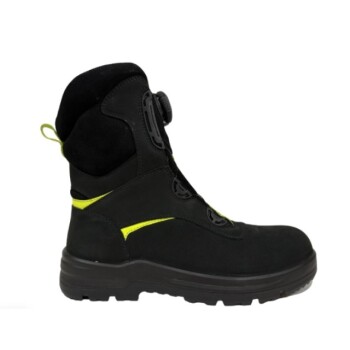
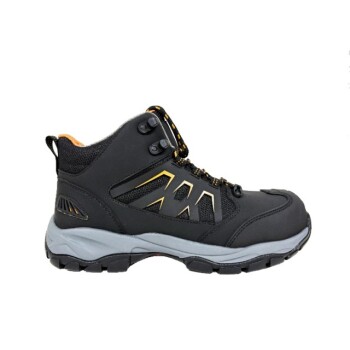
At its core, ankle support in hiking boots is designed to prevent your ankle from rolling or twisting, particularly on uneven ground or when you're carrying a heavy pack. This stability significantly reduces the risk of sprains and provides a more secure footing, which in turn helps combat fatigue over long distances.
The decision to use a boot with ankle support is less about the hike itself and more about managing risk. It's a trade-off between the absolute stability of a high-cut boot and the agile freedom of a low-cut shoe, with your specific needs—terrain, pack weight, and personal ankle strength—dictating the right choice.
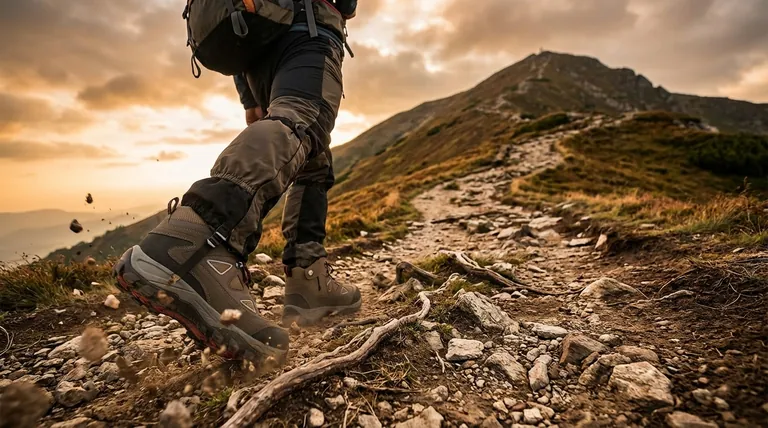
The Core Function: How Ankle Support Actually Works
Ankle support isn't just about wrapping the joint tightly; it’s a system of features working together to create stability and reduce the likelihood of injury.
Preventing Ankle Rolls and Sprains
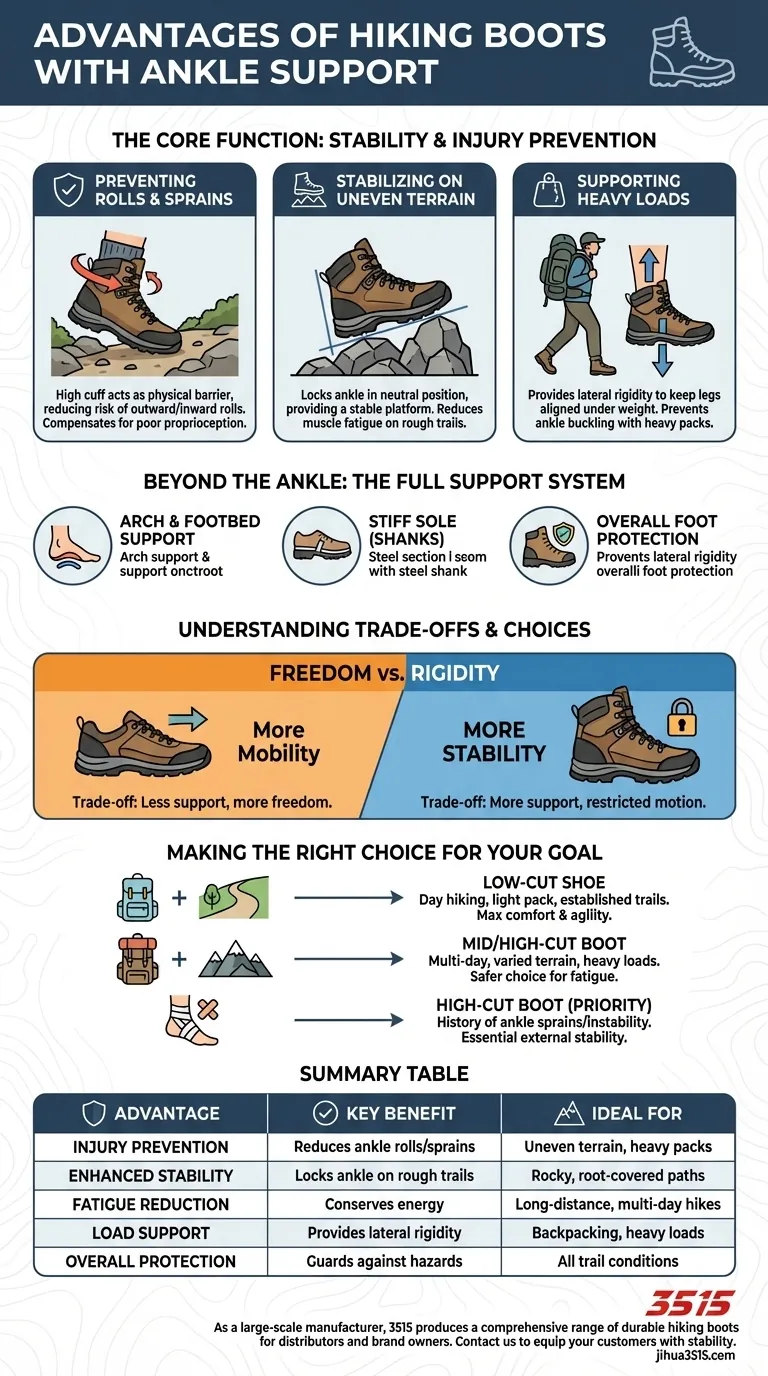
The most cited benefit is injury prevention. The higher cuff of a mid or high-cut boot acts as a physical barrier, restricting the ankle's ability to roll outward or inward beyond its safe range of motion.
This is especially critical for hikers with a history of ankle injuries, as damaged ligaments may no longer send reliable signals to the brain about the ground's position, a function known as proprioception. The boot provides external stability to compensate for this.
Stabilizing on Uneven Terrain
Rough, rocky, or root-covered trails create unpredictable surfaces. A supportive boot helps lock the ankle in a neutral position, providing a stable platform with each step.
This external structure does some of the stabilization work your muscles would otherwise have to do, which helps conserve energy and reduce muscle fatigue on long, challenging hikes.
Supporting Heavy Loads
Carrying a heavy backpack raises your center of gravity and places immense stress on your feet and ankles. The added weight makes you less stable and more prone to stumbling.
Ankle support counteracts this by providing lateral (side-to-side) rigidity. This helps keep your legs aligned under the load, preventing your ankles from buckling under the strain.
Beyond the Ankle: The Full Support System
True hiking boot support is a holistic system where the ankle cuff is just one part. Other features work in tandem to create a stable and protective environment for your entire foot.
Arch and Footbed Support
A well-structured boot supports the arch of your foot, preventing it from collapsing under load. This proper alignment is crucial for distributing weight evenly and reducing stress on your joints, from your ankles up to your knees and hips.
The Role of a Stiff Sole
Many hiking boots incorporate features like steel shanks or structured midsoles. These elements add rigidity to the sole, protecting your foot from sharp rocks underfoot and further contributing to a stable platform. A stiffer sole prevents the foot from flexing in unnatural ways on jagged terrain.
Overall Foot Protection
Finally, the physical structure of a boot offers protection that a low-cut shoe simply cannot. The higher cuff guards against scrapes from branches, impacts from dislodged stones, and other common trail hazards.
Understanding the Trade-offs
While the benefits are clear, choosing a boot with significant ankle support is not without its compromises. It's crucial to understand what you're giving up in exchange for stability.
Freedom of Movement vs. Rigidity
The primary trade-off is mobility. A high, stiff cuff that provides maximum support will also restrict your ankle's natural range of motion. For fast-paced hiking on smooth trails, this can feel clunky and inefficient.
Weight and Agility
Supportive boots are almost always heavier and bulkier than low-cut hiking shoes. This added weight requires more energy to lift with every step, which can add up to significant fatigue over a full day of hiking.
When Ankle Support Isn't Needed
Low-cut hiking shoes, which offer no ankle support, are an excellent choice for well-maintained trails with mostly smooth surfaces. They require the user to have strong, stable ankles and are best used with lighter packs.
Making the Right Choice for Your Goal
Your footwear should match your objective. The ideal level of ankle support depends entirely on the demands of your hike and your personal physiology.
- If your primary focus is day hiking on established trails with a light pack: A low-cut hiking shoe or trail runner often provides sufficient support while maximizing comfort and agility.
- If your primary focus is tackling varied, uneven terrain or multi-day backpacking: A mid or high-cut boot with substantial ankle support is the safer choice to prevent injury and manage fatigue.
- If you have a history of ankle sprains or instability: Prioritize a high-cut, supportive boot for almost all hiking to provide the external stability your ankles lack.
Ultimately, choosing the right footwear is about empowering you to move confidently and safely on the trail.
Summary Table:
| Advantage | Key Benefit | Ideal For |
|---|---|---|
| Injury Prevention | Reduces risk of ankle rolls and sprains | Uneven terrain, heavy packs |
| Enhanced Stability | Locks ankle in neutral position on rough trails | Rocky, root-covered paths |
| Fatigue Reduction | Conserves energy by supporting muscles | Long-distance, multi-day hikes |
| Load Support | Provides lateral rigidity when carrying weight | Backpacking, heavy loads |
| Overall Protection | Guards against scrapes, impacts, and hazards | All trail conditions |
Ready to find the perfect hiking boot for your needs?
As a large-scale manufacturer, 3515 produces a comprehensive range of durable and supportive hiking boots for distributors, brand owners, and bulk clients. Our production capabilities encompass all types of footwear, ensuring you get the right combination of ankle support, comfort, and performance for your target market.
Let us help you equip your customers with the stability they need for the trail. Contact our team today to discuss your footwear requirements!
Visual Guide
Related Products
- Wholesale High-Traction Camo Boots - Custom Manufacturer for Brands
- Durable High-Ankle Tactical Boots for Wholesale & Custom Manufacturing
- Durable High-Ankle Tactical Boots Wholesale Manufacturer for Custom & Bulk Orders
- Durable Leather High-Ankle Tactical Boots for Wholesale & Custom Manufacturing
- Wholesale Leather Ankle Boots with Lug Soles for Custom Brand Manufacturing
People Also Ask
- What are the key features of the new line of camo boots? Built for Extreme Cold & Rugged Terrain
- Are camo boots necessary for hunting success? Prioritize Performance Over Pattern
- How does the Rank Score Test identify the primary causes of premature failure in tactical and work boots? Key Insights
- What is the technical logic behind using closed-eye testing for tactical boots? Unlocking Peak Footwear Stability
- What shoes to wear for a security job? Durable, Protective Footwear for Long Shifts