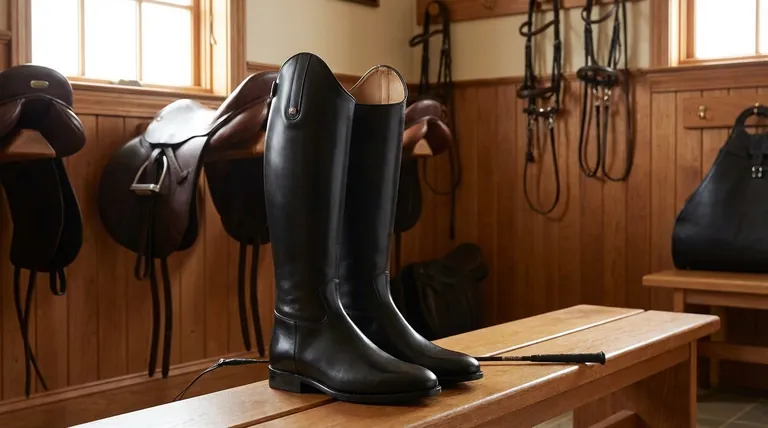
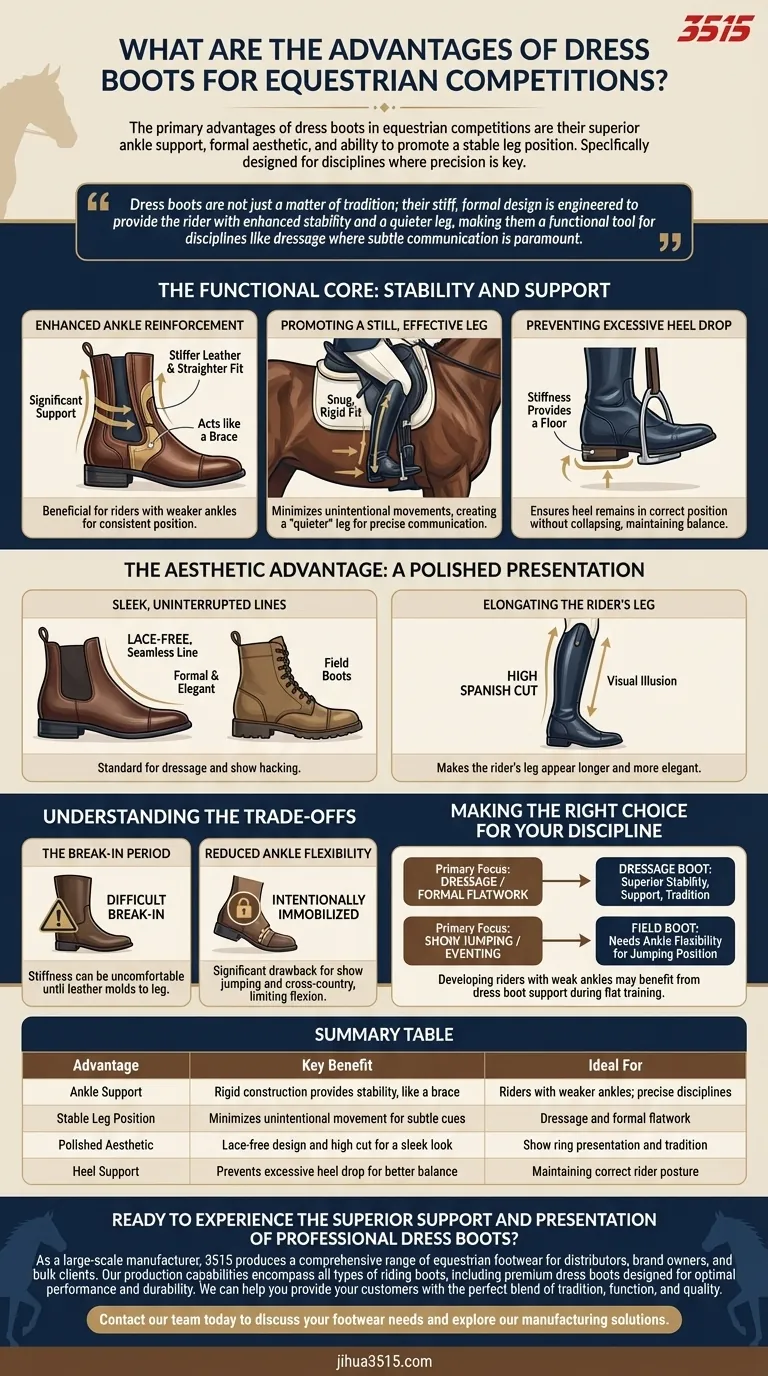
The primary advantages of dress boots in equestrian competitions are their superior ankle support, formal aesthetic, and ability to promote a stable leg position. Specifically designed for disciplines where precision is key, their stiff construction offers functional benefits that go far beyond their polished appearance.
Dress boots are not just a matter of tradition; their stiff, formal design is engineered to provide the rider with enhanced stability and a quieter leg, making them a functional tool for disciplines like dressage where subtle communication is paramount.
The Functional Core: Stability and Support
The most significant advantage of the dress boot lies in its rigid construction. This design directly translates to better performance and rider posture in the saddle.
Enhanced Ankle Reinforcement
A dress boot is intentionally built with stiffer leather and a straighter fit through the ankle.
This construction provides significant support, acting almost like a brace. It's particularly beneficial for riders with weaker ankles who struggle to maintain a consistent position.
Promoting a Still, Effective Leg
The snug, rigid fit of a dress boot minimizes small, unintentional movements in the rider's lower leg.
This stability creates a "quieter" leg, allowing for more precise and subtle communication with the horse, which is the cornerstone of disciplines like dressage.
Preventing Excessive Heel Drop
While a deep heel is desirable, too much flexibility can cause the heel to drop excessively, disrupting the rider's balance and leg position.
The stiffness of a dress boot provides a floor for the heel, ensuring it remains in a correct and effective position without collapsing.
The Aesthetic Advantage: A Polished Presentation
In the show ring, presentation matters. The dress boot is designed to create the most elegant and formal silhouette possible.
Sleek, Uninterrupted Lines
Unlike field boots, dress boots are lace-free. This creates a seamless, uninterrupted line from the top of the boot down to the heel.
This clean look is considered more formal and is the standard for dressage and other formal events like show hacking.
Elongating the Rider's Leg
Most dress boots feature a high "Spanish cut" on the outside of the boot, extending up over the side of the knee.
This design element creates a visual illusion, making the rider's leg appear longer and more elegant in the saddle.
Understanding the Trade-offs
No piece of equipment is perfect for every situation. The very features that make dress boots ideal for some disciplines create disadvantages for others.
The Break-in Period
The same stiffness that provides support makes for a notoriously difficult break-in period. New dress boots can be uncomfortable until the leather softens and molds to the rider's leg.
Reduced Ankle Flexibility
The core benefit of ankle support comes at the direct cost of flexibility. The ankle is intentionally immobilized to a degree.
This lack of articulation is a significant drawback for disciplines like show jumping and cross-country, where a rider needs maximum ankle flexion for the two-point position and absorbing shock over fences.
Making the Right Choice for Your Discipline
Choosing between a dress boot and a more flexible alternative comes down to your primary riding activity.
- If your primary focus is dressage or formal flatwork: The dress boot is the superior choice for the stability, support, and traditional presentation required.
- If your primary focus is show jumping or eventing: You will likely need the ankle flexibility of a field boot to maintain a secure and effective jumping position.
- If you are a developing rider with weak ankles: The added support of a dress boot can be a significant functional benefit, even during general training on the flat.
Ultimately, selecting the right boot is about aligning the equipment's design with your specific performance goals.
Summary Table:
| Advantage | Key Benefit | Ideal For |
|---|---|---|
| Ankle Support | Rigid construction provides stability, like a brace | Riders with weaker ankles; precise disciplines |
| Stable Leg Position | Minimizes unintentional movement for subtle cues | Dressage and formal flatwork |
| Polished Aesthetic | Lace-free design and high cut for a sleek look | Show ring presentation and tradition |
| Heel Support | Prevents excessive heel drop for better balance | Maintaining correct rider posture |
Ready to experience the superior support and presentation of professional dress boots?
As a large-scale manufacturer, 3515 produces a comprehensive range of equestrian footwear for distributors, brand owners, and bulk clients. Our production capabilities encompass all types of riding boots, including premium dress boots designed for optimal performance and durability.
We can help you provide your customers with the perfect blend of tradition, function, and quality. Contact our team today to discuss your footwear needs and explore our manufacturing solutions.
Visual Guide
Related Products
- Wholesale Breathable Perforated Leather Derby Dress Shoes for Custom Brands
- Classic Leather Derby Dress Shoes Wholesale & Custom Manufacturing
- Wholesale Women's Leather Derby Shoes Custom Factory Production
- Wholesale Perforated Comfort Dress Shoes | Custom Derby Shoe Manufacturer
- Wholesale Leather Derby Shoes Manufacturer | Customizable Business & Dress Footwear
People Also Ask
- How should you dry wet leather dress shoes? A Step-by-Step Guide to Save Your Investment
- How can you remove salt stains from leather dress shoes? Save Your Shoes with a Simple Vinegar Solution
- How often should leather dress shoes be cleaned and polished? A 3-Tier Care Guide for Longevity
- What are the basic steps to clean leather dress shoes? A Guide to Preserving Your Investment
- What are the main types of leather used in dress shoes? Find the Perfect Fit for Style & Durability