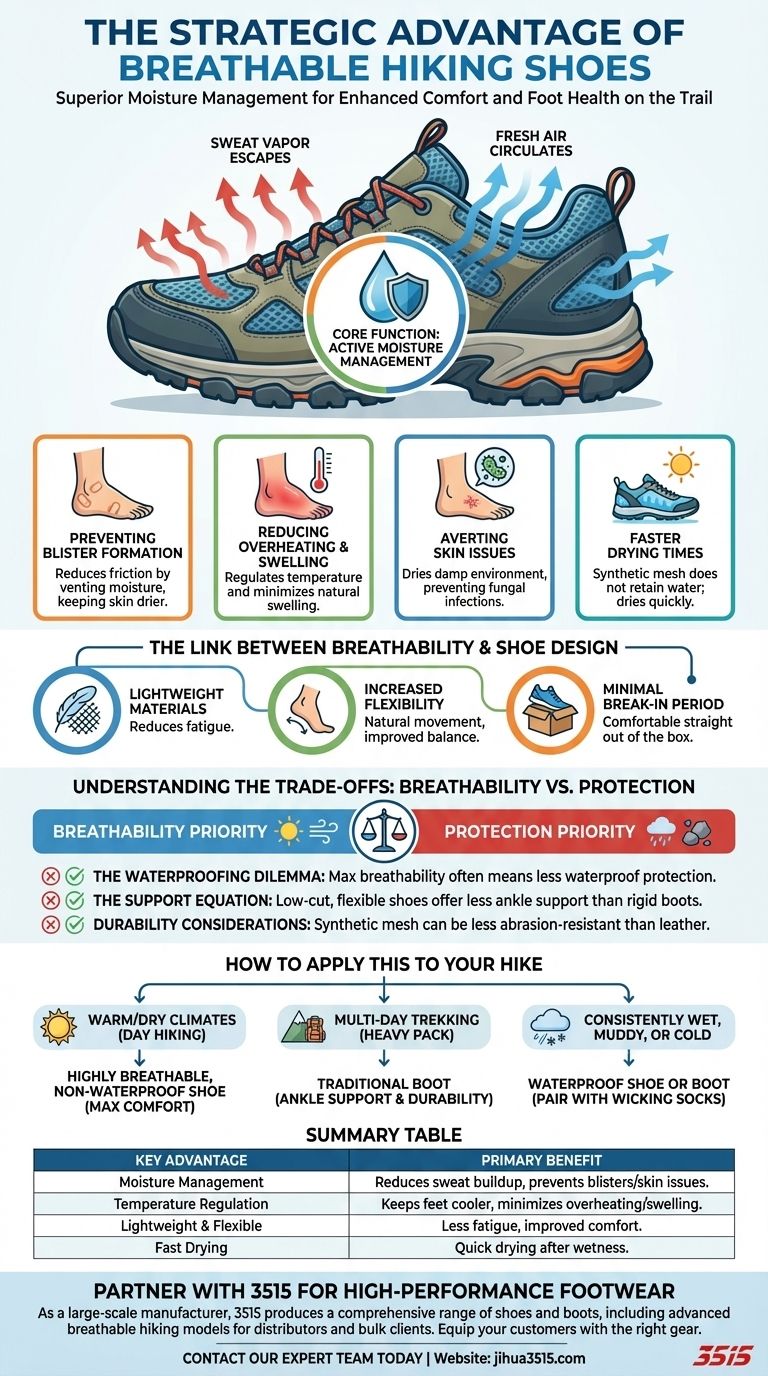
The primary advantage of breathable hiking shoes is superior moisture management. By allowing air to circulate freely, they significantly reduce sweat buildup inside the shoe, which is the single most effective way to prevent blisters, maintain comfort, and ensure overall foot health on the trail.
Choosing a hiking shoe is not about finding one "best" feature, but about understanding a core trade-off. Breathability prioritizes keeping your feet dry from the inside (sweat), which often comes at the expense of protection from the outside (water and terrain).
The Core Function: Active Moisture Management
Your feet sweat significantly, especially during strenuous activity like hiking. Breathability is the mechanism that allows this moisture vapor to escape before it becomes a problem.
Preventing Blister Formation
Blisters are caused by a combination of friction, heat, and moisture. By actively venting moisture, breathable shoes keep your skin drier, drastically reducing the friction that leads to painful hot spots and blisters.
Reducing Overheating and Swelling
Proper airflow helps regulate the temperature inside your shoe. This keeps your feet cooler and can minimize the natural swelling that occurs during a long hike, leading to greater comfort over many miles.
Averting Skin Issues
A damp, warm environment is a breeding ground for fungus and bacteria. Keeping your feet dry is the first line of defense against common issues like athlete's foot or other potential skin infections.
Achieving Faster Drying Times
Inevitably, your feet might get wet from an external source, like a creek crossing. Highly breathable shoes, often made of synthetic mesh, do not retain water and will dry out remarkably fast as you continue to hike.
The Link Between Breathability and Shoe Design
Breathability isn't just a feature; it's a direct result of specific design choices that impact the entire shoe.
Lightweight Materials
Breathable shoes typically utilize synthetic mesh and other lightweight fabrics. This construction not only allows for maximum airflow but also reduces the overall weight of the shoe, leading to less fatigue on long treks.
Increased Flexibility
The materials that enhance breathability also tend to be more flexible than traditional leather. This allows your foot to move more naturally, which can improve balance and comfort on uneven trails.
Minimal Break-In Period
Unlike heavy, rigid boots, lightweight and breathable hiking shoes require little to no break-in period. Their flexible materials are generally comfortable straight out of the box.
Understanding the Trade-offs: Breathability vs. Protection
Opting for maximum breathability is a strategic choice that involves accepting compromises in other areas of performance.
The Waterproofing Dilemma
This is the most critical trade-off. A fully waterproof membrane (like Gore-Tex) works by having pores small enough to block liquid water but large enough to let water vapor escape. However, even the best waterproof-breathable membranes will trap more heat and moisture than a non-waterproof, highly ventilated shoe.
The Support Equation
Highly breathable shoes are often low-cut and less rigid. They offer less ankle support than sturdy, high-cut hiking boots. This makes them ideal for lighter packs and well-maintained trails but less suitable for carrying heavy loads over rugged, unstable terrain.
Durability Considerations
The synthetic mesh that provides excellent ventilation can be less resistant to abrasion than the full-grain leather found on heavy-duty boots. For hikers who frequently encounter sharp rocks or dense brush, this can be a factor in the shoe's lifespan.
How to Apply This to Your Hike
Your choice should be dictated by your specific needs and the conditions you expect to face.
- If your primary focus is day hiking in warm or dry climates: A highly breathable, non-waterproof shoe is almost always the superior choice for maximum comfort.
- If your primary focus is multi-day trekking with a heavy pack: You may need to sacrifice some breathability for the critical ankle support and durability of a more traditional boot.
- If your primary focus is hiking in consistently wet, muddy, or cold conditions: A waterproof shoe or boot is the logical choice to keep external moisture out, but pair it with excellent moisture-wicking socks to manage sweat.
Ultimately, choosing the right footwear is about correctly identifying the most likely challenge your feet will face on the trail.
Summary Table:
| Key Advantage | Primary Benefit |
|---|---|
| Moisture Management | Reduces sweat buildup to prevent blisters and skin issues. |
| Temperature Regulation | Keeps feet cooler, minimizing overheating and swelling. |
| Lightweight & Flexible | Less fatigue and improved comfort on the trail. |
| Fast Drying | Quick drying after creek crossings or rain. |
Ready to find the perfect breathable hiking shoe for your needs?
As a large-scale manufacturer, 3515 produces a comprehensive range of high-performance footwear for distributors, brand owners, and bulk clients. Our production capabilities encompass all types of shoes and boots, including advanced breathable hiking models designed for optimal comfort and durability.
Let us help you equip your customers with the right gear. Contact our expert team today to discuss your footwear requirements!
Visual Guide
Related Products
- Lightweight Breathable Training Shoes for Wholesale & Custom OEM Manufacturing
- Wholesale Breathable Training Shoes Custom Athletic Footwear Manufacturer
- Lightweight Breathable Sneakers with Wet-Traction Grip for Wholesale & Private Label
- Wholesale Breathable Perforated Leather Derby Shoes with Modern Comfort Sole
- Custom OEM Training Shoes Wholesale Manufacturer Durable & Breathable
People Also Ask
- Why are lightweight training shoes often preferred over professional hiking boots in urban walking? Maximize City Comfort
- What is the primary role of specialized training or orthopedic shoes? Enhance Safety in Elderly Balance Training
- Why are professional-grade training shoes essential for physical therapy? Ensure Patient Safety and Gait Stability
- Why are the slip-resistance and stability performance of training shoes critical in gait analysis? Ensure Data Accuracy
- Why is the use of flat-soled or professional training shoes essential for WBV? Maximize Vibration Energy Transfer