
In short, a CAM walker, also known as a walking boot, is a specialized medical boot designed to stabilize and protect your foot, ankle, or lower leg after an injury or surgery. It immobilizes the affected area to promote healing while still allowing you to walk, which is why it is often prescribed as an alternative to a traditional cast.
The core purpose of a walking boot is to resolve the conflict between two essential needs during recovery: the need for immobilization to heal properly and the need for mobility to live your life. It offers a functional compromise between a restrictive cast and a simple brace.
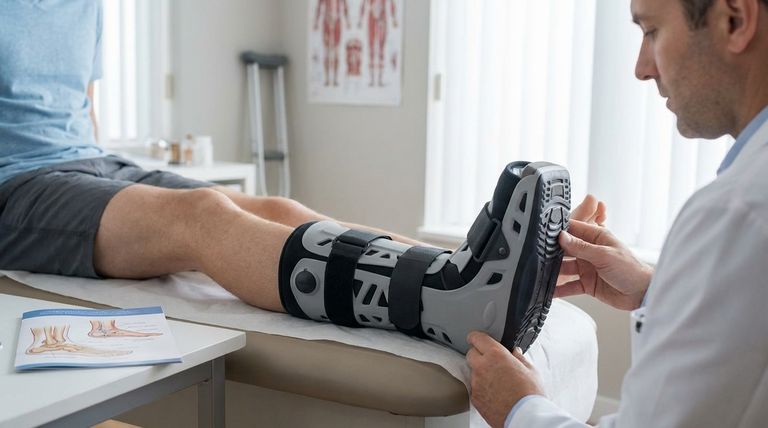
How a Walking Boot Accelerates Healing
A CAM (Controlled Ankle Motion) walker is a sophisticated piece of medical equipment engineered to create a specific healing environment. Its design directly addresses the biological requirements for recovery from fractures, sprains, and post-operative care.
The Principle of Immobilization
The primary function of the boot is stabilization. By restricting motion at the ankle and foot joints, it prevents the injured bones, ligaments, or tendons from being stressed.
This immobilization is critical. It allows the body's natural healing processes—like bone regeneration or ligament repair—to occur without interruption from movement.
The Benefit of Controlled Weight-Bearing
Unlike a traditional cast, which often requires you to be completely non-weight-bearing with crutches, a walking boot allows for controlled weight-bearing.
The boot's rigid shell and rocker-style sole are designed to absorb and redistribute the impact and pressure of walking. This offloads the injured area, ensuring it is not subjected to the full force of your body weight.
This controlled pressure is often beneficial, as light, managed stress can stimulate bone healing and help maintain muscle tone, preventing significant atrophy in the leg.
Key Components and Their Function
Understanding the parts of a walking boot helps clarify how it achieves its goals. While designs vary, most share common features.
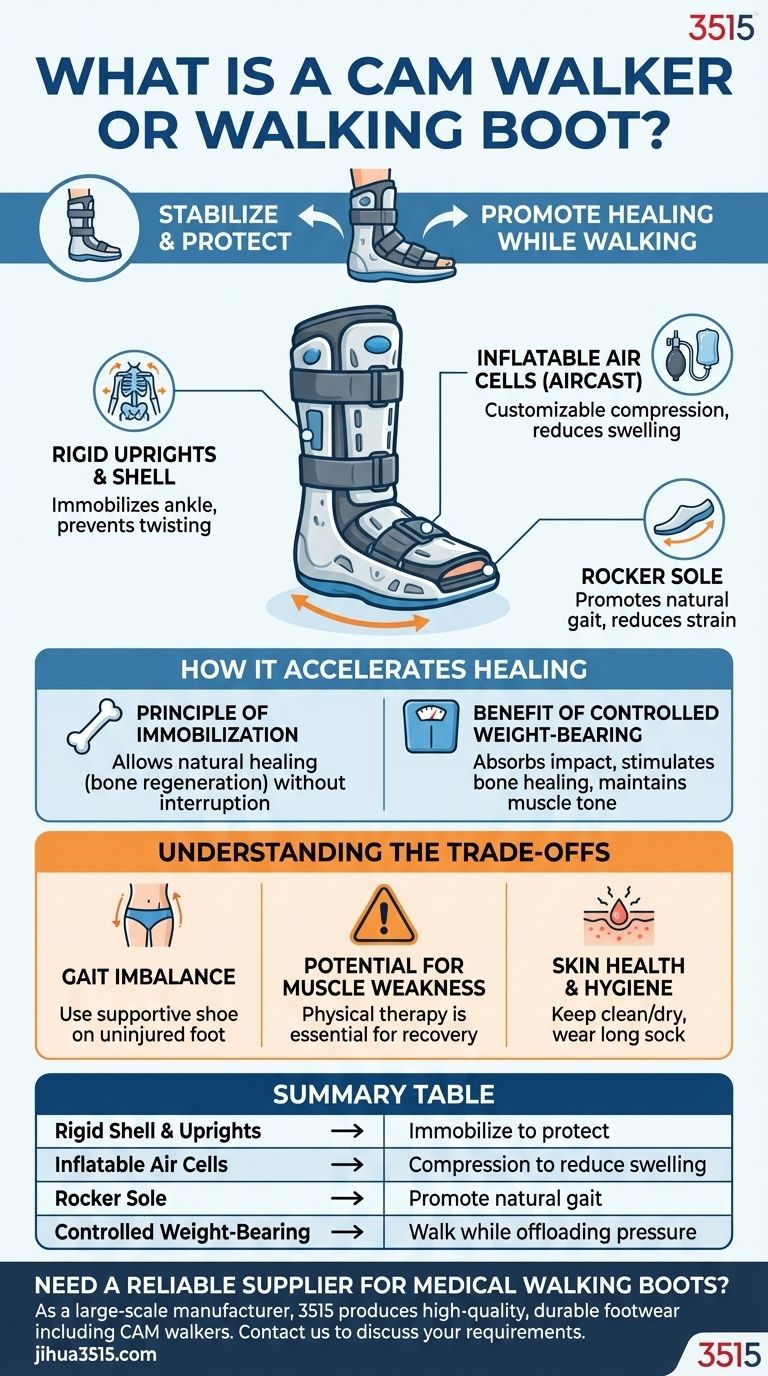
Rigid Uprights and Shell
The supportive frame, consisting of one or two rigid uprights, acts as an external skeleton. This shell prevents unwanted side-to-side and twisting motions of the ankle.
Inflatable Air Cells (Aircast)
Many modern boots feature inflatable air cells or bladders. These can be customized with a small pump to provide targeted compression around the injury.
This compression helps reduce swelling (edema), which in turn can alleviate pain and improve blood flow to the area, further supporting the healing process.
Rocker Sole
The bottom of the boot is curved, creating a rocker sole. This feature promotes a more natural walking gait (heel-to-toe motion) without requiring you to bend your ankle.
This design makes walking less awkward and more efficient, reducing strain on your other joints, like your knee and hip, which might otherwise have to compensate.
Understanding the Trade-offs
While highly effective, a walking boot is not without its challenges. Being aware of them helps you use the device correctly and manage expectations.
Risk of Gait Imbalance
The boot's sole is significantly thicker than that of a regular shoe. This height discrepancy can create a limp and place uneven stress on your hips and lower back.
Many clinicians recommend wearing a thick-soled, supportive shoe on your uninjured foot to help level your hips and minimize this imbalance.
Potential for Muscle Weakness
While the boot allows for mobility, the prolonged immobilization can still lead to muscle atrophy (weakening) in your lower leg.
Physical therapy is almost always a critical component of recovery after the boot is no longer needed. This is essential for rebuilding strength, flexibility, and balance.
Skin Health and Hygiene
The boot must be worn for long periods, which can lead to skin irritation or breakdown if not managed properly.
It is crucial to keep the liner and your skin clean and dry. Always wear a long sock that extends above the top of the boot to act as a barrier and wick away moisture.
Making the Right Choice for Your Goal
Always follow the specific instructions provided by your doctor or physical therapist. They will guide you on when and how to wear the boot and how much weight you can safely put on it.
- If your primary focus is healing a fracture: Prioritize immobilization. Ensure the boot is fitted snugly and that all straps are secure to prevent any movement that could disrupt the bone's healing process.
- If your primary focus is managing a severe sprain: Use the compression feature effectively. Adjust the air cells to provide firm but comfortable pressure to control swelling, especially after periods of activity.
- If your primary focus is post-surgical recovery: Adhere strictly to your surgeon's weight-bearing protocol. The boot is there to protect the surgical repair, and putting too much weight on it too soon can compromise the outcome.
Ultimately, the CAM walker is a tool that empowers you to remain functional while giving your body the stable environment it needs to heal effectively.
Summary Table:
| Feature | Purpose |
|---|---|
| Rigid Shell & Uprights | Immobilizes the ankle and foot to protect the injury. |
| Inflatable Air Cells | Provides customizable compression to reduce swelling. |
| Rocker Sole | Promotes a natural walking gait without bending the ankle. |
| Controlled Weight-Bearing | Allows for walking while offloading pressure from the injury. |
Need a reliable supplier for medical walking boots?
As a large-scale manufacturer, 3515 produces a comprehensive range of high-quality, durable footwear for distributors, brand owners, and bulk clients. Our production capabilities encompass all types of therapeutic shoes and boots, including CAM walkers designed for optimal patient recovery.
We can help you source or customize walking boots that meet your specific market needs and quality standards. Contact our team today to discuss your requirements and discover how we can support your business.
Visual Guide
Related Products
People Also Ask
- Can canvas shoes be worn in rainy conditions? The Truth About Water Resistance
- What are the properties of canvas as a shoe material? A Guide to Lightweight Comfort & Style
- Why is the selection of high-strength fabric materials necessary in the production of canvas shoes and training shoes?
- What are the characteristics of canvas as a shoe material? A Guide to Lightweight, Breathable Footwear
- What are the benefits and limitations of using canvas as a primary material for footwear? Key B2B Manufacturing Insights
