
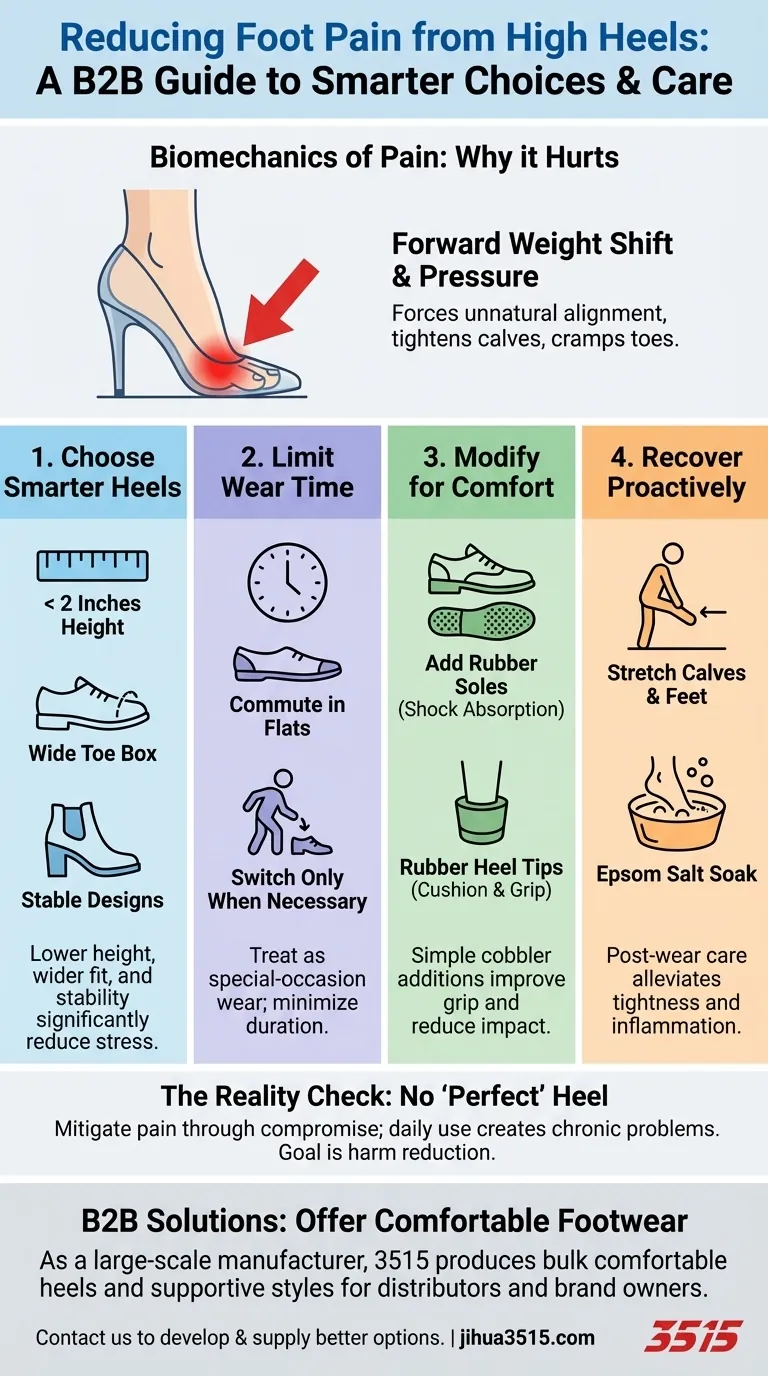
To immediately reduce foot pain from high heels, you should choose heels under two inches with a wide toe box, limit the total time you wear them, and add modifications like rubber soles for better shock absorption. After wearing them, proactive care like stretching your calves and soaking your feet in Epsom salts can significantly alleviate discomfort.
The fundamental issue with high heels is that they force your body's weight onto the balls of your feet, creating an unnatural alignment. Therefore, the most effective strategies either reduce the severity of this weight shift or minimize the duration your feet spend in this stressful position.

Why High Heels Hurt: The Biomechanics of Pain
To effectively combat the pain, you first need to understand its source. The design of a high heel fundamentally alters your body's natural mechanics, leading to a cascade of physical stress.
The Forward Weight Shift
A flat foot distributes your body weight relatively evenly. Elevating your heel shifts the vast majority of that weight forward, placing immense pressure on the delicate bones and nerves in the ball of your foot and your toes.
The Impact on Muscles and Tendons
This forward-leaning posture forces your calf muscles and Achilles tendon to shorten and tighten. Over time, this chronic tightness can lead to significant discomfort and a higher risk of injury.
The Effect on Toes and Ankles
Your toes are often cramped into a narrow toe box, which can lead to weakness and deformities. Furthermore, your ankle is placed in an unstable position, increasing the risk of sprains and falls.
Choosing a Smarter, Less Painful Heel
Prevention is the most powerful tool. The characteristics of the shoe you choose have the single biggest impact on your comfort and foot health.
Prioritize a Lower Heel Height
The most critical factor is height. A heel that is two inches or lower is dramatically less stressful on your foot than a higher stiletto.
Insist on a Wider Toe Box
Avoid sharply pointed shoes that crush your toes together. A heel with a wider, more accommodating toe box allows your toes to lie flat and reduces pressure.
Avoid Inherently Unstable Designs
Extremely high and pointy-toed heels are the primary culprits of pain. Similarly, be cautious with peep-toe shoes, which can force the foot to slide forward, and very high wedges or platforms, which can still create ankle instability despite their wider base.
Practical Tips for Wearing and Recovering
Even with a better shoe choice, how you wear them and what you do afterward makes a significant difference.
Limit Your Time and Distance
Treat high heels like a special-occasion tool, not everyday footwear. Wear supportive flats or walking shoes during your commute and switch into your heels only when necessary, such as right before entering the office or an event.
Modify Your Shoes for Comfort
A cobbler can make two simple modifications that greatly improve comfort. Adding a thin rubber sole increases grip and shock absorption, while replacing plastic heel tips with rubber ones further cushions your step.
Stretch and Soothe Your Feet
After a long day in heels, dedicate a few minutes to recovery. Perform gentle stretches for your calves and feet, and do simple range-of-motion exercises with your ankles. Soaking your feet in warm water with Epsom salts can also help reduce inflammation and soothe soreness.
Understanding the Inherent Trade-offs
Objective advice requires acknowledging that there is no perfect high heel. Mitigating pain is about making intelligent compromises.
The Myth of the "Comfortable" High Heel
While some heels are certainly less painful than others, no high heel is truly "good" for your feet from a biomechanical standpoint. The goal is always to reduce harm, not to find a shoe that eliminates it entirely.
Daily Use Creates Chronic Problems
Wearing heels occasionally for an event is very different from wearing them daily. The cumulative stress of daily use can lead to chronic issues like bunions, hammertoes, and persistent tendon tightness.
Making the Right Choice for Your Situation
Your strategy should adapt to your specific needs and goals.
- If your primary focus is daily professional wear: Opt for heels under two inches with a wide toe box and always wear supportive shoes during your commute.
- If your primary focus is a special event: Prioritize minimizing walking distance and dedicate time afterward for recovery, including stretching and soaking your feet.
- If your primary focus is long-term foot health: Reserve high heels for rare occasions and make well-fitting, supportive flats your default choice.
Ultimately, empowering yourself with this knowledge allows you to make conscious footwear choices that balance your style with your well-being.
Summary Table:
| Key Strategy | Specific Action | Why It Helps |
|---|---|---|
| Choose Smarter Heels | Opt for heels ≤ 2 inches with a wide toe box. | Reduces pressure on the ball of the foot and prevents toe cramping. |
| Limit Wear Time | Wear supportive flats for commuting; switch to heels only when necessary. | Minimizes the duration of stress on feet and muscles. |
| Modify Your Shoes | Add rubber soles and heel tips for better shock absorption. | Increases cushioning and grip, reducing impact with each step. |
| Recover Proactively | Stretch calves/feet and soak in Epsom salts after wearing. | Alleviates muscle tightness and soothes inflammation. |
Ready to Offer Comfortable Footwear Solutions?
As a large-scale manufacturer, 3515 produces a comprehensive range of footwear for distributors, brand owners, and bulk clients. Our production capabilities encompass all types of shoes and boots, including styles designed for superior comfort and support.
We can help you:
- Develop and supply comfortable heels with features like wider toe boxes and better arch support.
- Provide bulk quantities of supportive footwear for your customers.
Let's discuss how we can bring comfortable, stylish footwear to your market.
Contact our team today to explore partnership opportunities
Visual Guide
Related Products
- Durable High-Ankle Tactical Boots Wholesale Manufacturer for Custom & Bulk Orders
- Durable High-Ankle Tactical Boots for Wholesale & Custom Manufacturing
- Durable Leather High-Ankle Tactical Boots for Wholesale & Custom Manufacturing
- Wholesale Durable Camouflage Canvas Shoes with High-Traction Cleated Rubber Sole
- Comfortable Block Heel Pumps Wholesale & Custom Factory Production
People Also Ask
- What specialized protections do tactical boots offer? Maximize Endurance with High-Performance Footwear
- How do tactical boots protect against injuries? Discover the Integrated Safety System
- What are the ideal use cases for tactical boots? Empower Your Performance in Demanding Scenarios
- Can tactical boots be stylish for everyday wear? Yes, with the right styling and features.
- What are the primary benefits of wearing tactical boots for everyday use? Get All-Day Comfort & Durability


















