
At their core, tall riding boots offer several distinct style features designed to enhance both appearance and function. Key elements include the topline cut, such as the elegant Spanish-cut that elongates the leg, the shape of the toe which can be round or square, and decorative accents like toe caps, logo plaques, and flourishes of patent or exotic leather for a polished show-ring look.
The style of a tall riding boot is more than just an aesthetic choice; it's a direct reflection of its intended riding discipline, balancing the need for formal presentation with functional requirements like ankle flexibility.
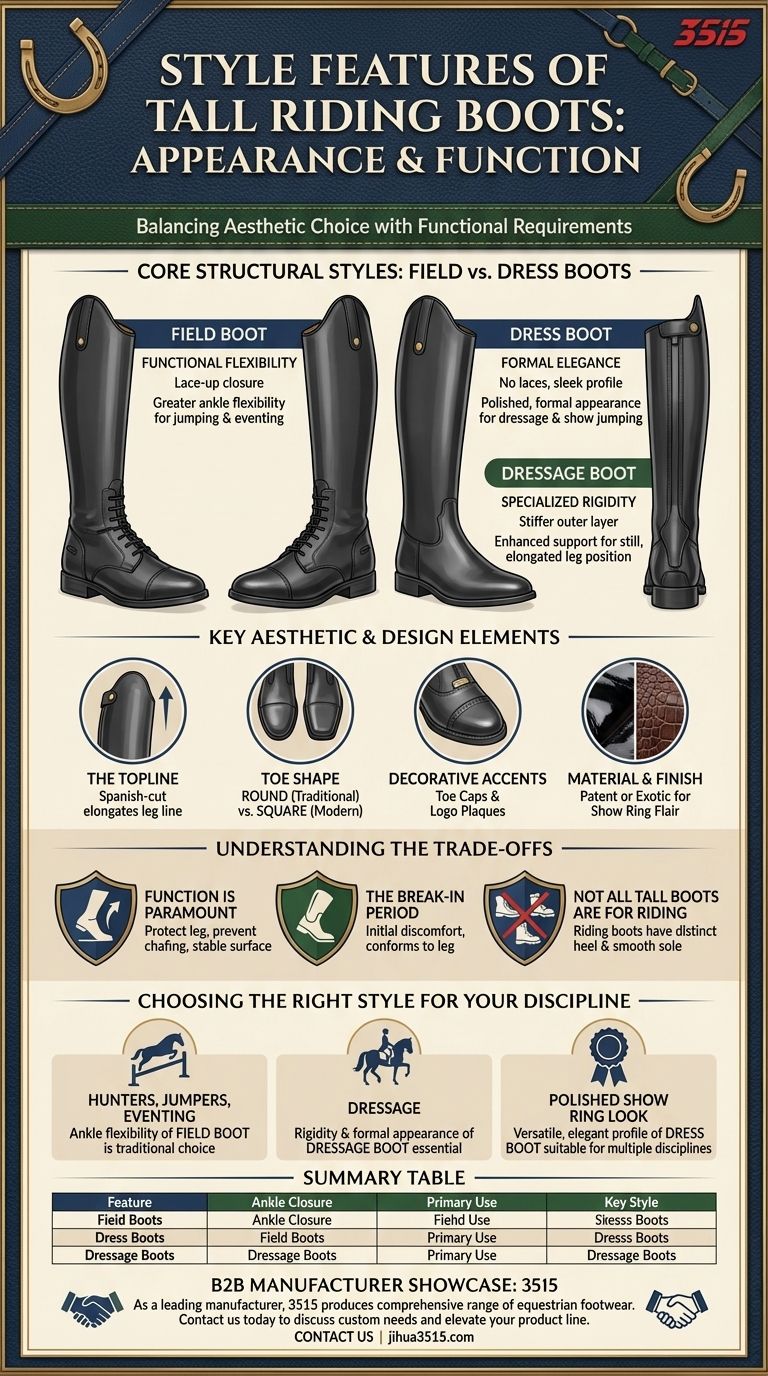
Core Structural Styles: Field vs. Dress Boots
The most significant style difference in tall boots is the distinction between field boots and dress boots. This choice is primarily dictated by your riding discipline.
The Functional Flexibility of Field Boots
Field boots are easily identified by the lace-up closure over the instep.
This feature provides greater ankle flexibility, which is essential for riders who use a shorter stirrup length, such as those in jumping, eventing, and hunt seat disciplines.
The Formal Elegance of Dress Boots
Dress boots present a smooth, sleek, and traditional profile with no laces at the ankle.
Their polished and formal appearance makes them the standard for dressage and is also a popular choice for show jumpers seeking a classic look.
The Specialized Rigidity of Dressage Boots
While technically a type of dress boot, dressage boots are worth noting separately. They are constructed with a much stiffer outer layer to provide enhanced support and encourage a still, elongated leg position—a key goal in the discipline of dressage.
Key Aesthetic & Design Elements
Beyond the core type, several smaller features define a boot's final look and feel, allowing for personal expression within the bounds of tradition.
The Topline: Creating a Longer Leg Line
The topline is the very top edge of the boot. A contoured or "Spanish-cut" topline is higher on the outside of the leg, creating a graceful, flattering line that visually elongates the rider's leg.
Toe Shape: Round vs. Square
The shape of the toe is largely a matter of fashion and personal preference. A round toe offers a very traditional look, while a square toe provides a more modern and updated appearance.
Decorative Accents: Toe Caps and Logos
A toe cap is a stitched piece of leather across the toe box. This is a classic, decorative touch that adds a layer of refinement to the boot's design. Small logo plaques are also common branding elements.
Material and Finish: Adding Show Ring Flair
For riders looking to stand out, boots can incorporate patent leather, exotic textures, or other decorative touches, particularly on the topline. These elements add a unique flair for the show ring while maintaining the boot's core function.
Understanding the Trade-offs
Choosing a boot involves balancing aesthetics with practical considerations that impact your comfort and performance.
Function Is Paramount
While style is important, a tall boot's primary purpose is to protect your lower leg, prevent chafing from the saddle, and provide a stable surface to enhance communication with your horse.
The Inevitable Break-in Period
Regardless of style, all new leather tall boots require a break-in period. Expect some initial discomfort as the stiff leather conforms to the unique shape of your leg and ankle.
Not All Tall Boots Are for Riding
It's crucial to distinguish riding boots from other tall boots like combat, tactical, or snow boots. Riding boots have specific features, like a distinct heel and smooth sole, designed for safety and function in the stirrup.
Choosing the Right Style for Your Discipline
Your decision should ultimately be guided by the requirements and traditions of your primary riding activity.
- If your primary focus is hunters, jumpers, or eventing: The ankle flexibility provided by a field boot is the traditional and most functional choice.
- If your primary focus is dressage: The rigidity and formal appearance of a specialized dressage boot are essential for proper support and presentation.
- If your primary focus is a polished show ring look: A classic dress boot offers a versatile and elegant profile suitable for multiple disciplines.
Ultimately, the right boot respects the traditions of your sport while reflecting your personal style.
Summary Table:
| Feature | Field Boots | Dress Boots | Dressage Boots |
|---|---|---|---|
| Ankle Closure | Lace-up for flexibility | No laces, sleek profile | No laces, extra stiff |
| Primary Use | Jumping, eventing | Versatile show ring | Dressage |
| Key Style | Functional, flexible | Formal, elegant | Rigid, supportive |
As a leading manufacturer, 3515 produces a comprehensive range of equestrian footwear for distributors, brand owners, and bulk clients. Whether you need custom field boots with lace-up closures or elegant dress boots for the show ring, our production capabilities cover all types of riding boots. Contact us today to discuss your specific needs and elevate your product line with quality craftsmanship. Get in touch with our team!
Visual Guide
Related Products
- Durable High-Ankle Tactical Boots Wholesale Manufacturer for Custom & Bulk Orders
- Durable High-Ankle Tactical Boots for Wholesale & Custom Manufacturing
- Durable Leather High-Ankle Tactical Boots for Wholesale & Custom Manufacturing
- Wholesale High-Traction Camo Boots - Custom Manufacturer for Brands
- Wholesale Tactical Boots High-Traction & Reflective for Bulk & Brand Orders
People Also Ask
- What specialized protections do tactical boots offer? Maximize Endurance with High-Performance Footwear
- How do tactical boots protect against injuries? Discover the Integrated Safety System
- What are the ideal use cases for tactical boots? Empower Your Performance in Demanding Scenarios
- Can tactical boots be stylish for everyday wear? Yes, with the right styling and features.
- What are the primary benefits of wearing tactical boots for everyday use? Get All-Day Comfort & Durability


















