
At their core, roper boots are a modern, practical evolution of the classic cowboy boot. They are specifically designed for comfort and versatility, featuring a shorter shaft, a low and flat "walking" heel, and a rounded toe. This design makes them exceptionally well-suited for individuals who need to transition frequently between walking on the ground and riding on horseback.
The essential difference is this: traditional cowboy boots are optimized for being in the saddle, while roper boots are a hybrid designed for both walking comfort and riding functionality. This makes them a more practical choice for daily wear and all-around ranch work.
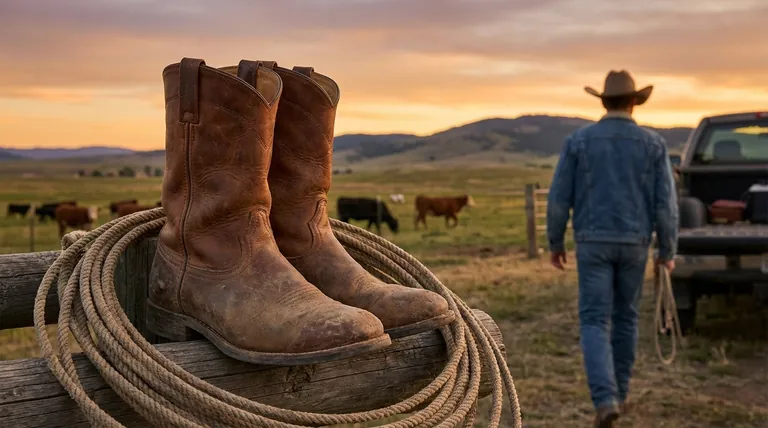
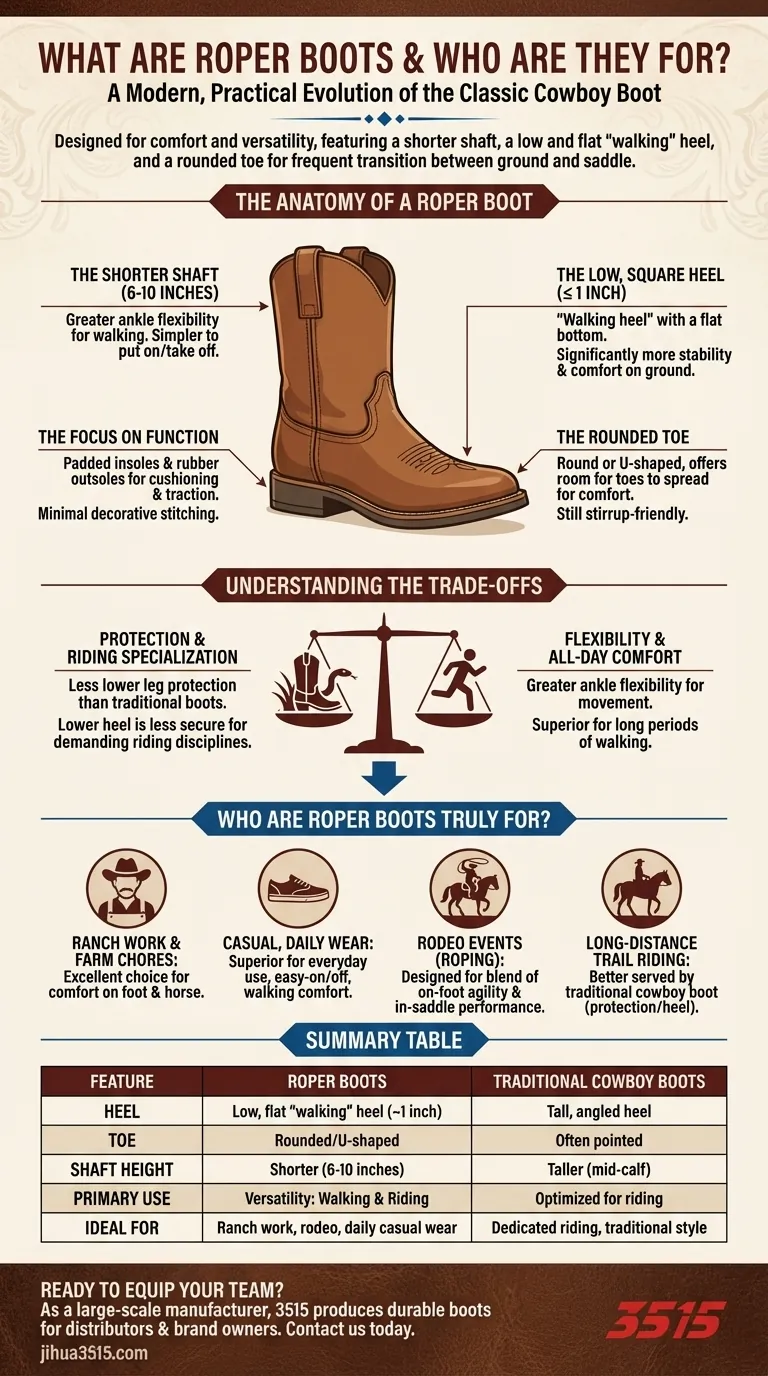
The Anatomy of a Roper Boot
The design of a roper boot is a direct response to the needs of rodeo calf ropers, who must be able to run, dismount, and ride with equal agility. Each feature serves a distinct, functional purpose.
The Low, Square Heel
The most defining feature is the heel, which is typically one inch or less and has a square, flat bottom. This is often called a "walking heel."
This design provides significantly more stability and comfort when walking on flat ground compared to the taller, angled heel of a traditional cowboy boot.
The Rounded Toe
Roper boots feature a round or U-shaped toe. This shape offers more room for your toes to spread out naturally.
The primary benefit is comfort during long periods of walking, but it's still tapered enough to slide easily into a stirrup without snagging.
The Shorter Shaft
Unlike the tall shafts of classic cowboy boots that can reach mid-calf, ropers have a shorter shaft, typically between 6 and 10 inches.
This lower height allows for greater ankle flexibility, making it easier to run or work on foot. It also makes them simpler to put on and take off.
The Focus on Function
Many roper boots include features like padded insoles and rubber outsoles for enhanced cushioning and traction.
They often have minimal decorative stitching, prioritizing practical performance over ornate, traditional aesthetics.
Understanding the Trade-offs
Choosing a roper boot involves a clear set of compromises. While they excel in versatility, they may not be the optimal choice for every specific task.
Protection vs. Flexibility
The shorter shaft that makes ropers comfortable for walking offers less protection for your lower leg against brush, snakes, or rubbing against a saddle compared to a traditional cowboy boot.
Riding Specialization vs. All-Day Comfort
The taller, angled heel of a traditional cowboy boot is superior for locking your foot securely into a stirrup, especially during demanding riding disciplines. The lower heel of a roper is functional for riding but doesn't provide the same level of security.
Style vs. Utility
While highly practical, some may find the simple, functional appearance of a roper boot less striking than the iconic silhouette of a classic, ornately stitched cowboy boot.
Who Are Roper Boots Truly For?
Your ideal boot depends entirely on how you plan to use it. The roper is not a universal solution, but it is the perfect choice for a specific user.
- If your primary focus is ranch work or farm chores: Ropers are an excellent choice, as they provide the comfort for hours on your feet with the capability to hop on a horse when needed.
- If your primary focus is casual, daily wear: The walking comfort, easy-on/easy-off design, and subtle Western style make ropers a superior option for everyday use.
- If your primary focus is rodeo events (specifically roping): This boot was designed for you, offering the perfect blend of on-foot agility and in-saddle performance.
- If your primary focus is dedicated, long-distance trail riding: You may be better served by a traditional cowboy boot with a taller shaft for protection and a higher heel for stirrup security.
Ultimately, the roper boot is the definitive choice for anyone who needs a reliable, comfortable boot that performs well both on the ground and in the saddle.
Summary Table:
| Feature | Roper Boots | Traditional Cowboy Boots |
|---|---|---|
| Heel | Low, flat "walking" heel (~1 inch) | Tall, angled heel |
| Toe | Rounded/U-shaped for comfort | Often pointed |
| Shaft Height | Shorter (6-10 inches) | Taller (reaches mid-calf) |
| Primary Use | Versatility: Walking & Riding | Optimized for riding |
| Ideal For | Ranch work, rodeo, daily casual wear | Dedicated riding, traditional style |
Ready to equip your team or brand with high-quality, versatile footwear?
As a large-scale manufacturer, 3515 produces a comprehensive range of durable boots for distributors, brand owners, and bulk clients. Whether you need reliable roper boots for work or other types of footwear, we have the production capabilities to meet your demand.
Contact us today to discuss your footwear needs and discover how we can add value to your supply chain.
Visual Guide
Related Products
- Durable Goodyear Welt Leather Work Boots for Wholesale & Private Label
- Factory Direct Wholesale Rain Boots Durable Waterproof & Fully Customizable
- Durable High-Ankle Tactical Boots for Wholesale & Custom Manufacturing
- Premium Wholesale Tactical Style Safety Shoes Boots with Quick Lacing
- Durable Leather Work Boots Wholesale Manufacturer & Custom Factory
People Also Ask
- What is the difference between full-grain and top-grain leather? Premium Material Guide for Boot Manufacturers
- What are the advantages of leather as an upper material for work boots? Unmatched Durability & Custom Comfort
- Why is it important to waterproof leather work boots? Protect Your Investment and Performance
- How should new leather work boots be broken in? A Guide to Comfort and Durability
- What are the advantages of leather uppers in work boots? Unmatched Durability & Protection

















