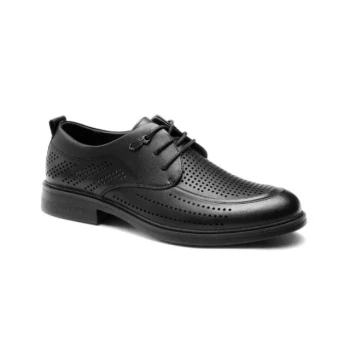
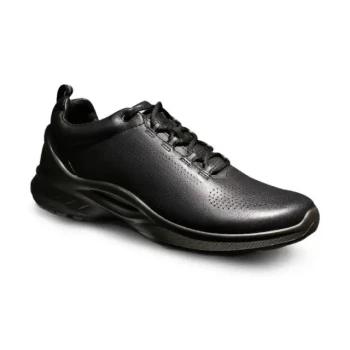
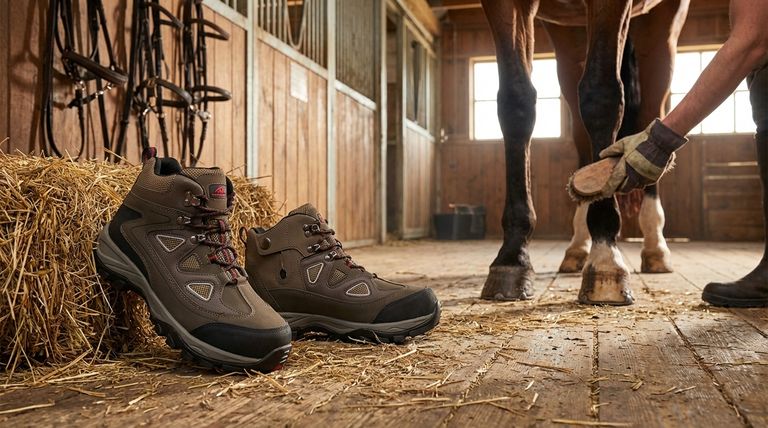
In the world of equestrian gear, riding shoes are a versatile, ankle-high footwear option designed primarily for comfort and utility around the stable. They feature a thick, protective sole and are often padded against the cold, making them an ideal choice for daily horse care and groundwork.
Riding shoes are the practical workhorse of equestrian footwear, perfect for stable chores and casual riding. However, their lack of leg protection and formal recognition means they are unsuitable for competitive events, where traditional riding boots are required.
The Core Purpose of Riding Shoes
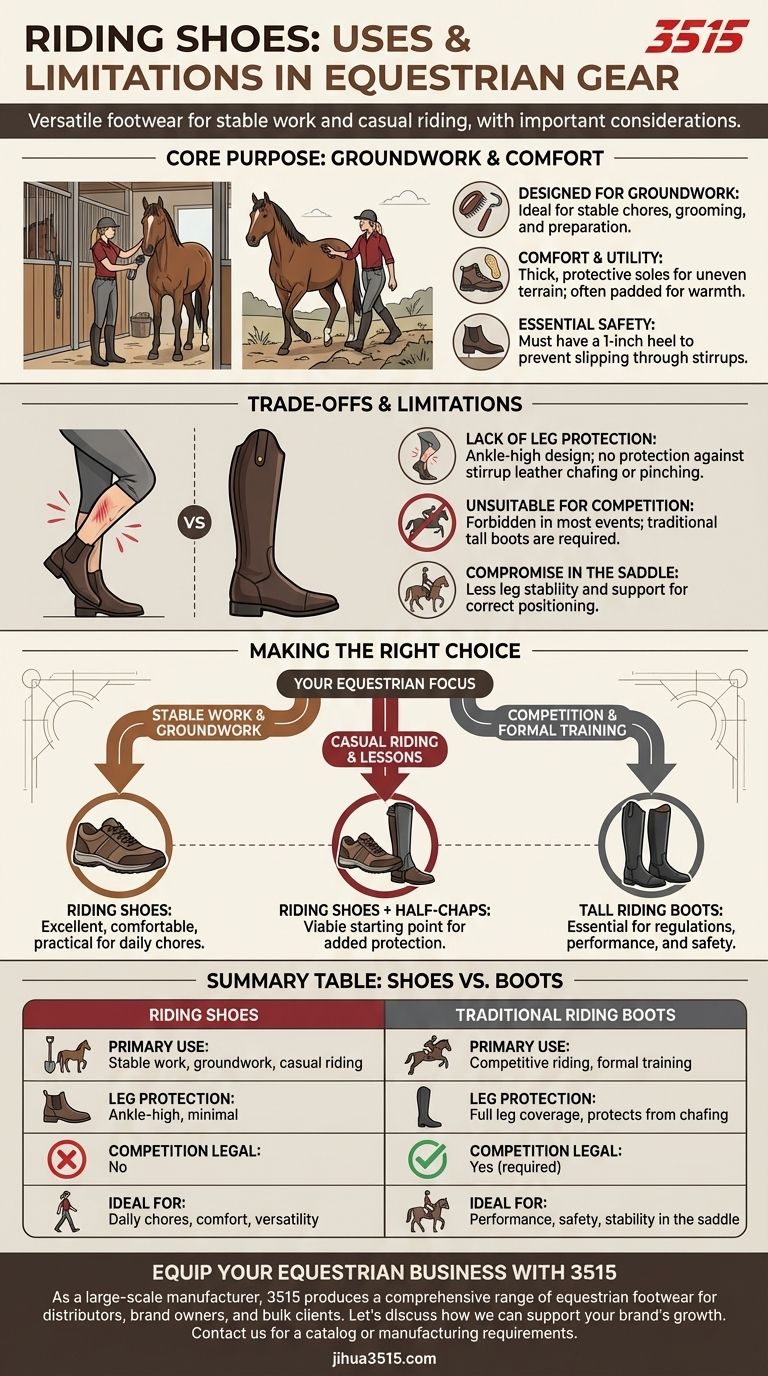
Designed for Groundwork and Comfort
Riding shoes excel in tasks performed on the ground. Their primary function is to provide comfort and protection during stable work, grooming, and preparing a horse for a ride.
The thick sole helps protect the foot from the uneven ground of a barn or paddock and provides a barrier if a horse accidentally steps on your foot.
Versatility for Everyday Use
Many riders appreciate that these shoes can be worn for activities beyond the barn, such as running errands after a ride, without the inconvenience of changing out of tall boots.
The internal padding often found in riding shoes adds a layer of insulation, making them particularly useful for working in cold or damp conditions.
Essential Safety Features
Like all proper equestrian footwear, a riding shoe must have a distinct heel of about one inch. This feature is critical for safety, as it prevents the rider's foot from accidentally slipping all the way through the stirrup.
Understanding the Trade-offs and Limitations
Lack of Lower Leg Protection
The most significant limitation of a riding shoe is its ankle-high design. It offers no protection for the rider's lower leg against chafing from the stirrup leathers or pinching against the saddle.
This lack of coverage can lead to discomfort and bruising, especially during longer or more intensive riding sessions.
Unsuitability for Competition
Riding shoes are explicitly forbidden in virtually all forms of equestrian competition.
Show regulations mandate the use of traditional tall boots (or paddock boots with matching half-chaps in some disciplines) for reasons of safety, tradition, and formal presentation.
A Compromise in the Saddle
While suitable for a light hack or a casual lesson, riding shoes do not provide the same level of leg stability and support as a tall boot. A proper boot helps keep the rider's lower leg still and encourages a correct, effective leg position.
Making the Right Choice for Your Needs
Choosing the right footwear is about matching the tool to your specific equestrian activities.
- If your primary focus is stable work and groundwork: Riding shoes are an excellent, comfortable, and highly practical choice for daily chores.
- If your primary focus is casual riding or weekly lessons: Riding shoes are a viable starting point, but consider pairing them with half-chaps to provide the necessary leg protection.
- If your primary focus is competition or formal training: You must invest in a proper pair of tall riding boots to meet regulations and ensure optimal performance and safety.
Ultimately, understanding the role of each type of footwear ensures your safety, comfort, and success in and out of the saddle.
Summary Table:
| Feature | Riding Shoes | Traditional Riding Boots |
|---|---|---|
| Primary Use | Stable work, groundwork, casual riding | Competitive riding, formal training |
| Leg Protection | Ankle-high, minimal protection | Full leg coverage, protects from chafing |
| Competition Legal | No | Yes (required) |
| Ideal For | Daily chores, comfort, versatility | Performance, safety, stability in the saddle |
Ready to Equip Your Equestrian Business?
As a large-scale manufacturer, 3515 produces a comprehensive range of equestrian footwear for distributors, brand owners, and bulk clients. Whether you need durable riding shoes for the stable or competition-ready tall boots, our production capabilities ensure high-quality, safe, and comfortable footwear for every rider's needs.
Let's discuss how we can support your brand's growth. Contact our team today to request a catalog or discuss your manufacturing requirements.
Visual Guide
Related Products
- Advanced KPU Athletic Safety Shoe with Steel Toe Cap Anti-Slip Rotary Lacing System
- Wholesale Durable Camouflage Canvas Shoes with High-Traction Cleated Rubber Sole
- Wholesale Breathable Perforated Leather Derby Shoes with Modern Comfort Sole
- Wholesale Modern Perforated Leather Derby Shoes with Chunky Sole for Custom Branding
- Premium KPU Athletic Safety Shoes for Wholesale
People Also Ask
- What are the key differences between steel toe and composite toe caps? Choose the Right Safety for Your Job
- What impact do steel toe caps have on toe skin health? Prevent Friction and Pressure in Your Safety Shoes
- What are the primary protective functions of safety shoes with steel toes in the automotive repair industry?
- What type of safety shoe is recommended for workers exposed to heavy machinery? Steel Toe Boots for Ultimate Protection
- How does defining specific friction interface models in FEA assist in predicting safety shoe toe cap failure modes?