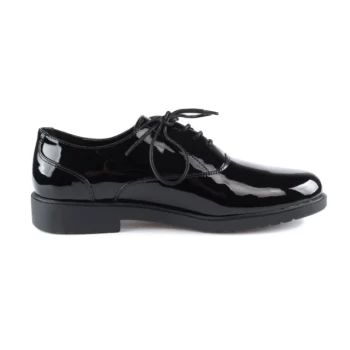
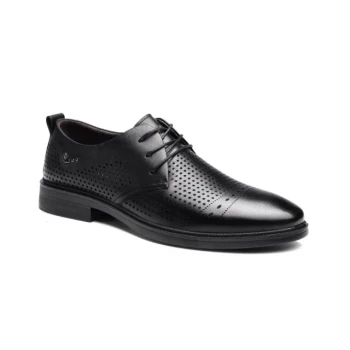
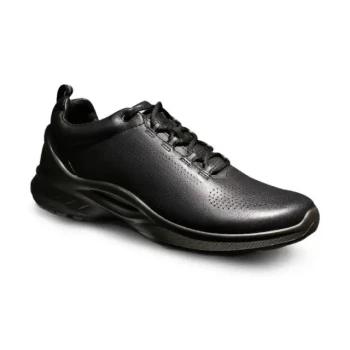
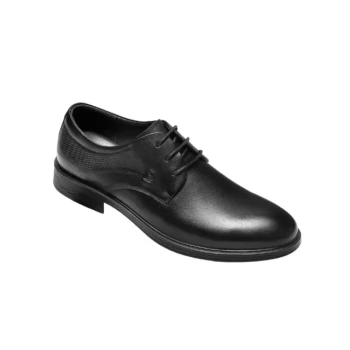
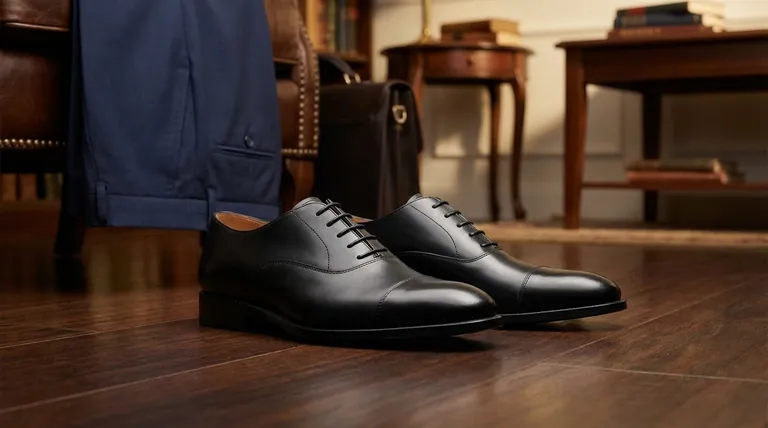
At its core, an Oxford is a classic dress shoe defined by its unique lacing system. Its defining characteristic is the "closed lacing," where the eyelet tabs are stitched underneath the vamp (the front part of the shoe), creating a clean, sleek, and formal silhouette.
The single most important feature that makes a shoe an Oxford is its closed lacing system. This construction is not merely a stylistic choice; it is the source of the shoe's inherent formality and elegance.
The Defining Characteristic: Closed Lacing
The concept of "closed lacing" is the absolute key to identifying an Oxford. It is the anatomical difference that separates it from other dress shoes like the Derby.
What "Closed Lacing" Means
On an Oxford, the two leather flaps that hold the shoelace eyelets (known as the quarters) are sewn together at the bottom, directly underneath the front section of the shoe.
When the shoe is tied, these flaps are pulled together, creating a small, V-shaped gap at the top of the tongue. This makes the entire lacing mechanism appear as an integrated, seamless part of the shoe's upper.
The Impact on Formality
This construction method results in a smooth, uninterrupted profile. The lack of visible, separate flaps gives the Oxford a refined and minimalist appearance, making it the most formal style of dress shoe.
Its clean lines are designed to complement the sharp tailoring of a suit, creating a cohesive and polished look from head to toe.
Common Features and Variations
While the lacing system is the only non-negotiable trait, most Oxfords share other common characteristics and come in several variations.
The Toe Cap
Many classic Oxfords feature a toe cap, which is an additional layer of leather stitched over the toe box. This is a highly traditional and popular style, often referred to as a "cap-toe Oxford."
Material and Color
The most formal Oxfords are typically made from polished black leather. However, variations exist for different occasions.
One notable example mentioned in the U.S. is the White Buck, an Oxford made from white buckskin. This specific style is traditionally paired with lighter, seasonal suit fabrics like seersucker or linen for summer events.
A Note on Terminology
In the United States, the Oxford is sometimes referred to by its traditional name, the Balmoral. While the terms can be used interchangeably, "Oxford" is the more globally recognized name.
Understanding the Context: When to Wear Oxfords
The sleek design of the Oxford makes it the undisputed standard for professional and formal attire. Its level of formality, however, can vary based on its specific details.
The Standard for Suits
For business environments, weddings, and any event requiring a suit, the Oxford is the default choice. A black or dark brown leather cap-toe Oxford is the most reliable and appropriate option.
A Spectrum of Formality
Not all Oxfords are reserved for the boardroom. The material, color, and detailing can dress the shoe down. A suede Oxford in a lighter color, for example, pairs well with smart trousers or chinos for a less formal setting.
The White Buck serves as a perfect example of this principle, taking the formal Oxford structure and adapting it for a specific, more relaxed context like a summer party.
Making the Right Choice for Your Goal
Selecting the correct Oxford depends entirely on the context and the rest of your attire.
- If your primary focus is maximum formality (business, black-tie optional): A polished black leather cap-toe Oxford is the essential, non-negotiable choice.
- If your primary focus is versatility with suits: A dark brown or oxblood leather Oxford provides a stylish alternative that pairs well with navy, grey, and charcoal suits.
- If your primary focus is seasonal or smart-casual wear: Consider Oxfords in alternative materials like suede or buckskin, as these are better suited for less formal occasions.
Recognizing the Oxford's closed lacing system is the first step to mastering formal footwear.
Summary Table:
| Feature | Description | Key Takeaway |
|---|---|---|
| Lacing System | Closed lacing; eyelet tabs stitched under the vamp. | The defining feature that creates a sleek, formal silhouette. |
| Formality Level | Highest formality among dress shoes. | Ideal for business, weddings, and events requiring a suit. |
| Common Variations | Cap-toe, different materials (leather, suede, buckskin). | Versatility exists; material and color adjust the formality. |
| Best For | Professional attire, formal events, polished looks. | The standard choice to complement sharp tailoring. |
Ready to Stock the Perfect Oxfords for Your Customers?
As a large-scale manufacturer, 3515 produces a comprehensive range of formal footwear, including classic Oxfords in various styles, materials, and colors. We equip distributors, brand owners, and bulk clients with high-quality dress shoes that meet the demands of any market.
Partner with us to offer your customers:
- Authentic Craftsmanship: Oxfords built with the precise closed lacing system that defines the style.
- Extensive Variety: From traditional black cap-toe to versatile suede options.
- Reliable Volume Production: Consistent quality and supply for your business needs.
Elevate your footwear collection with 3515. Contact us today to discuss your requirements and request a catalog.
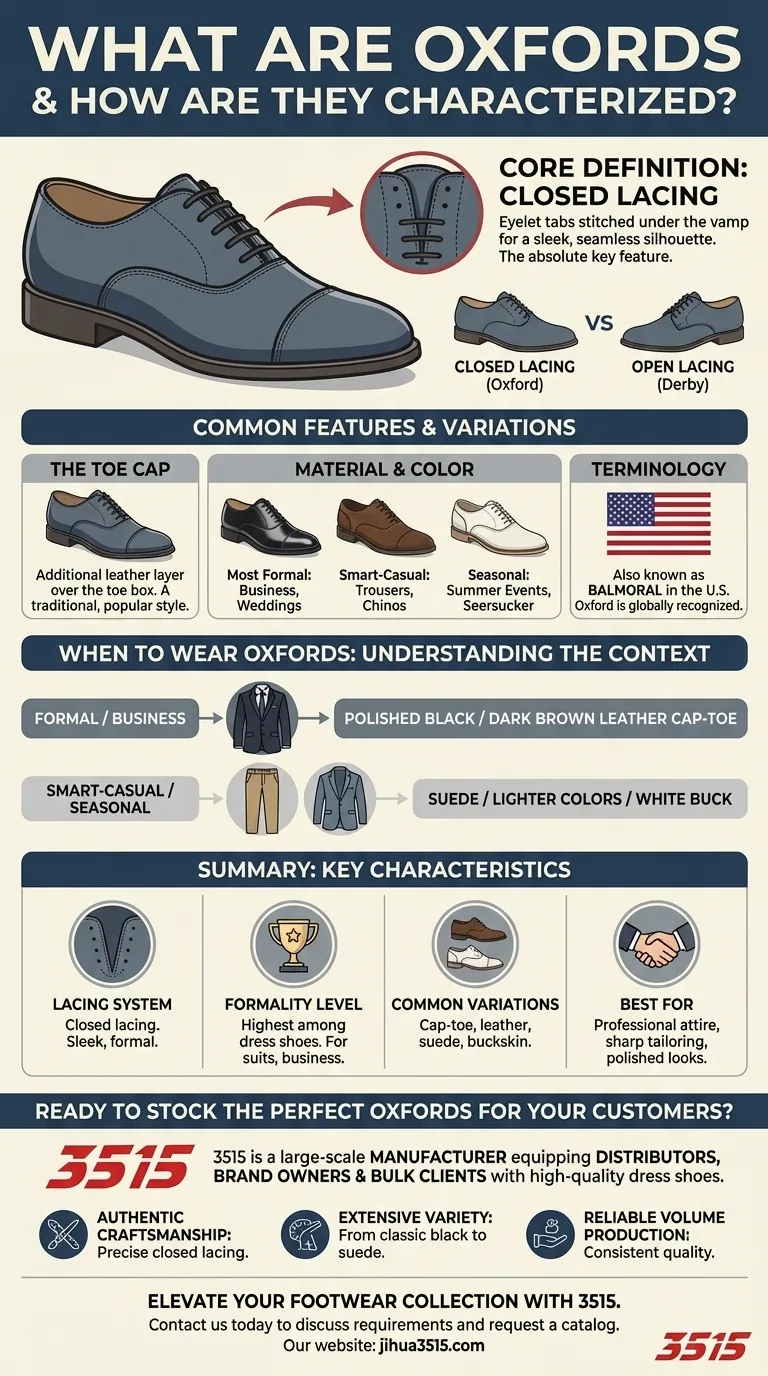
Visual Guide
Related Products
- Wholesale Patent Oxford Dress Shoes | Custom & Bulk Manufacturing
- Wholesale Leather Derby Shoes Manufacturer | Customizable Business & Dress Footwear
- Classic Leather Derby Dress Shoes Wholesale & Custom Manufacturing
- Wholesale Breathable Perforated Leather Derby Dress Shoes for Custom Brands
- Wholesale Perforated Comfort Dress Shoes | Custom Derby Shoe Manufacturer
People Also Ask
- What are the key characteristics of Oxford dress shoes? A Guide to Timeless Formal Footwear
- How do Oxfords and Derbies differ in terms of lacing and formality? A Guide to Choosing the Right Shoe
- What is the origin of the Oxford shoe? From 1800s University Boots to Modern Elegance
- How do Oxford Shoes differ from other casual shoes? The Ultimate Guide to Lacing & Formality
- What makes Oxford shoes suitable for business casual settings? Master the Art of Professional Style