At their core, motocross boots are purpose-built protective equipment specifically designed for the high-impact, unpredictable environment of off-road dirt bike riding. Their construction prioritizes shielding the rider's feet, ankles, and shins from severe injury over comfort or versatility.
Motocross boots are engineered for maximum rigidity and impact absorption, making them the definitive choice for safety on dirt tracks and trails. This specialized focus on protection means they intentionally sacrifice the flexibility and comfort required for walking or other forms of riding.
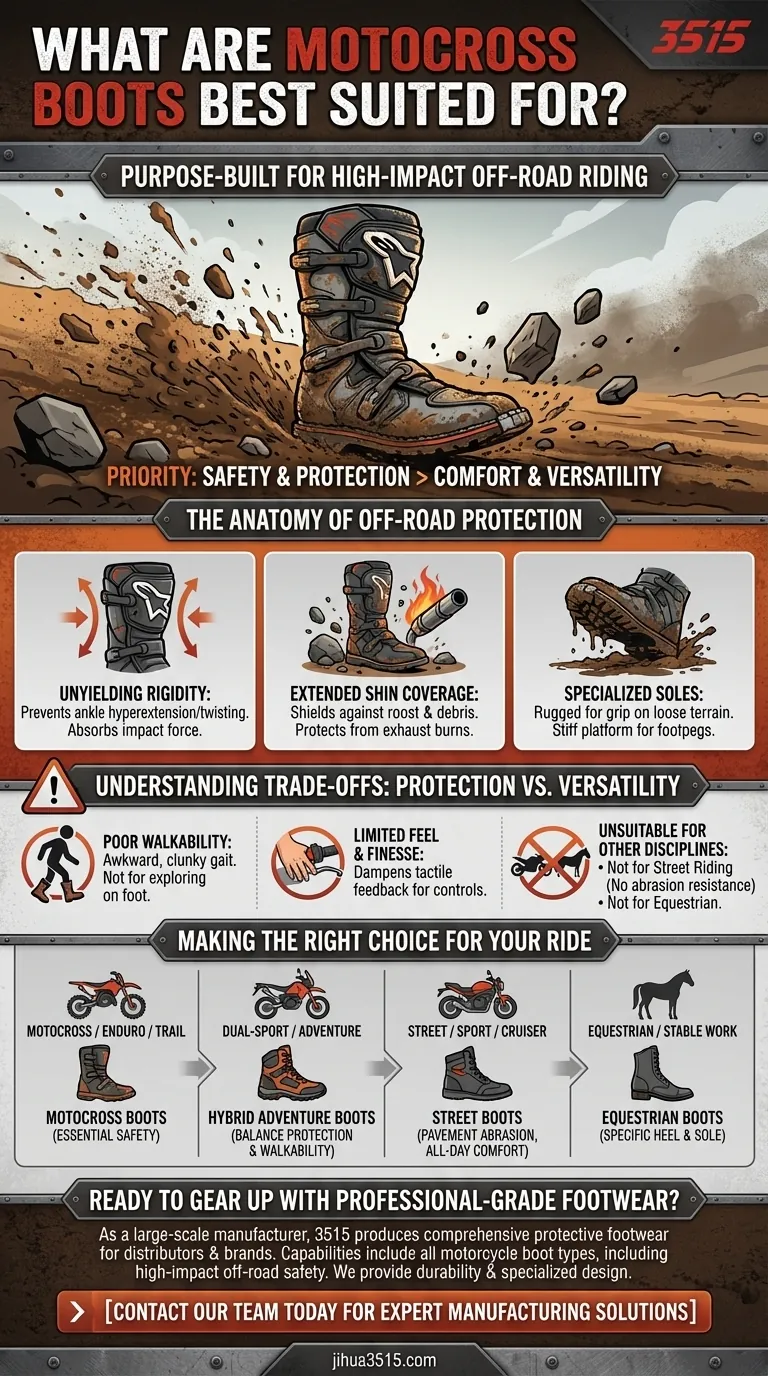
The Anatomy of Off-Road Protection
To understand what motocross boots are best for, we must first look at how their design directly addresses the unique dangers of riding in dirt, mud, and on uneven terrain. Each feature serves a critical safety function.
Unyielding Rigidity
A motocross boot's primary feature is its stiff, armored structure, often made of hard plastics and reinforced leather. This exoskeleton is designed to prevent hyperextension, hyperflexion, and torsional twists of the ankle during a crash.
It also absorbs and dissipates the force from direct impacts with rocks, other bikes, or the ground itself, which could otherwise easily lead to broken bones.
Extended Shin Coverage
The tall design extends high up the calf for a reason. It provides a crucial shield for the shin against flying rocks and debris (roost) kicked up by other bikes.
This height also protects the leg from burns from a hot exhaust pipe and adds another layer of support against twisting injuries.
Specialized Soles
The soles of motocross boots are thick, rugged, and stiff. This design provides excellent grip on muddy or loose surfaces when a rider needs to put a foot down for stability.
The stiffness also ensures a solid platform on the bike's footpegs, preventing the arch from flexing uncomfortably over long rides or hard landings.
Understanding the Trade-offs: Protection vs. Versatility
The single-minded focus on protection comes with significant trade-offs. Understanding these limitations is key to knowing when a motocross boot is the wrong tool for the job.
Poor Walkability
Motocross boots are notoriously difficult and uncomfortable to walk in. The extreme ankle rigidity and stiff sole that protect you on the bike create an awkward, clunky gait on foot.
They are not designed for walking any significant distance, making them unsuitable for activities that involve getting on and off the bike frequently to explore.
Limited Feel and Finesse
The thick, rigid construction significantly dampens the rider's feel for the rear brake and gear shifter. While experienced riders adapt, this lack of tactile feedback can be challenging for beginners or for riders who value precise control.
Unsuitability for Other Disciplines
Using motocross boots for street riding is not recommended. They lack the specific abrasion resistance needed for sliding on pavement and their bulky soles can feel clumsy on street bike controls.
Likewise, they are completely inappropriate for equestrian activities, where a specific heel and sole design are needed for safety in a stirrup.
Making the Right Choice for Your Ride
Selecting the correct footwear depends entirely on the environment you plan to ride in.
- If your primary focus is motocross, enduro, or aggressive trail riding: Motocross boots are the essential and non-negotiable choice for safety.
- If your primary focus is dual-sport or adventure riding: Consider hybrid adventure boots, which blend the protection of a motocross boot with the comfort and walkability needed for long-distance touring.
- If your primary focus is street, sport, or cruiser riding: You need dedicated street boots designed for pavement abrasion and all-day comfort.
- If your primary focus is horse riding or stable work: You must use proper equestrian boots designed specifically for that activity.
Ultimately, matching your boot to your environment is the most critical decision you can make for both safety and enjoyment.
Summary Table:
| Feature | Purpose | Benefit |
|---|---|---|
| Unyielding Rigidity | Prevents ankle twists and absorbs impacts | Reduces risk of fractures and severe sprains |
| Extended Shin Coverage | Shields against debris and hot exhaust pipes | Protects the lower leg from common off-road hazards |
| Specialized Soles | Provides grip on loose terrain and a stable platform on footpegs | Enhances control and stability in mud and dirt |
| Key Limitation | Poor for walking and other riding disciplines | Best suited exclusively for motocross and trail riding |
Ready to Gear Up with Professional-Grade Footwear?
As a large-scale manufacturer, 3515 produces a comprehensive range of protective footwear for distributors, brand owners, and bulk clients. Our production capabilities encompass all types of motorcycle boots, including the high-impact, rigid construction required for true off-road safety.
We provide the durability and specialized design your customers demand. Let's discuss your specific needs and how we can support your business with reliable, high-quality footwear.
Contact our team today for expert manufacturing solutions.
Visual Guide
Related Products
- Durable Moc-Toe Wedge Work Boots | Wholesale Manufacturing for Brands
- Wholesale Tactical Boots High-Traction & Reflective for Bulk & Brand Orders
- Durable Spiked Camouflage Boots Wholesale & Factory Production
- Wholesale Lightweight Tactical Boots Custom Manufacturer for Desert & Combat Use
- Durable Goodyear Welt Leather Work Boots for Wholesale & Private Label
People Also Ask
- How can you achieve a Classic Workwear Vibe with moc toe boots? Build a Rugged, Authentic Style
- What types of outfits can moc toe boots be worn with? Versatile Style Guide
- How did moc toe boots originate? A Legacy of Workwear Durability and Style
- How can moc toe boots be styled for casual wear? Master Rugged & Modern Looks
- What distinguishes moc toe boots? The Ultimate Guide to Unmatched Comfort & Style