Okay, here's my plan. I'm taking on this task as a senior advisor, so I need to make this definitive. First, I need to get into the user's head. They likely want a quick answer to "What are they, and who needs them?", but the real question is "How do they work, are they really safe, and how do I pick the right ones?" I'll address that right away.
I've got the basics from these references – the non-conductive sole, the electrical shock protection, the different work boot features – but I can do a lot better. I'll start with a concise definition. I'll make it clear that these are PPE, and the target audience is anyone dealing with electrical hazards.
Here's the key: it's secondary protection. I have to drive that home. It’s an insulator, not a cure-all. I'll make that a core takeaway. Then, I'll dive into the mechanics. How does that non-conductive sole actually work? I'll explain the role of rubber and polyurethane, and emphasize that no metal can penetrate the sole and make it conductive. And I'll clarify the safety toe. A steel toe doesn't negate the EH rating because it's encased.
I'll then address the "Who" question directly, with clear examples: electricians, maintenance crews, anyone near live wires. But I must address the limitations. Water? Huge factor. Wear and tear? Crucial. Secondary protection? Underline it! That's how I build trust. And, importantly, I'll differentiate between EH boots and SD boots. They are not the same thing, and mixing them up could be dangerous!
Finally, I'll provide actionable advice. If you're an electrician, it's non-negotiable. For general industry, it's a good precaution. For a safety manager, it's based on a risk assessment. I want the user to leave feeling empowered, confident they've made the right choice for their safety. And I’ll conclude by reminding the user that it’s all about safety in the workplace.
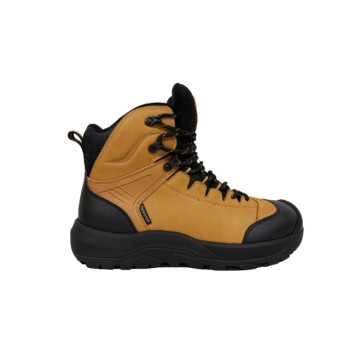
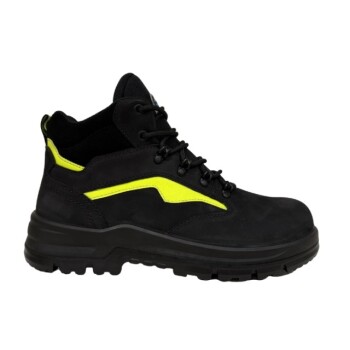
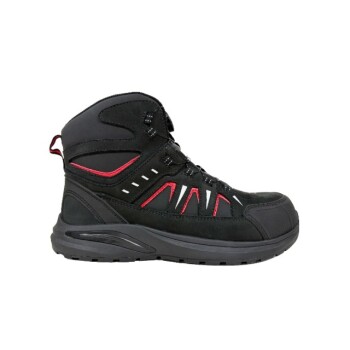
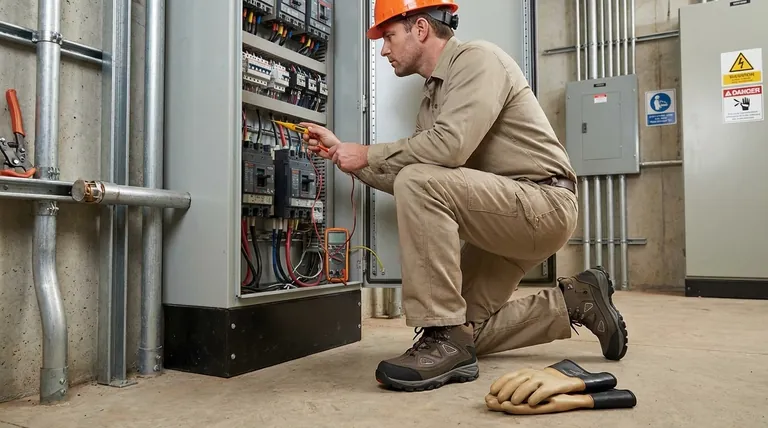
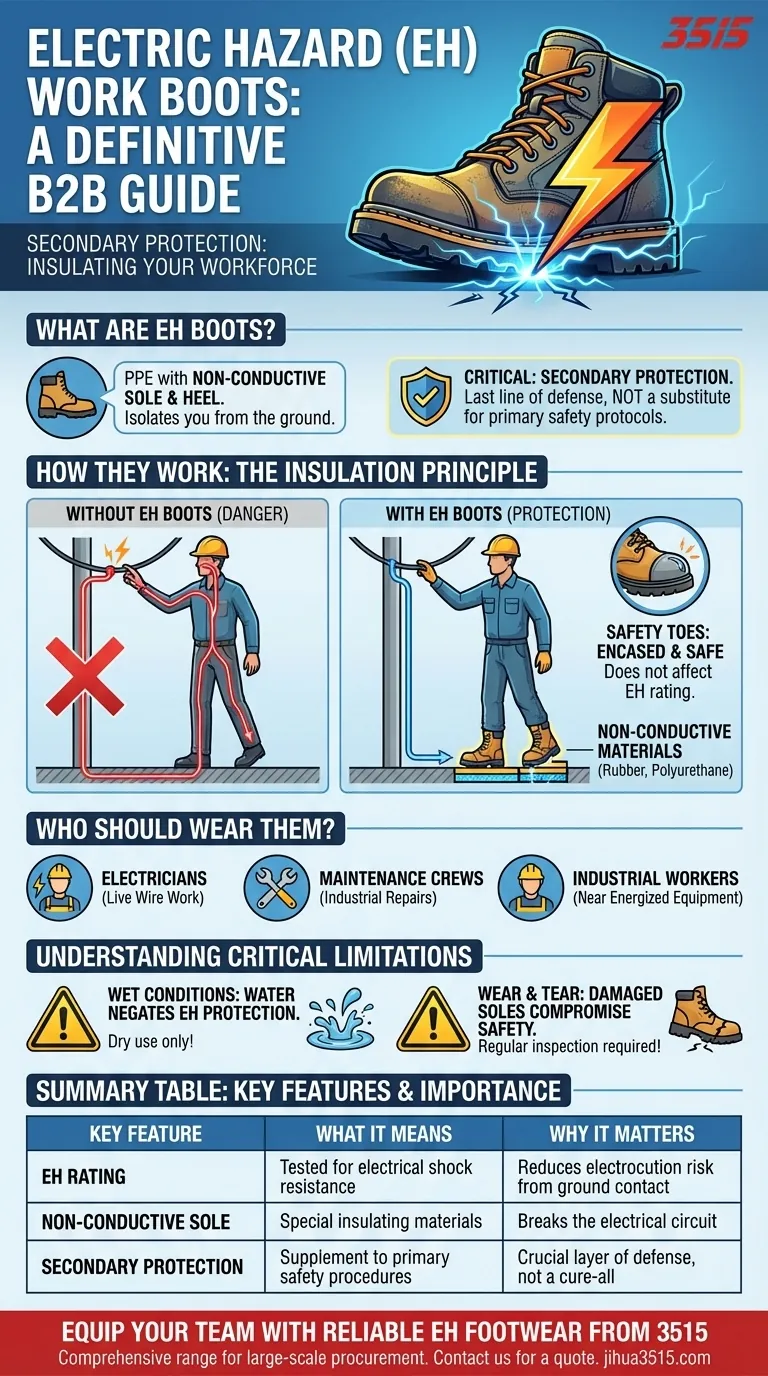
I will make sure the article is easy to read, with bold headings, short paragraphs, and a clear structure. I'll review everything for clarity, tone, and accuracy. This guide will be thorough, reliable, and, most importantly, useful. At its core, an Electric Hazard (EH) work boot is a piece of personal protective equipment with a non-conductive sole and heel designed to insulate you from the ground. This construction significantly reduces your risk of receiving a severe electric shock if you step on a live electrical circuit. They are essential for electricians, industrial maintenance workers, and anyone who works in an environment where accidental contact with energized conductors is a possibility.
The crucial insight is that EH-rated boots are a secondary source of protection. They are your last line of defense against electrocution from ground contact, not a substitute for proper safety procedures like de-energizing and locking out circuits.
How Electric Hazard (EH) Protection Works
To understand the value of EH boots, you must first understand the danger they mitigate. An electric shock occurs when your body becomes part of a complete electrical circuit, allowing current to flow through it.
The Principle of Insulation
The human body is a conductor of electricity. If you touch a live wire while also being in contact with the ground, you complete a circuit, and the current will use your body as its path.
EH boots work by breaking this circuit. Their soles are made from materials that do not conduct electricity easily, effectively isolating your feet from the ground and preventing the circuit from being completed.
The Role of Non-Conductive Materials
The effectiveness of EH boots comes from the specific materials used in their construction, typically special rubber or polyurethane compounds.
These materials are tested to resist the flow of electricity up to a specific voltage under dry conditions. It is also critical that no conductive materials, like nails, are used to attach the sole to the upper part of the boot, as this would compromise the insulation.
EH Boots and Safety Toes
Many EH boots feature a steel or composite safety toe for impact protection, which can cause confusion.
This is perfectly safe. The safety toe is fully encased within the non-conductive leather and sole of the boot. It does not touch the ground and does not create a path for electricity, leaving the boot's EH rating intact.
Understanding the Limitations and Pitfalls
Trusting your safety to any piece of equipment requires understanding its limits. EH boots are highly effective, but they are not infallible.
They Are Secondary Protection Only
Never rely on EH boots as your primary means of protection. Always follow established electrical safety protocols, such as Lockout/Tagout (LOTO), verifying circuits are de-energized, and using other appropriate PPE.
Wear and Tear Compromises Safety
The protective sole is the key component. If it becomes heavily worn, cut, or punctured by a nail, its insulating properties can be destroyed.
Regularly inspect your boots for damage. If the sole is compromised, the boots are no longer safe for electrical hazard protection and must be replaced.
Water Negates EH Protection
The EH rating is only valid in dry conditions. Water is a conductor of electricity.
If your boots become wet, or if you are standing in water, their ability to insulate you from the ground is severely diminished or completely eliminated.
Making the Right Choice for Your Goal
Selecting the right footwear is a critical safety decision based on a clear assessment of your daily work environment.
- If your primary focus is direct electrical work: Choose certified EH-rated boots as a mandatory part of your safety kit, and always use them in conjunction with other primary safety measures.
- If your primary focus is construction or industrial maintenance: Select EH-rated footwear as a crucial precaution against the risk of accidental contact with damaged wiring or energized equipment.
- If your primary focus is worksite safety management: Conduct a risk assessment to identify electrical hazards and mandate EH-rated boots for all personnel working in those areas.
Choosing the correct footwear is not just about compliance; it is a foundational step in controlling your personal safety in hazardous environments.
Summary Table:
| Key Feature | What It Means | Why It Matters |
|---|---|---|
| EH Rating | Boots are tested to provide electrical shock resistance. | Reduces the risk of electrocution from ground contact. |
| Non-Conductive Sole | Sole and heel are made of special rubber or polyurethane. | Insulates the wearer from the ground, breaking the electrical circuit. |
| Secondary Protection | Not a substitute for primary safety procedures like Lockout/Tagout. | Must be used alongside other safety measures for maximum protection. |
| Key Limitations | Protection is compromised by water, wear, and damage. | Requires regular inspection and must be used only in dry conditions. |
Ensure your team's safety with reliable EH-rated footwear from 3515.
As a large-scale manufacturer, we produce a comprehensive range of certified electric hazard work boots designed for the demands of electricians, industrial maintenance crews, and bulk procurement clients. Our boots combine critical EH protection with durability and comfort, supporting your commitment to workplace safety.
Ready to equip your workforce with trusted PPE? Contact our team today to discuss your requirements and receive a customized quote.
Visual Guide
Related Products
- Customizable Anti-Smash Safety Boots for Wholesale & Private Label Manufacturing
- Durable Moc-Toe Wedge Work Boots | Wholesale Manufacturing for Brands
- Wholesale Customizable Safety Boots Durable & Protective Footwear Manufacturing
- Durable Leather Moc Toe Work Boots for Wholesale & Custom Manufacturing
- Durable Leather Work Boots Wholesale Manufacturer & Custom Factory
People Also Ask
- What are the requirements of BS EN345 safety regulations for security guard safety boots? | EN ISO 20345 Guide
- What are the key performance benchmarks set by the EN ISO 20345 standard for safety boots? A Guide to Selecting the Right Protection
- What additional protections are defined by the EN ISO 20345 norm? Match Footwear to Specific Hazards
- How is compliance with the EN ISO 20345 standard certified? The Path to Independent Verification
- Why are industrial safety boots with steel toes necessary for machine operators? Essential Foot Protection for Safety