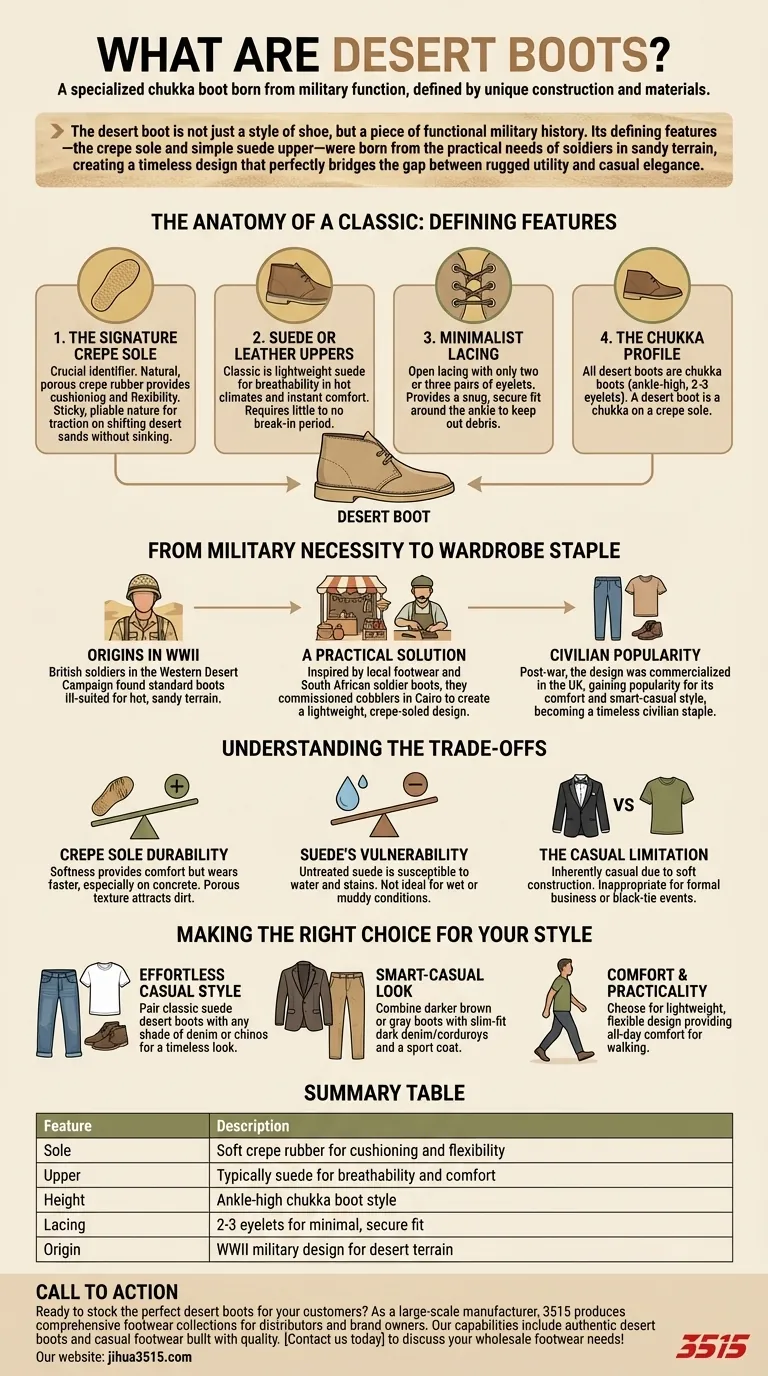
At its core, a desert boot is a specific type of chukka boot defined by its unique construction and materials. It is an ankle-high boot, most often made with suede uppers, featuring two or three pairs of eyelets for lacing, and distinguished by its signature sole made from a soft, gummy material known as crepe rubber.
The desert boot is not just a style of shoe, but a piece of functional military history. Its defining features—the crepe sole and simple suede upper—were born from the practical needs of soldiers in sandy terrain, creating a timeless design that perfectly bridges the gap between rugged utility and casual elegance.

The Anatomy of a Classic: Defining Features
To understand the desert boot, you must understand its constituent parts. Each element was chosen for a specific, practical purpose that has contributed to its enduring appeal.
The Signature Crepe Sole
The most crucial identifier of a true desert boot is its crepe rubber sole. This natural, porous rubber provides excellent cushioning and flexibility. Its slightly sticky, pliable nature was originally ideal for gaining traction on shifting desert sands without sinking.
Suede or Leather Uppers
While leather versions exist, the classic desert boot is made from lightweight suede. This material was favored for its breathability in hot climates and its comfort, requiring little to no break-in period compared to traditional stiff military boots.
Minimalist Lacing
Desert boots feature an open lacing system with only two or three pairs of eyelets. This minimalist design allows the boot to be tied snugly around the ankle, preventing sand and debris from getting inside while maintaining flexibility.
The Chukka Profile
All desert boots are a type of chukka boot, but not all chukka boots are desert boots. The term "chukka" refers to any ankle-high boot with this open, two-to-three eyelet lacing system. The desert boot is simply a chukka built on a crepe sole.
From Military Necessity to Wardrobe Staple
The desert boot's design wasn't conceived in a fashion house; it was engineered on the battlefield. Its history is key to understanding its function and form.
Origins in World War II
During the Western Desert Campaign of WWII, British soldiers found their standard-issue military boots to be heavy, stiff, and ill-suited for the hot, sandy environment. They sought a more practical alternative.
A Practical Solution
Soldiers noticed the comfortable, lightweight footwear worn by traders in Cairo's bazaars, which were influenced by the crepe-soled suede boots worn by South African soldiers. They commissioned local cobblers to create a similar design, resulting in the first desert boots.
Civilian Popularity
After the war, the design was brought back to the UK and commercialized, where its unique blend of comfort and smart-casual style quickly made it a popular choice for civilian wear, a status it has maintained ever since.
Understanding the Trade-offs
While exceptionally versatile, the desert boot's design comes with inherent limitations that are important to recognize.
Crepe Sole Durability
The softness that makes a crepe sole so comfortable also means it can wear down more quickly than harder rubber or leather soles, especially on abrasive surfaces like concrete. The porous texture also tends to attract and hold dirt.
Suede's Vulnerability
Traditional, untreated suede is highly susceptible to water damage and staining. While protective sprays can mitigate this, the desert boot is not an ideal choice for wet or muddy conditions.
The Casual Limitation
Despite its ability to be "dressed up," the desert boot remains an inherently casual piece of footwear. Its soft construction and rugged origins make it inappropriate for formal business attire or black-tie events.
Making the Right Choice for Your Style
The desert boot's strength lies in its remarkable versatility. How you wear it depends entirely on your goal.
- If your primary focus is effortless casual style: Pair classic suede desert boots with any shade of denim or chinos for a timeless, go-to look.
- If your primary focus is a smart-casual look: Combine a darker brown or gray pair with slim-fit dark denim or neutral corduroys and a sport coat or blazer.
- If your primary focus is comfort and practicality: Choose the desert boot for its lightweight, flexible design that provides all-day comfort for walking.
Its unique origin story is baked into its design, offering a rare combination of comfort, history, and style that makes it a worthy foundation for any modern wardrobe.
Summary Table:
| Feature | Description |
|---|---|
| Sole | Soft crepe rubber for cushioning and flexibility |
| Upper | Typically suede for breathability and comfort |
| Height | Ankle-high chukka boot style |
| Lacing | 2-3 eyelets for minimal, secure fit |
| Origin | WWII military design for desert terrain |
Ready to stock the perfect desert boots for your customers?
As a large-scale manufacturer, 3515 produces comprehensive footwear collections perfect for distributors, brand owners, and bulk clients. Our production capabilities include authentic desert boots and all types of casual footwear built with the quality and attention to detail your customers expect.
Contact us today to discuss your wholesale footwear needs and discover how we can help you build a profitable casual footwear collection!
Visual Guide
Related Products
- Wholesale Lightweight Tactical Boots Custom Manufacturer for Desert & Combat Use
- Durable Military Combat Boots with Water Drainage for Wholesale & OEM
- Durable Spiked Camouflage Boots Wholesale & Factory Production
- Wholesale High-Traction Camo Boots - Custom Manufacturer for Brands
- Durable Leather Tactical Boots Wholesale & Custom Manufacturing for Brands
People Also Ask
- What are the common types of combat boots? Find the Right Boot for Your Mission
- What specialized protections do tactical boots offer? Maximize Endurance with High-Performance Footwear
- What is the role of high-frequency acquisition hardware in technical skill analysis for outdoor and tactical boots?
- What are the different types of tactical boots available? Find the Right Boot for Your Mission
- How is the compatibility of polymer materials demonstrated in smart footwear? Enhancing Tactical & Training Performance