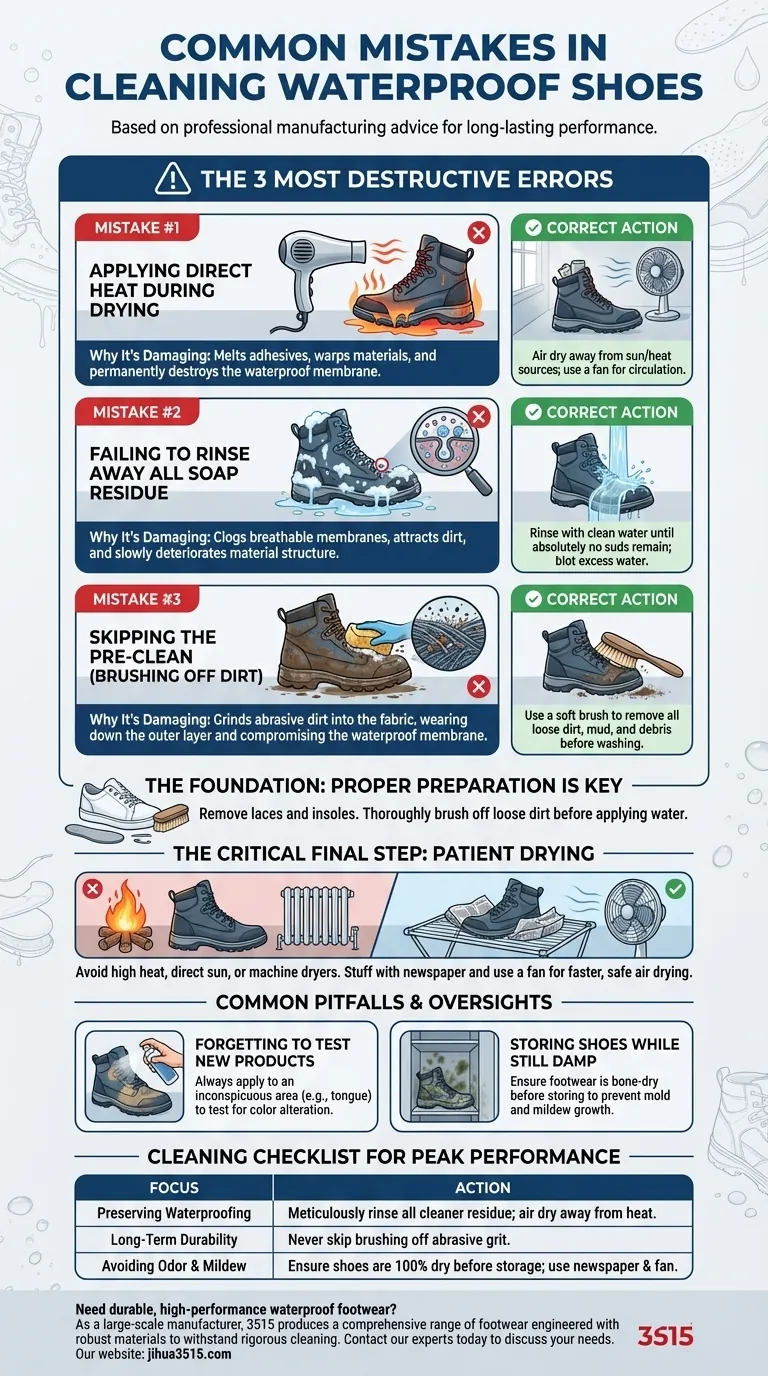
The most common mistakes when cleaning waterproof shoes are applying direct heat during drying, failing to rinse away all soap residue, and not brushing off loose dirt before washing. These errors can permanently damage the waterproof membrane, degrade materials, and shorten the lifespan of your footwear.
The goal of cleaning waterproof gear isn't just to remove dirt—it's to preserve the delicate materials and technical features that keep you dry. The core principle is to clean gently, rinse thoroughly, and dry patiently without heat.
The Foundation: Proper Preparation
Properly preparing your shoes for washing is the single most important step for preventing damage. Skipping it turns your cleaning effort into a destructive one.
Mistake #1: Skipping the Pre-Clean
The most frequent oversight is applying water and cleaner to a shoe still caked in mud and grit. This grinds abrasive particles into the fabric.
Before any water touches your shoes, remove the laces and insoles. Use a soft brush to thoroughly knock off all loose dirt, mud, and debris.
Why This Step Is Non-Negotiable
This isn't just about aesthetics. Trapped dirt can wear down the shoe's outer fabric and, over time, compromise the integrity of the underlying waterproof membrane.
For stubborn, dried-on mud, use a damp cloth to soften and wipe it away before proceeding with a full wash.
The Cleaning Process: Less is More
The washing and rinsing phase is where material-damaging residue can be introduced or left behind. The key is using the right products and being meticulous.
Mistake #2: Leaving Soap Residue Behind
Failing to rinse shoes completely is a critical error. Leftover soap or detergent residue can attract more dirt and clog the pores of breathable waterproof fabrics.
This residue can also slowly deteriorate the shoe's material over time, weakening its structure.
The Importance of a Thorough Rinse
Rinse your shoes with clean, cool water until absolutely no suds or residue remain. This ensures the breathable membrane can function properly and prevents chemical damage.
After rinsing, use a dry cloth to blot away excess water. This will significantly speed up the drying time.
The Critical Final Step: Patient Drying
How you dry your waterproof shoes is just as important as how you wash them. This is where most irreversible damage occurs.
Mistake #3: The Allure of Direct Heat
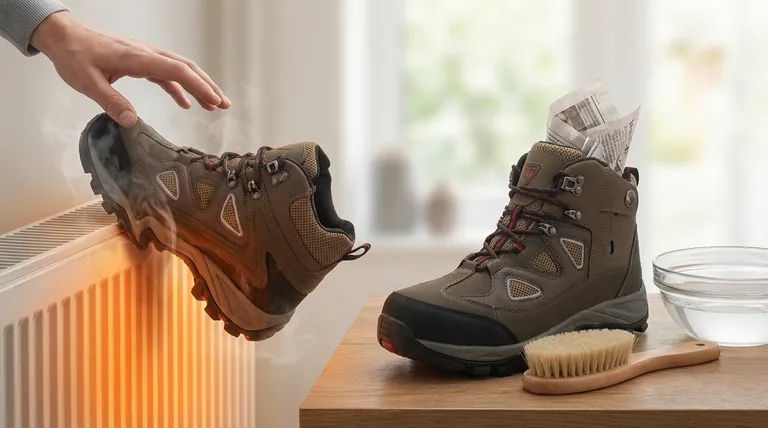
The single most destructive mistake is using high heat to speed up drying. Never place waterproof footwear in a machine dryer, near a radiator, or in front of a campfire.
Direct heat can melt the adhesives holding the shoe together, shrink or warp the materials, and permanently destroy the waterproof membrane. Direct sunlight can also cause UV damage and material degradation.
The Correct Method: Air and Patience
The only safe way to dry waterproof shoes is to let them air dry in a well-ventilated area away from direct sun.
To speed up the process and help the shoes maintain their shape, stuff them loosely with newspaper or paper towels. Using a fan on a low setting can also improve air circulation.
Common Pitfalls and Oversights
Beyond the core process, several other oversights can lead to poor results or damage.
Forgetting to Test New Products
Never apply a new cleaning or waterproofing product to your entire shoe without testing it first. Some chemicals can alter the color or appearance of the material.
Always apply a small amount to an inconspicuous area, like the tongue, to see how the material reacts.
Storing Shoes While Still Damp
Storing shoes before they are completely dry is a recipe for disaster. This traps moisture and creates an ideal environment for mold and mildew to grow.
Ensure your footwear is bone-dry before storing it, especially in a closed container or closet.
A Cleaning Checklist for Peak Performance
Your approach should match your primary goal for the footwear.
- If your primary focus is preserving waterproofing: Meticulously rinse all cleaner residue and always air dry away from any heat source to protect the membrane.
- If your primary focus is long-term durability: Never skip the initial step of brushing off abrasive grit, which physically wears down the shoe's materials.
- If your primary focus is avoiding odor and mildew: Ensure shoes are 100% dry before storage by using newspaper and a fan to aid evaporation.
By avoiding these simple errors, you ensure your technical footwear will perform as intended for years to come.
Summary Table:
| Common Mistake | Why It's Damaging | Correct Action |
|---|---|---|
| Skipping the Pre-Clean | Grinds abrasive dirt into fabric, damaging the waterproof membrane. | Brush off all loose dirt and mud before washing. |
| Leaving Soap Residue | Clogs breathable membranes, attracts dirt, and degrades materials. | Rinse thoroughly with cool water until no suds remain. |
| Using Direct Heat to Dry | Melts adhesives, warps materials, and destroys the waterproof membrane. | Air dry away from sun/heat; use newspaper and a fan. |
| Storing While Damp | Promotes mold and mildew growth, leading to odors and material rot. | Ensure shoes are 100% bone-dry before storage. |
Need durable, high-performance waterproof footwear that's built to last?
As a large-scale manufacturer, 3515 produces a comprehensive range of footwear for distributors, brand owners, and bulk clients. Our production capabilities encompass all types of shoes and boots, engineered with robust materials and construction to withstand rigorous cleaning and maintain performance.
Contact our experts today to discuss your footwear needs and discover how our manufacturing excellence can provide reliable, long-lasting products for your customers.
Visual Guide
Related Products
- Wholesale Premium Waterproof Nubuck Safety Shoes Boots
- Heavy-Duty Waterproof Nubuck Safety Boots Safety Shoes for Bulk Supply
- Premium Wholesale Waterproof Safety Boots High Performance Protection for Industrial Markets
- Durable Waterproof Rain Boots | Custom Manufacturer for Wholesale & Brands
- Wholesale Waterproof Tactical Boots Custom Suede & High-Traction Soles
People Also Ask
- Why are waterproof safety boots recommended for certain work environments? Essential Protection for Wet & Hazardous Jobs
- What materials are commonly used in waterproof boots? The Complete Guide to Durable, Breathable Protection
- What are the drawbacks of waterproof boots? The Breathability vs. Protection Trade-Off
- What is the advantage of one-piece construction in waterproof boots? Unbeatable Seamless Protection
- What is the difference between waterproof, water-resistant, and water-repellent boots? Choose the Right Protection for Your Feet