
Originally, combat boots were designed exclusively for military use. They were government-issued equipment created to protect soldiers and enhance their performance during active combat operations in challenging and unpredictable environments.
The core purpose of a combat boot is pure function over form. Every design element, from the high ankle support to the durable materials, was engineered to solve a specific problem faced by soldiers in the field, prioritizing protection, stability, and endurance above all else.
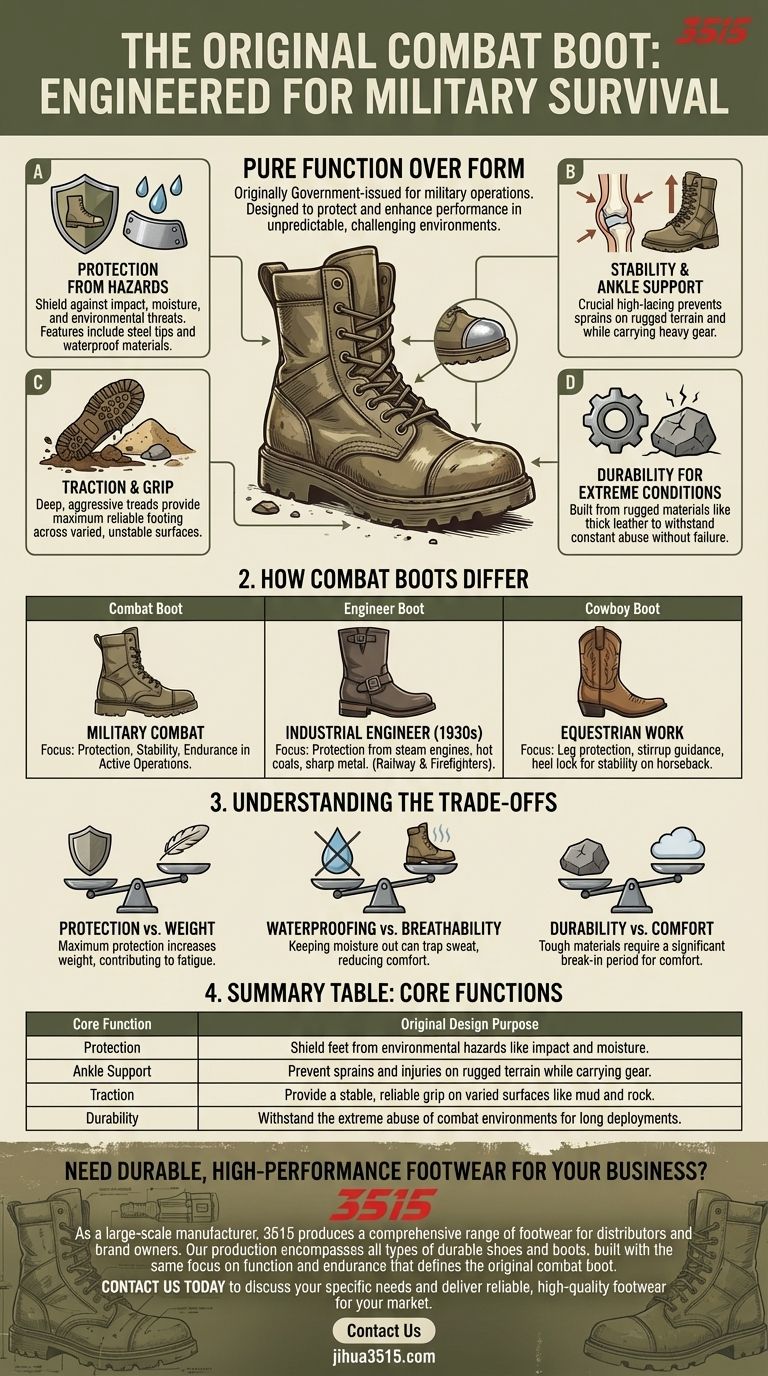
The Core Functions of a Combat Boot
To understand the original design, you must look at the specific problems it was built to solve for a soldier. The boot was a critical piece of survival equipment, not a fashion accessory.
Protection from Hazards
Soldiers face numerous environmental threats. Combat boots were built to be a shield for the feet, often incorporating features like steel tips for impact protection and waterproof materials to keep feet dry and prevent infections or frostbite.
Stability and Ankle Support
Operating on uneven, rugged terrain while carrying heavy gear puts immense strain on the ankles. The high-lacing design of combat boots provides crucial ankle support, reducing the risk of sprains and injuries that could incapacitate a soldier.
Traction and Grip
Reliable footing can be a matter of life and death. The soles of combat boots were designed with deep, aggressive treads to provide maximum traction across varied surfaces like mud, rock, and sand, ensuring a stable footing in any condition.
Durability for Extreme Conditions
Standard footwear would quickly fail under the stress of a combat environment. Combat boots were constructed from highly durable leather and other rugged materials to withstand constant abuse without falling apart, ensuring they would last through a deployment.
How Combat Boots Differ from Other Work Boots
While many boots appear rugged, their original designs were tailored to very different tasks. Understanding these differences highlights the unique purpose of the combat boot.
The Engineer Boot: For Industrial Work
Originally created in the 1930s for railway engineers and firefighters, the engineer boot was designed to protect workers from the hazards of steam engines. Its pull-on style and buckled straps offered protection from hot coals, sharp metal, and heavy equipment in an industrial setting.
The Cowboy Boot: For Equestrian Work
The cowboy boot was designed for ranchers who spent most of their day on horseback. Its high shaft protected the leg, the pointed toe helped guide the foot into a stirrup, and the distinct heel locked it in place, providing stability for the rider.
Understanding the Trade-offs
No design is perfect, and the features that make combat boots effective in the field also create inherent compromises.
Protection vs. Weight
The original, highly protective designs using thick leather and steel were extremely heavy. This provided maximum protection but also contributed to fatigue. Modern designs constantly try to balance this by using lighter, advanced composite materials.
Waterproofing vs. Breathability
While waterproofing is essential for keeping feet dry from external moisture, it can also trap sweat. This lack of breathability can lead to discomfort and foot problems, a trade-off that boot designers are always working to improve.
Durability vs. Comfort
The same tough, durable materials that allow a boot to survive harsh conditions often make it stiff and uncomfortable out of the box. A significant break-in period has always been a known characteristic of traditional, ruggedly built combat boots.
Making the Right Choice for Your Goal
Understanding a boot's original purpose allows you to select the right footwear based on your specific needs.
- If your primary focus is tactical performance or serious hiking: Prioritize features central to the combat boot's origin—superior ankle support, aggressive traction, and proven durability.
- If your primary focus is industrial safety: Look for purpose-built work boots, like engineer boots, that have specific protections like steel toes or heat resistance certified for your environment.
- If your primary focus is style or casual wear: You can appreciate the aesthetic heritage of a combat boot while prioritizing modern materials that offer greater comfort and less weight for daily use.
Ultimately, the design of any functional boot is a direct response to the demands of its intended environment.
Summary Table:
| Core Function | Original Design Purpose |
|---|---|
| Protection | Shield feet from environmental hazards like impact and moisture. |
| Ankle Support | Prevent sprains and injuries on rugged terrain while carrying gear. |
| Traction | Provide a stable, reliable grip on varied surfaces like mud and rock. |
| Durability | Withstand the extreme abuse of combat environments for long deployments. |
Need Durable, High-Performance Footwear for Your Business?
As a large-scale manufacturer, 3515 produces a comprehensive range of footwear for distributors, brand owners, and bulk clients. Our production capabilities encompass all types of durable shoes and boots, built with the same focus on function and endurance that defines the original combat boot.
Contact us today to discuss your specific needs and discover how we can deliver reliable, high-quality footwear for your market.
Visual Guide
Related Products
- Durable Military Combat Boots with Water Drainage for Wholesale & OEM
- Durable Leather Tactical Boots Wholesale & Custom Manufacturing for Brands
- High-Traction Suede Tactical Boots Wholesale & Custom Manufacturing
- Wholesale Lightweight Tactical Boots Custom Manufacturer for Desert & Combat Use
- Durable Mid-Cut Tactical Boots for Wholesale & Private Label
People Also Ask
- Why must gait validation for military applications be conducted in combat boots? Ensure Data Accuracy for Soldiers
- What are the common types of combat boots? Find the Right Boot for Your Mission
- What factors should be considered when choosing military boots for hiking? Durability vs. Weight for Your Terrain
- What are the key considerations when choosing military boots? Prioritize Compliance, Environment & Fit
- How should the midfoot and heel fit in military boots? Achieve a Snug, Secure Fit for Blister Prevention

















