
At its core, a chukka boot is a simple, ankle-high boot defined by its minimalist lacing system, typically featuring just two or three pairs of eyelets. Originally derived from the game of polo, these boots are most often crafted from suede or leather and have a clean, uncluttered design. This inherent simplicity is precisely what makes them one of the most versatile pieces of footwear you can own, capable of bridging the gap between casual and more formal attire.
The chukka boot's true value lies in its unique position as a hybrid. It offers more structure and style than a sneaker but is significantly less formal and bulky than a traditional dress or work boot, making it an essential foundation for any modern wardrobe.
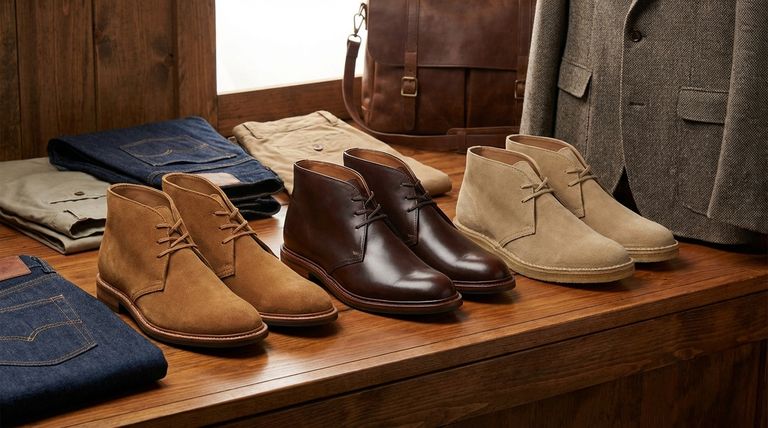
What Defines a Chukka Boot?
The chukka's versatility isn't accidental; it’s a direct result of its specific design characteristics. Each element contributes to its ability to adapt to different styles and settings.
The Ankle-High Cut
The chukka sits right at the ankle. This height is high enough to be recognized as a boot but low enough that it doesn't overwhelm an outfit or dictate the type of pants you must wear.
This silhouette works equally well with the cuff of a pair of jeans or the clean break of a dress trouser.
The Minimalist Lacing System
The most defining feature of a chukka is its open lacing with only two or three eyelets. This creates a clean, uncluttered vamp (the front part of the boot).
Fewer eyelets result in a less "busy" appearance than a standard boot or dress shoe, contributing to its refined yet relaxed aesthetic.
The Simple Construction
Chukka boots are typically made from just two main pieces of leather or suede sewn together. They feature a rounded toebox and a straightforward, unadorned design.
This lack of ornamentation—no broguing, cap-toes, or excessive stitching—is key to its adaptability.
Why Material Dictates Formality
The same chukka design can be worn very differently depending on its material and sole. Understanding this distinction is the key to using them effectively.
Suede: The Casual Standard
Suede is the most common and classic material for chukka boots. Its soft texture lends itself perfectly to smart-casual and relaxed settings.
A tan, brown, or sand suede chukka is the ideal partner for jeans, chinos, and casual button-down shirts.
Polished Leather: The Dressier Alternative
When made from polished leather, the chukka takes on a more formal character. The clean lines of the boot are highlighted by the smooth, reflective surface.
A dark brown or black leather chukka can easily be worn with a blazer and trousers or even a more casual suit.
Sole Construction
The sole is a critical, often overlooked detail. A thin leather sole signals a dressier purpose, while a thicker rubber or crepe sole leans more casual and offers greater comfort and durability for everyday wear.
Understanding the Versatility Limits
While incredibly versatile, the chukka is not a one-size-fits-all solution. Knowing its boundaries is crucial for wearing it well.
Not a True Dress Shoe
Even in its most formal leather guise, a chukka is not a substitute for a classic Oxford in highly formal business or black-tie settings. Its boot origin and open lacing system keep it slightly less formal.
Not a Rugged Work Boot
The chukka's simple construction and often delicate materials mean it is not designed for heavy-duty work, hiking, or extreme weather conditions. It is a style boot, not a utility boot.
Suede Requires Care
Suede, the most popular chukka material, is susceptible to water and stains. Proper care and protective sprays are necessary to maintain its appearance and longevity, especially in damp climates.
How to Style Your Chukka Boots
Your choice should be guided by your primary wardrobe needs.
- If your primary focus is smart-casual: A suede chukka in tan, sand, or brown is the most versatile choice for pairing with jeans and chinos.
- If your primary focus is business-casual: A dark brown polished leather chukka with a slim leather sole offers a sophisticated look for trousers and blazers.
- If your primary focus is everyday comfort: Choose a chukka with a durable rubber or crepe sole for better grip and all-day wearability.
By mastering its context, the chukka boot becomes a reliable and stylish cornerstone of your footwear collection.
Summary Table:
| Feature | Impact on Versatility |
|---|---|
| Ankle-High Cut | Works with jeans, chinos, and dress trousers. |
| 2-3 Eyelet Lacing | Creates a clean, minimalist look. |
| Suede Material | Ideal for smart-casual and relaxed settings. |
| Polished Leather | Suitable for business-casual and blazers. |
| Thin Leather Sole | Dressier appearance. |
| Rubber/Crepe Sole | Casual, comfortable, and durable for everyday wear. |
Ready to build a versatile footwear collection?
As a large-scale manufacturer, 3515 produces a comprehensive range of high-quality chukka boots and other footwear for distributors, brand owners, and bulk clients. Our production capabilities encompass all types of shoes and boots, ensuring you get the perfect style, material, and sole construction for your market.
Contact us today to discuss your footwear needs and discover how we can deliver quality and value at scale.
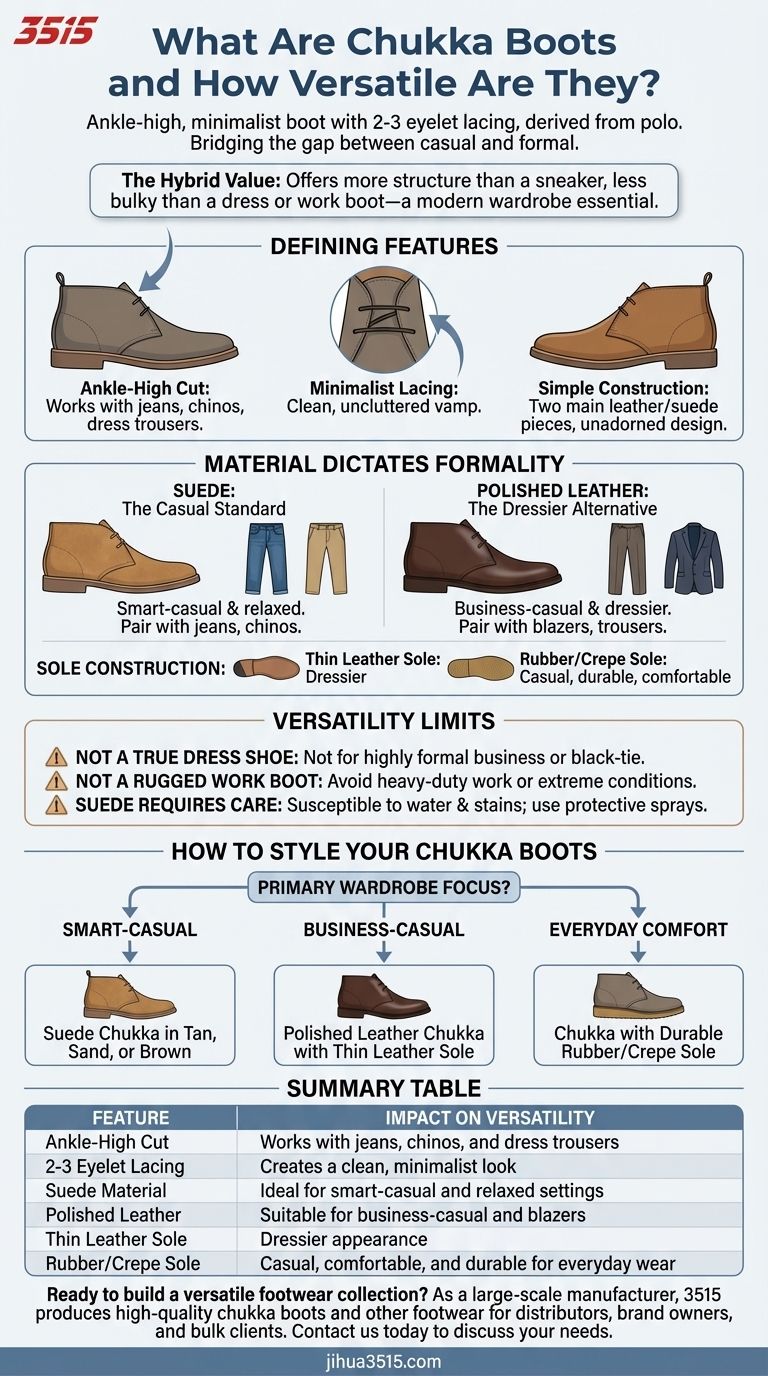
Visual Guide
Related Products
- Wholesale Safety Boots Manufacturer for Custom & Private Label Orders
- Premium Wholesale Tactical Style Safety Shoes Boots with Quick Lacing
- Factory Direct Wholesale Rain Boots Durable Waterproof & Fully Customizable
- Wholesale High-Traction Camo Boots - Custom Manufacturer for Brands
- Durable Leather High-Ankle Tactical Boots for Wholesale & Custom Manufacturing
People Also Ask
- Why is proper storage important for safety boots? Preserve Protection and Extend Lifespan
- How should safety boots be cleaned to avoid damage? A Gentle Guide to Preserve Your Boots
- What are the risks of using ordinary rubber boots in forest clearing? Why professional safety boots are essential
- What are the key features of safety boots? Essential Protection for Hazardous Workplaces
- What are the consequences of not wearing safety boots? Protect Your Finances and Career


















