
At their core, boat shoes are typically constructed from either treated leather or breathable canvas. Originally designed for sailors needing grip on a wet deck, their functional design has made them a staple for smart-casual warm-weather occasions, from coastal getaways to city brunches.
The materials and construction of a boat shoe are not just for aesthetics; they are engineered for performance in a marine environment. This functional heritage is the key to understanding where and how they should be worn today.
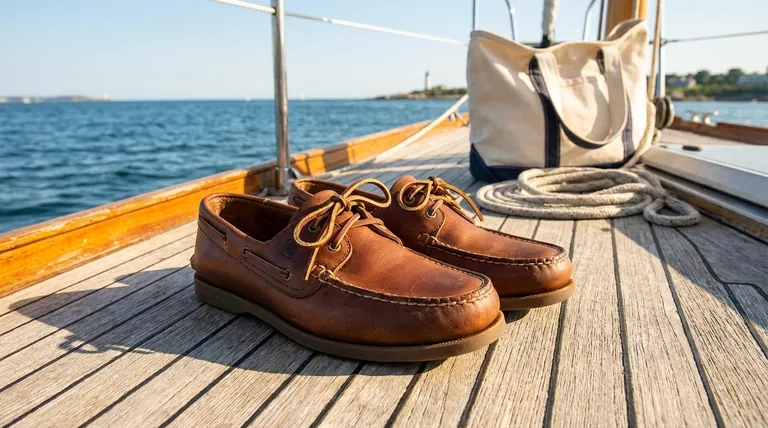
The Anatomy of a Classic Boat Shoe
To understand where to wear a boat shoe, you must first appreciate why it’s built the way it is. Each component serves a distinct, practical purpose that has been refined over decades.
The Upper: Treated Leather or Canvas
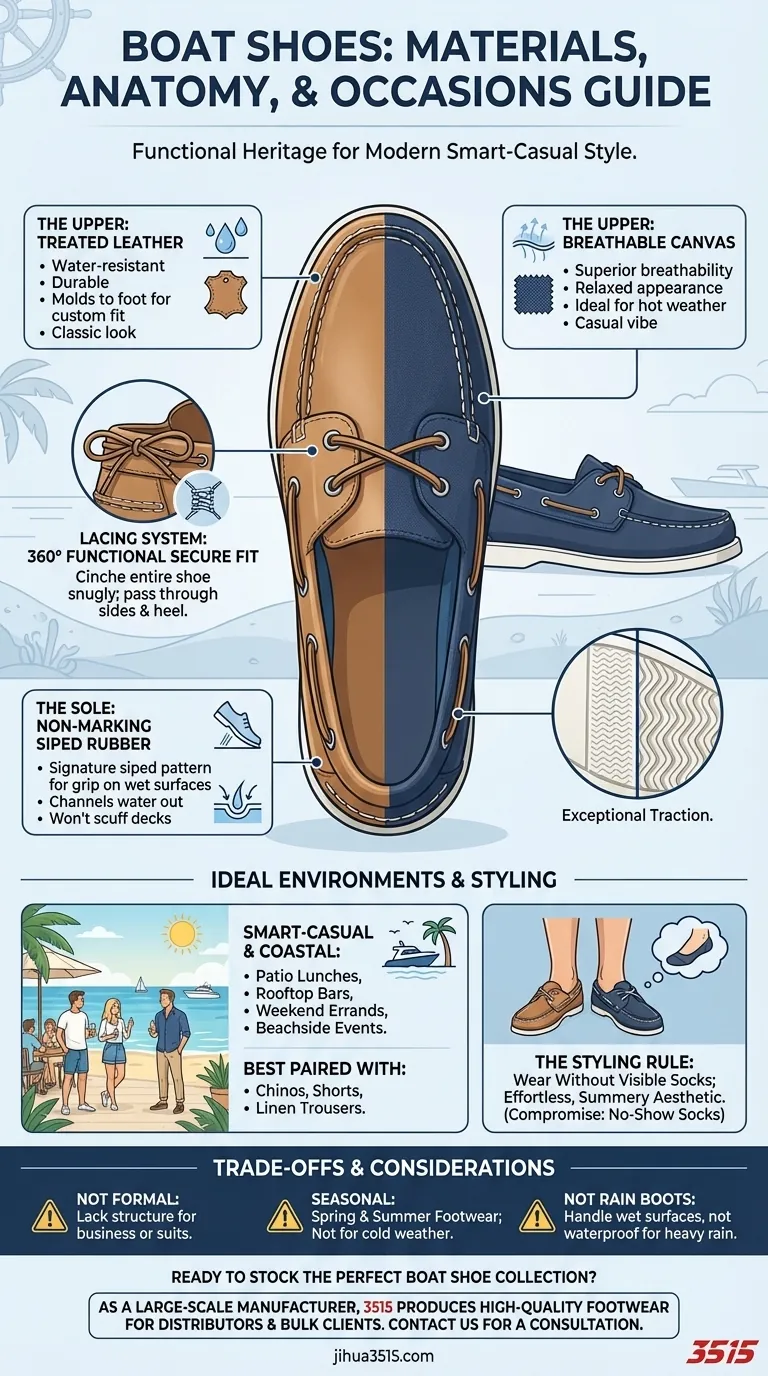
The upper part of the shoe is most commonly made from water-resistant leather. This material is durable and molds to the wearer's foot over time, offering a comfortable, custom fit.
Alternatively, many modern boat shoes use canvas. This material offers superior breathability in hot weather and a more relaxed, casual appearance.
The Sole: Non-Marking Siped Rubber
This is the boat shoe's most defining functional feature. The white or light-colored rubber soles are designed to be non-marking, meaning they won’t leave scuffs on a clean boat deck.
The soles feature a signature siped pattern—a series of thin, razor-cut slits. This pattern channels water out from under the shoe, providing exceptional grip on wet, slippery surfaces.
The Lacing System: A Functional Detail
Most traditional boat shoes include a 360-degree lacing system. The leather or fabric laces pass through the sides and heel of the shoe, allowing you to cinch the entire shoe snugly around your foot for a secure fit, even without socks.
Where Boat Shoes Fit—And Where They Don't
The shoe's origins dictate its modern use. It belongs in settings that are relaxed, casual, and generally associated with spring and summer.
The Ideal Environment: Smart-Casual & Coastal
Boat shoes excel in any "smart-casual" context. Think patio lunches, rooftop bars, weekend errands, or a casual beachside event. They perfectly bridge the gap between overly casual sneakers and more formal loafers.
Pairing with Your Wardrobe
They pair best with chinos, shorts of all kinds, and linen trousers. The defining style rule is to wear them without visible socks. The look is meant to be effortless and summery.
Understanding the Trade-offs & Common Mistakes
While versatile, boat shoes are not a universal solution. Wearing them in the wrong context can be a significant style misstep.
Lack of Formal Structure
Boat shoes are inherently casual. They lack the rigid structure and sleek profile required for business, business-casual, or any formal event. Never pair them with a suit.
The Sock Debate
The traditional and most stylish way to wear boat shoes is without socks. If comfort or hygiene is a concern, the only acceptable compromise is a pair of "no-show" socks that remain completely hidden.
Seasonal and Weather Limitations
These are definitively spring and summer footwear. Their low-profile design and materials are not suited for cold weather, and while they handle wet surfaces, they aren't waterproof boots for walking in the rain.
Making the Right Choice for Your Goal
Select your boat shoe based on how you intend to use it.
- If your primary focus is classic, versatile style: Choose a traditional leather boat shoe in a neutral color like navy, brown, or tan.
- If your primary focus is casual, breathable comfort: Opt for a canvas boat shoe, which is ideal for very hot days and relaxed settings.
- If your primary focus is actual boating: Ensure the shoe has a high-quality, deeply siped, non-marking rubber sole for maximum safety and grip.
Understanding a boat shoe's purpose-built design is the key to wearing it with confidence.
Summary Table:
| Feature | Description | Key Takeaway |
|---|---|---|
| Upper Material | Typically water-resistant leather or breathable canvas. | Leather offers a classic look; canvas is more casual and breathable. |
| Sole | Non-marking, siped rubber for grip on wet surfaces. | Provides essential traction, defining the shoe's functional heritage. |
| Ideal Occasions | Smart-casual settings: brunches, patios, coastal outings. | Perfect for warm-weather, relaxed events. Avoid formal wear. |
| Styling Rule | Best worn with chinos, shorts, and no visible socks. | Creates an effortless, summery aesthetic. |
Ready to Stock the Perfect Boat Shoe Collection?
As a large-scale manufacturer, 3515 produces a comprehensive range of high-quality footwear for distributors, brand owners, and bulk clients. Our production capabilities encompass all types of shoes and boots, including durable and stylish boat shoes built with the authentic materials and construction details outlined in this guide.
We help you offer your customers the perfect blend of classic style and functional performance. Let's discuss your specific needs and how we can support your business.
Contact us today for a consultation
Visual Guide
Related Products
- Wholesale Modern Business Shoes with Dial Closure System for Bulk Orders
- Heavy-Duty Waterproof Nubuck Safety Boots Safety Shoes for Bulk Supply
- Wholesale Durable Camouflage Canvas Shoes with High-Traction Cleated Rubber Sole
- Wholesale Waterproof Tactical Boots Custom Suede & High-Traction Soles
- Premium Wholesale Tactical Style Safety Shoes Boots with Quick Lacing
People Also Ask
- What kind of shoes do businessmen wear? Master the Dress Code for Professional Success
- What are the essential business shoes every man should own? Build a Professional Wardrobe Foundation
- What are the key considerations when choosing professional business shoes? Elevate Your Professional Image
- How does wearing the right shoes benefit overall health? Protect Your Joints, Posture, and Mobility
- Why do quality shoes boost confidence? Unleash Your Potential with the Right Footwear



















