
At its core, craftsmanship is what separates a true cowboy boot from a simple piece of footwear. It is the deliberate, skilled process that transforms high-quality materials into an object of remarkable durability, comfort, and function. The work of an artisan ensures every element, from the internal structure to the final stitch, serves a distinct purpose.
True cowboy boot craftsmanship is not about aesthetics alone; it is a system of proven construction techniques that directly determines a boot's fit, durability, and long-term value. Understanding these techniques allows you to move beyond style and invest in genuine quality.
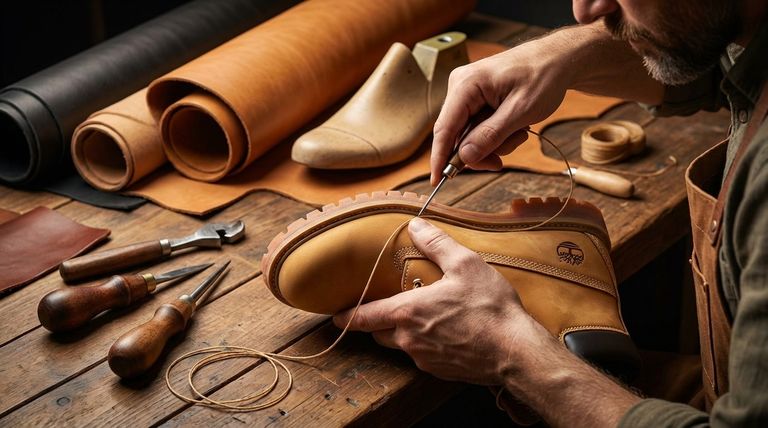
The Pillars of Exceptional Bootmaking
Exceptional craftsmanship is not a single action but a series of interdependent stages. Each step builds upon the last, contributing to the final integrity of the boot.
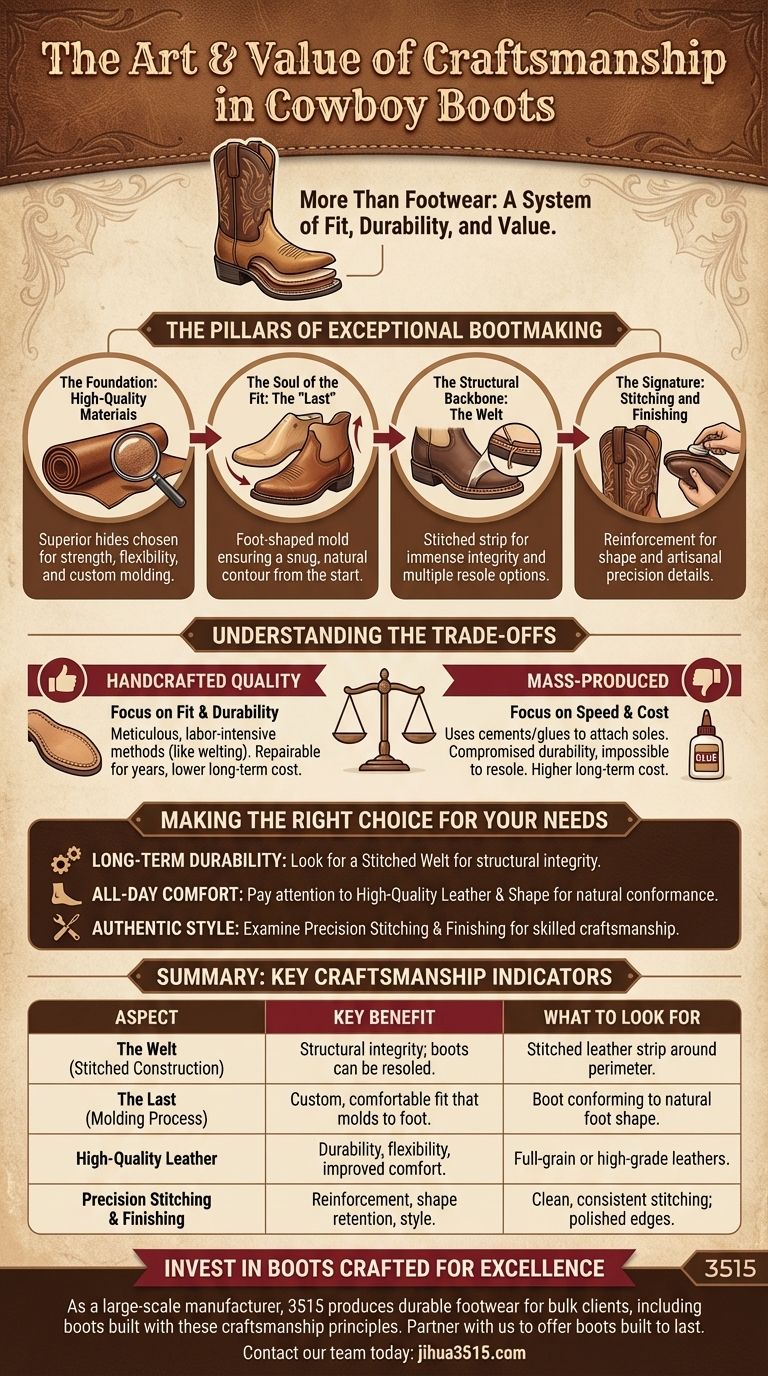
The Foundation: High-Quality Materials
The entire process begins with the critical selection of superior leathers.
A skilled artisan chooses hides not just for their appearance, but for their specific properties of strength, flexibility, and the ability to mold to a foot over time.
The Soul of the Fit: The 'Last'
The last is a foot-shaped mold that serves as the three-dimensional template for the entire boot.
Craftsmen meticulously stretch and shape the leather over this last. This crucial process is what ensures the boot's final shape will conform to the natural contours of a human foot, creating a snug and comfortable fit from the start.
The Structural Backbone: The Welt
The welt is a strip of leather stitched around the perimeter of the boot to attach the upper (the part covering your foot) to the sole.
This construction method is a hallmark of high-quality craftsmanship. It provides immense structural integrity and, most importantly, allows the boot to be resoled multiple times, dramatically extending its lifespan.
The Signature: Stitching and Finishing
The intricate stitching on a boot's shaft is more than just decoration; it adds reinforcement to the leather, helping it maintain its shape and preventing sagging.
Final finishing touches, from hand-burnishing the leather to polishing the sole edges, are the concluding marks of an artisan who is dedicated to precision in every detail.
Understanding the Trade-offs
Recognizing quality craftsmanship also means understanding what distinguishes it from mass-market alternatives. The differences in approach have significant implications for the final product.
Handcrafted vs. Mass-Produced
Well-crafted boots prioritize fit and durability through meticulous, labor-intensive processes like welting and careful lasting.
In contrast, many mass-produced boots use cements or glues to attach the soles. This method is faster and cheaper, but it severely compromises durability and makes the boot impossible to resole.
The Investment in Quality
The upfront cost of a well-crafted boot is undoubtedly higher, reflecting the skilled labor and superior materials required.
However, this initial investment often translates to a lower long-term cost. A boot that can be repaired for years will outlast several cheaper pairs that must be discarded once the original sole wears out.
Making the Right Choice for Your Needs
A well-made boot is an investment in both function and comfort. Identifying the markers of quality craftsmanship is the key to making a wise choice that aligns with your goals.
- If your primary focus is long-term durability: Look for a stitched welt, as this is the single most important factor for a boot's structural integrity and repairability.
- If your primary focus is all-day comfort: Pay attention to the quality of the leather and the overall shape, as the lasting process dictates how well the boot will conform to your foot.
- If your primary focus is authentic style: Examine the precision of the decorative stitching and the finishing on the sole, which are clear indicators of an artisan's skill.
By understanding the principles of true craftsmanship, you can confidently choose a boot that is built not just to be worn, but to last.
Summary Table:
| Aspect of Craftsmanship | Key Benefit | What to Look For |
|---|---|---|
| The Welt (Stitched Construction) | Structural integrity; boots can be resoled multiple times. | A leather strip stitched around the boot's perimeter. |
| The Last (Molding Process) | A custom, comfortable fit that molds to your foot. | A boot that conforms to the natural shape of your foot. |
| High-Quality Leather | Durability, flexibility, and improved comfort over time. | Full-grain or high-grade leathers chosen for strength. |
| Precision Stitching & Finishing | Reinforcement, shape retention, and authentic style. | Clean, consistent stitching and polished edges. |
Invest in Boots Crafted for Excellence
As a large-scale manufacturer, 3515 produces a comprehensive range of durable footwear for distributors, brand owners, and bulk clients. Our production capabilities encompass all types of boots, including those built with the craftsmanship principles outlined above.
Partner with us to offer your customers boots that are built to last. We combine efficient large-scale production with a commitment to quality construction, ensuring value and performance.
Contact our team today to discuss your manufacturing needs and how we can help you deliver superior footwear.
Visual Guide
Related Products
- Wholesale High-Traction Camo Boots - Custom Manufacturer for Brands
- High-Traction Suede Tactical Boots Wholesale & Custom Manufacturing
- Wholesale Lightweight Tactical Boots Custom Manufacturer for Desert & Combat Use
- Durable Leather Tactical Boots Wholesale & Custom Manufacturing for Brands
- Wholesale Durable Mid-Cut Tactical Boots for Custom & Private Label Brands
People Also Ask
- What are the key features of the new line of camo boots? Built for Extreme Cold & Rugged Terrain
- Are camo boots necessary for hunting success? Prioritize Performance Over Pattern
- How does the Rank Score Test identify the primary causes of premature failure in tactical and work boots? Key Insights
- What is the technical logic behind using closed-eye testing for tactical boots? Unlocking Peak Footwear Stability
- What shoes to wear for a security job? Durable, Protective Footwear for Long Shifts



















