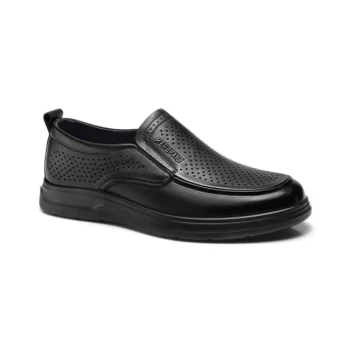
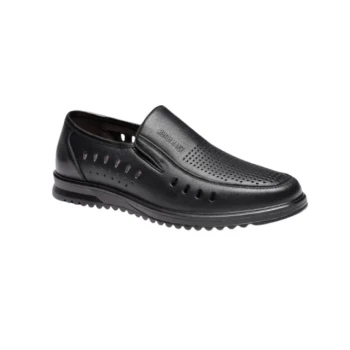
Beyond the sole, the most effective slip-resistant shoes integrate features designed for all-day professional use, including enhanced comfort elements like cushioned insoles and arch support, protective features like reinforced toes and water-resistant uppers, and durability from sturdy, high-grade materials. These additional components work in concert with the specialized tread to create footwear that is not just safe, but also practical and supportive for demanding work environments.
The slip-resistant sole is the primary safety feature, but the shoe's true value comes from a combination of comfort, durability, and protective elements tailored to the specific hazards of a professional setting.
Deconstructing the Key Features
A truly effective slip-resistant shoe is more than just its outsole. It's a system of components working together to provide safety, support, and endurance for the wearer throughout a long workday.
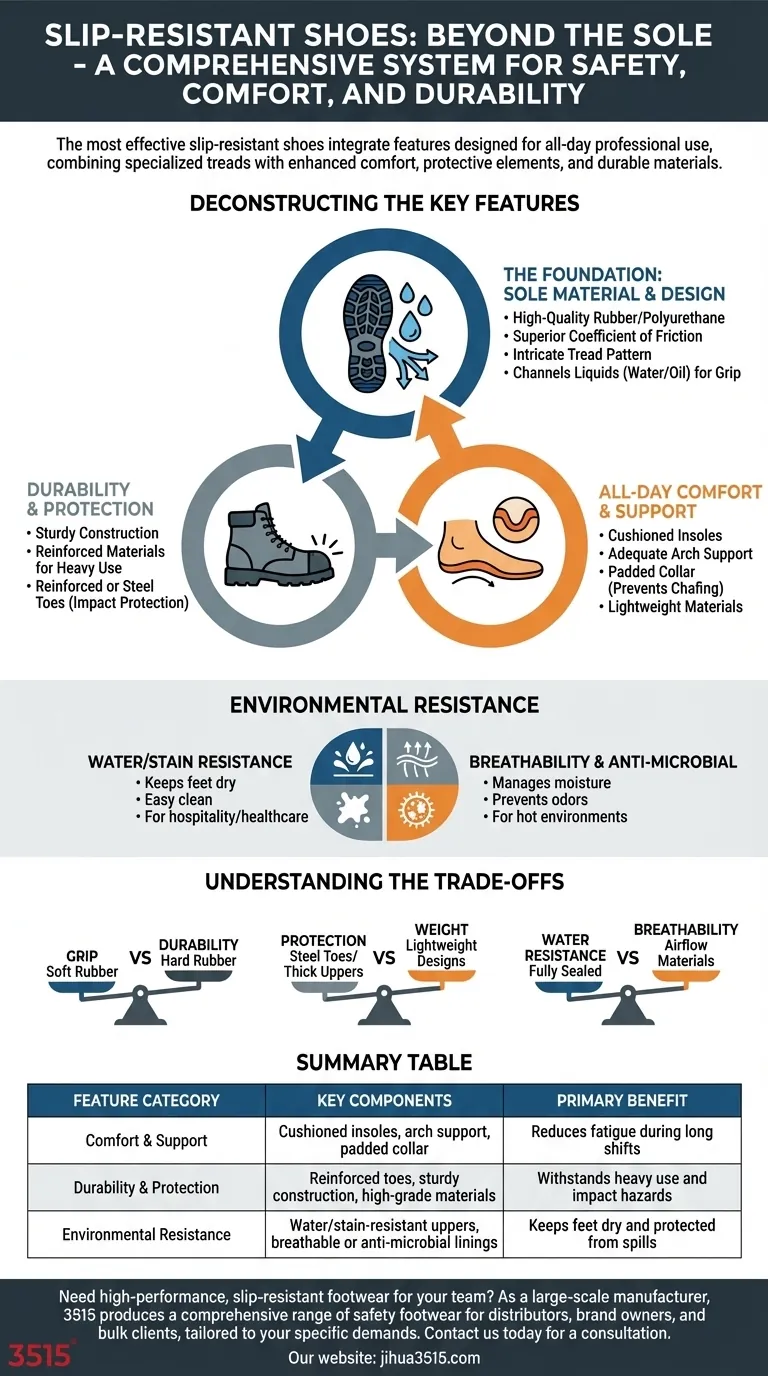
The Foundation: Sole Material and Design
The core of any slip-resistant shoe is a sole made from high-quality rubber or polyurethane. These materials offer a superior coefficient of friction compared to typical plastics.
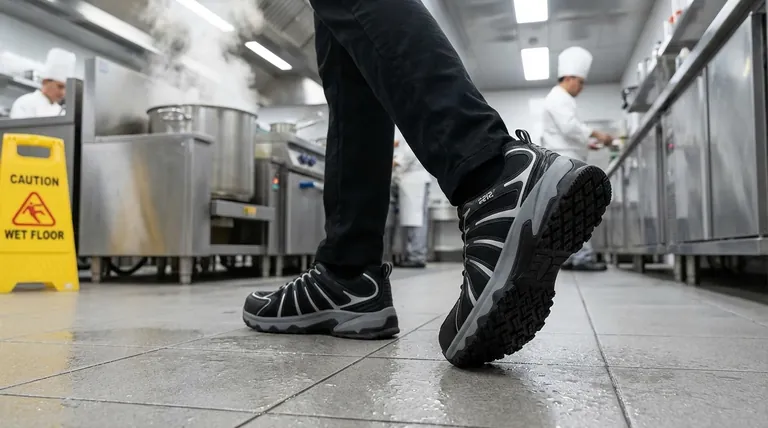
This material is then molded into an intricate tread pattern. Designs with small, multi-directional grooves or hexagons are engineered to channel liquids like water and oil away from the shoe's contact point, maximizing surface area and grip.
Durability and Protection
Professional environments demand more than casual footwear can provide. Slip-resistant shoes feature sturdy construction with reinforced materials designed to withstand heavy use and unpredictable conditions.
Many models, especially work boots, also include reinforced or steel toes to protect the foot from falling objects or impacts, a critical feature in industrial, kitchen, or construction settings.
All-Day Comfort and Support
Standing or walking for an entire shift requires significant support. These shoes almost always include cushioned insoles and adequate arch support to reduce fatigue and prevent foot pain.
A padded collar around the ankle prevents chafing and adds another layer of comfort, while the use of lightweight materials ensures the shoe doesn't become a burden during long hours of movement.
Environmental Resistance
Many jobs involve spills and moisture. That's why slip-resistant shoes often feature water-resistant or stain-resistant uppers. This keeps feet dry and makes the shoes easier to clean and maintain, which is particularly important in hospitality and healthcare.
For hot environments, some designs prioritize breathability or include anti-microbial properties to manage moisture and prevent odors from developing.
Understanding the Trade-offs
Choosing the right shoe involves balancing competing features. No single shoe is perfect for every environment, and understanding the trade-offs is key to making an informed decision.
Grip vs. Durability
Softer rubber compounds often provide the best possible grip, especially on smooth, wet surfaces. However, this softness can cause the tread to wear down more quickly. Harder compounds offer greater longevity but may provide slightly less traction.
Protection vs. Weight
Features like steel toes and thick, reinforced uppers offer maximum protection from impact and puncture hazards. This added protection, however, increases the shoe's weight, which can lead to fatigue over a long shift. Lightweight designs are more comfortable for constant movement but offer less physical protection.
Water Resistance vs. Breathability
A fully water-resistant upper is excellent for keeping feet dry from external spills. The downside is that it can trap sweat, leading to discomfort. More breathable materials are better for hot, dry environments but offer little protection from liquids.
Making the Right Choice for Your Job
Your specific work environment should dictate which features you prioritize. A shoe designed for a construction site is fundamentally different from one made for a hospital ward.
- If your primary focus is food service or hospitality: You need a shoe with excellent liquid-channeling treads, water and stain-resistant uppers, and superior cushioning for long hours of standing.
- If your primary focus is healthcare: Prioritize a lightweight design for constant movement, easy-to-clean surfaces, and all-day comfort and support.
- If your primary focus is industrial or construction work: Emphasize protective features like reinforced toes, durable construction, and a robust tread pattern suited for varied and uneven surfaces.
- If your primary focus is retail or fast-paced service: Look for a balance of reliable grip, lightweight comfort, and a professional appearance that can withstand constant walking.
Ultimately, selecting the right features transforms a piece of required safety gear into a critical tool for professional performance and well-being.
Summary Table:
| Feature Category | Key Components | Primary Benefit |
|---|---|---|
| Comfort & Support | Cushioned insoles, arch support, padded collar | Reduces fatigue during long shifts |
| Durability & Protection | Reinforced toes, sturdy construction, high-grade materials | Withstands heavy use and impact hazards |
| Environmental Resistance | Water/stain-resistant uppers, breathable or anti-microbial linings | Keeps feet dry and protected from spills |
Need high-performance, slip-resistant footwear for your team?
As a large-scale manufacturer, 3515 produces a comprehensive range of safety footwear for distributors, brand owners, and bulk clients. Our production capabilities encompass all types of slip-resistant shoes and boots, tailored to the specific demands of food service, healthcare, industrial, and retail environments.
We combine superior grip with essential features for all-day comfort and durability. Let's discuss your specific needs and how we can deliver the perfect solution for your business.
Contact us today for a consultation
Visual Guide
Related Products
- Heavy-Duty Waterproof Nubuck Safety Boots Safety Shoes for Bulk Supply
- Premium Suede Sport Safety Shoes for Wholesale & Bulk Orders
- Durable Leather Moc Toe Work Boots for Wholesale & Custom Manufacturing
- Durable High-Traction Canvas Sneakers Wholesale & Custom Manufacturing
- Advanced KPU Athletic Safety Shoe with Steel Toe Cap Anti-Slip Rotary Lacing System
People Also Ask
- What primary protective functions do professional safety boots provide in urban solid waste recovery and waste picking processes? Discover Dual-Layer Protection.
- How do safety boots reduce cutting hazards? Essential Protection for Your Workforce
- Which organizations develop safety standards for work boots? Ensure Compliance & Worker Safety
- What are the common types of safety boots and their primary uses? A Guide to Industrial Footwear
- Why is ankle and arch support important in safety footwear? Prevent Injury & Fatigue