
To be truly comfortable in cold weather, you need more than just a heavy coat. The most critical additional items are a base layer of thermal underwear, warm wool-blend socks, a hat, a scarf or neck gaiter, and a versatile glove system. These items work together to manage moisture and trap heat, which is the key to staying warm.
Your goal is not to wear one single thick item, but to create a strategic system of layers. This approach allows you to trap air for insulation and adjust your clothing to match both the weather and your activity level, ensuring you are neither too cold nor too hot.
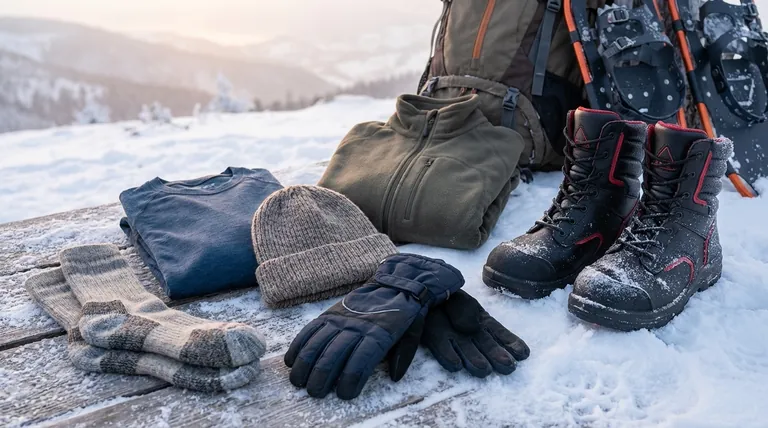
The Foundation of Warmth: The Layering System
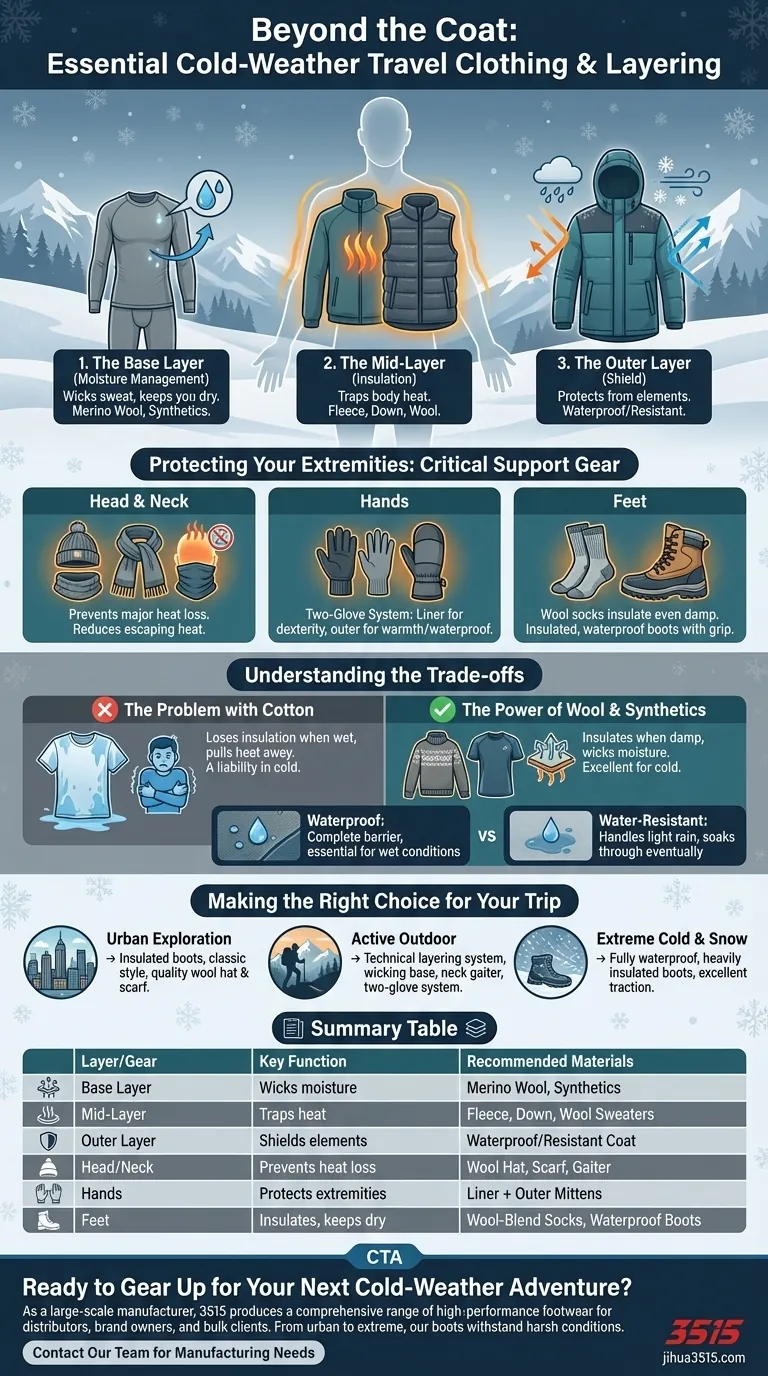
True cold-weather preparedness is built on a simple but effective layering strategy. Each layer serves a distinct purpose in managing your body's heat and moisture.
The Base Layer: Managing Moisture
Your base layer, such as thermal underwear, sits directly against your skin. Its primary job is not just warmth, but wicking sweat away from your body to keep you dry.
Materials like merino wool or synthetics are ideal for this. They pull moisture outward, preventing the chilling effect that occurs when sweat cools on your skin.
The Mid-Layer: Insulating Your Core
This is your primary insulating layer. Its job is to trap the warm air your body generates.
Common mid-layers include fleece jackets, down vests, or wool sweaters. The thickness of this layer can be adjusted depending on the temperature and how active you plan to be.
The Outer Layer: Your Shield from the Elements
Your outer layer, or shell, is your protection against wind, rain, and snow. A good winter coat is essential.
Look for a coat that is both insulated and water-resistant or waterproof. A hood provides critical protection for your head and neck against wind and precipitation.
Protecting Your Extremities: Critical Support Gear
The layering system for your core is only half the battle. A significant amount of body heat is lost through your head, hands, and feet, making accessories a non-negotiable part of your gear.
Head and Neck: Preventing Major Heat Loss
A warm hat is one of the most effective pieces of gear you can have. It dramatically reduces the amount of heat escaping from your head.
A scarf or, even better, a neck gaiter, seals the gap around your coat's collar. This prevents cold air from getting in and warm air from getting out.
Hands: The Value of a Two-Glove System
Your hands are highly susceptible to the cold. The most versatile approach is to use two pairs of gloves.
Start with a thin, lightweight liner glove for basic tasks. For colder conditions, add a heavier, insulated, and waterproof outer glove or mitten over the top.
Feet: The Role of Socks and Footwear
Proper socks are the foundation of warm feet. Choose socks made from wool or a merino blend, as they insulate even when damp and pull moisture away from your skin.
Your boots must be both insulated and waterproof to handle snow and slush. Look for a pair with excellent traction to prevent slips on ice. Boots designed in colder climates often provide the best combination of warmth and durability.
Understanding the Trade-offs
Choosing the right materials is just as important as choosing the right items. A common mistake can undermine your entire layering system.
The Problem with Cotton
Cotton is an excellent fabric for warm weather, but it is a liability in the cold.
When cotton gets wet from sweat or precipitation, it loses all its insulating properties and takes a very long time to dry. This actively pulls heat away from your body, making you colder.
The Power of Wool and Synthetics
Wool, especially merino wool, is a superior choice for cold-weather clothing. It insulates effectively, breathes well, and stays warm even when it gets damp.
Synthetic materials designed for performance also excel at wicking moisture and providing lightweight insulation. They are often used in base layers and mid-layers.
Waterproof vs. Water-Resistant
Water-resistant gear can handle light rain or snow for a short period but will eventually soak through.
Waterproof gear provides a complete barrier to moisture and is essential for heavy snow, slush, or cold rain. For footwear and outer jackets, waterproof is almost always the safer choice.
Making the Right Choice for Your Trip
Your specific gear choices should be tailored to the activities you have planned.
- If your primary focus is urban exploration: Prioritize insulated, waterproof boots with a classic style, and complement them with a quality wool hat and scarf.
- If your primary focus is active outdoor adventure: A technical layering system is key, including a moisture-wicking base layer, a neck gaiter, and the two-glove system.
- If your primary focus is surviving extreme cold and snow: Do not compromise on footwear; choose fully waterproof and heavily insulated boots with excellent traction.
Ultimately, being properly equipped transforms a cold-weather trip from a challenge to be endured into an experience to be enjoyed.
Summary Table:
| Layer/Gear | Key Function | Recommended Materials |
|---|---|---|
| Base Layer | Wicks moisture away from skin | Merino Wool, Synthetics |
| Mid-Layer | Traps body heat for insulation | Fleece, Down, Wool Sweaters |
| Outer Layer | Shields from wind, rain, and snow | Waterproof/Resistant Insulated Coat |
| Head/Neck | Prevents major heat loss | Wool Hat, Scarf, Neck Gaiter |
| Hands | Protects extremities from cold | Liner Gloves + Insulated Outer Mittens |
| Feet | Insulates and keeps feet dry | Wool-Blend Socks, Waterproof Boots |
Ready to Gear Up for Your Next Cold-Weather Adventure?
As a large-scale manufacturer, 3515 produces a comprehensive range of high-performance footwear for distributors, brand owners, and bulk clients. Whether you need durable, insulated boots for urban exploration or technical footwear for active outdoor adventures, our production capabilities encompass all types of shoes and boots designed to withstand harsh conditions.
Let us help you equip your customers with the right gear. Contact our team today to discuss your manufacturing needs and learn how we can bring quality and reliability to your product line.
Visual Guide
Related Products
- High-Traction Suede Tactical Boots Wholesale & Custom Manufacturing
- Durable Leather Work Boots Wholesale Manufacturer & Custom Factory
- Durable Leather Work Boots for Wholesale & Custom Manufacturing
- Durable Leather Work Boots for Wholesale & Custom OEM Manufacturing
- Durable Leather Tactical Boots Wholesale & Custom Manufacturing for Brands
People Also Ask
- Why is sequential analysis utilized to evaluate tactical boots? Master Dynamic Boot Development and Ergonomic Performance
- How does the material of tactical boots affect their performance? Choose the Right Material for Your Mission
- How do tactical boots differ from regular boots? Performance, Durability & Design Explained
- How do military uniforms and tactical boots impact the prediction of thermal risk? Essential Safety Insights
- What are the benefits of integrating FES and sEMG into tactical boots? Safety, Reliability & Field-Ready Performance


















