Beyond preventing slips, high-quality slip-resistant shoes are engineered to deliver a suite of benefits aimed at enhancing all-day comfort, providing comprehensive foot protection, and reducing long-term physical fatigue. They are a crucial piece of personal protective equipment designed to support the entire body, not just to improve grip.
While their primary function is to create friction and prevent falls, the true value of slip-resistant shoes lies in their holistic design. They function as an integrated system that improves comfort, ensures safety compliance, and ultimately boosts endurance and well-being for anyone working on their feet.

The Core Benefits Beyond the Grip
The most obvious feature of slip-resistant shoes is their specialized sole, but their value extends far beyond that single component. Manufacturers design these shoes understanding the demanding environments where they will be used.
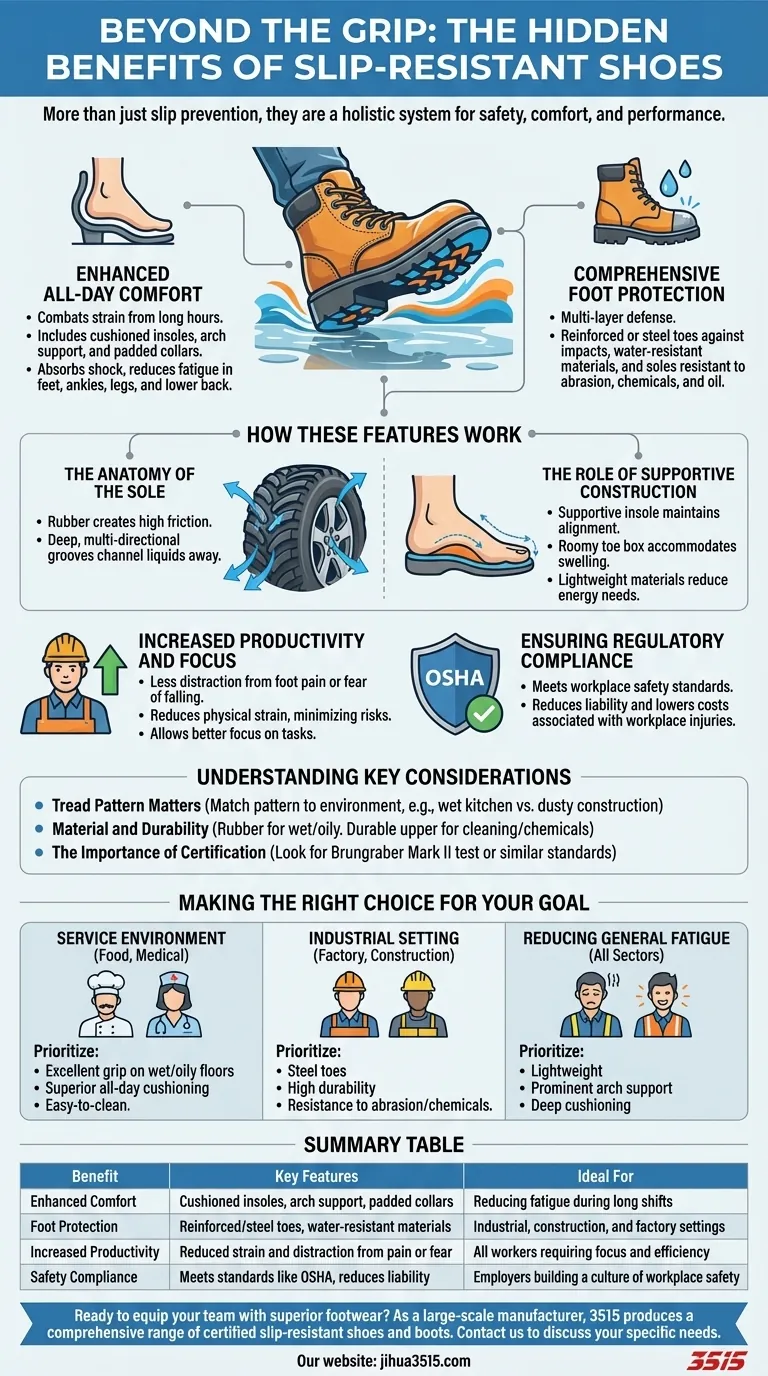
Enhanced All-Day Comfort
Many slip-resistant shoes incorporate features specifically designed to combat the strain of standing or walking for long hours. These often include cushioned insoles, arch support, and padded collars.
This construction helps absorb shock and distribute weight more evenly across the foot, reducing fatigue not just in the feet but also in the ankles, legs, and lower back.
Comprehensive Foot Protection
In many industries like construction or factory work, slip resistance is just one of several required safety features.
These shoes often include reinforced or steel toes to protect against impacts, water-resistant materials to keep feet dry, and soles designed to withstand abrasion, chemicals, or oil. This creates a multi-layer defense for the foot.
Increased Productivity and Focus
When workers are comfortable and feel secure, they are less distracted by foot pain or the fear of falling.
By reducing physical strain and minimizing the risk of slips, trips, and falls—the third most common non-fatal work injury—these shoes allow employees to focus more effectively on their tasks.
Ensuring Regulatory Compliance
For many employers, providing appropriate footwear is a key part of meeting workplace safety standards, such as those set by OSHA.
Equipping teams with certified slip-resistant shoes helps ensure compliance, reduces liability, and fosters a culture of safety, which in turn lowers costs associated with workplace injuries.
How These Features Work in Practice
The benefits of slip-resistant shoes are not accidental; they are the result of intentional engineering that addresses the physics of walking on hazardous surfaces and the biomechanics of the human body.
The Anatomy of the Sole
The shoe's grip comes from its rubber sole, which naturally creates high friction. This is enhanced by deep, often multi-directional grooves or treads.
This tread pattern is designed to channel water, oil, and other liquids away from the bottom of the shoe, allowing the rubber to make solid contact with the floor and maximize its grip.
The Role of Supportive Construction
Comfort features work together to prevent strain. A supportive insole helps maintain proper foot alignment, while a roomy toe box accommodates the natural swelling of feet that occurs throughout the day.
Lightweight materials further reduce the energy needed for each step, combating cumulative fatigue over a long shift.
Understanding the Key Considerations
Not all slip-resistant shoes are created equal. Choosing the right pair depends entirely on understanding your specific work environment and potential hazards.
The Tread Pattern Matters
A tread pattern that works well on a wet kitchen floor may not be optimal for a dusty construction site. Look for patterns designed for your specific conditions, such as those with grooves that resist clogging with debris.
Material and Durability
The sole's material is critical. Rubber is excellent for wet or oily surfaces. The durability of the shoe's upper material is also important to ensure it can withstand frequent cleaning or exposure to chemicals without degrading.
The Importance of Certification
Look for shoes that have been tested and certified by a recognized standard, such as the Brungraber Mark II test. This provides an objective measure of the shoe's performance on slippery surfaces and offers assurance of its quality.
Making the Right Choice for Your Goal
Selecting the correct shoe requires matching its features to your daily tasks and environment.
- If your primary focus is a service environment (food, medical): Prioritize shoes with excellent grip on wet and oily floors, superior all-day cushioning, and an easy-to-clean design.
- If your primary focus is an industrial setting (factory, construction): Seek out shoes with added protection like steel toes, high durability, and resistance to abrasion or chemicals.
- If your primary focus is reducing general fatigue: Look for lightweight shoes with prominent arch support and deep cushioning to minimize strain during long shifts on your feet.
Ultimately, investing in the right slip-resistant footwear is an investment in your own health, safety, and daily performance.
Summary Table:
| Benefit | Key Features | Ideal For |
|---|---|---|
| Enhanced Comfort | Cushioned insoles, arch support, padded collars | Reducing fatigue during long shifts |
| Foot Protection | Reinforced/steel toes, water-resistant materials | Industrial, construction, and factory settings |
| Increased Productivity | Reduced strain and distraction from pain or fear of falling | All workers requiring focus and efficiency |
| Safety Compliance | Meets standards like OSHA, reduces liability and injury costs | Employers building a culture of workplace safety |
Ready to equip your team with superior footwear that protects and enhances performance?
As a large-scale manufacturer, 3515 produces a comprehensive range of certified slip-resistant shoes and boots for distributors, brand owners, and bulk clients. Our production capabilities encompass all types of safety footwear, engineered for durability, comfort, and compliance.
Contact us today to discuss your specific needs and discover how our solutions can bring value to your business and workforce.
Visual Guide
Related Products
- Heavy-Duty Waterproof Nubuck Safety Boots Safety Shoes for Bulk Supply
- Premium Suede Sport Safety Shoes for Wholesale & Bulk Orders
- Durable Leather Moc Toe Work Boots for Wholesale & Custom Manufacturing
- Durable High-Traction Canvas Sneakers Wholesale & Custom Manufacturing
- Advanced KPU Athletic Safety Shoe with Steel Toe Cap Anti-Slip Rotary Lacing System
People Also Ask
- What primary protective functions do professional safety boots provide in urban solid waste recovery and waste picking processes? Discover Dual-Layer Protection.
- How do safety boots reduce cutting hazards? Essential Protection for Your Workforce
- Which organizations develop safety standards for work boots? Ensure Compliance & Worker Safety
- What are the common types of safety boots and their primary uses? A Guide to Industrial Footwear
- Why is ankle and arch support important in safety footwear? Prevent Injury & Fatigue