
Originally designed for military operations, combat boots are now widely used for a range of demanding activities. They are highly suitable for multi-day hiking, backpacking, and strenuous work in fields like construction or law enforcement, where robust protection and ankle support are critical.
The core purpose of a combat boot is to provide maximum durability and support in harsh, unpredictable environments. They excel when the terrain is challenging and protection is more important than low weight or flexibility.
The Design Philosophy: Protection Over Agility
To understand where combat boots fit, you must first understand their fundamental design. They are not simply heavy-duty shoes; they are a specific tool engineered for a specific job.
Built for Unforgiving Conditions
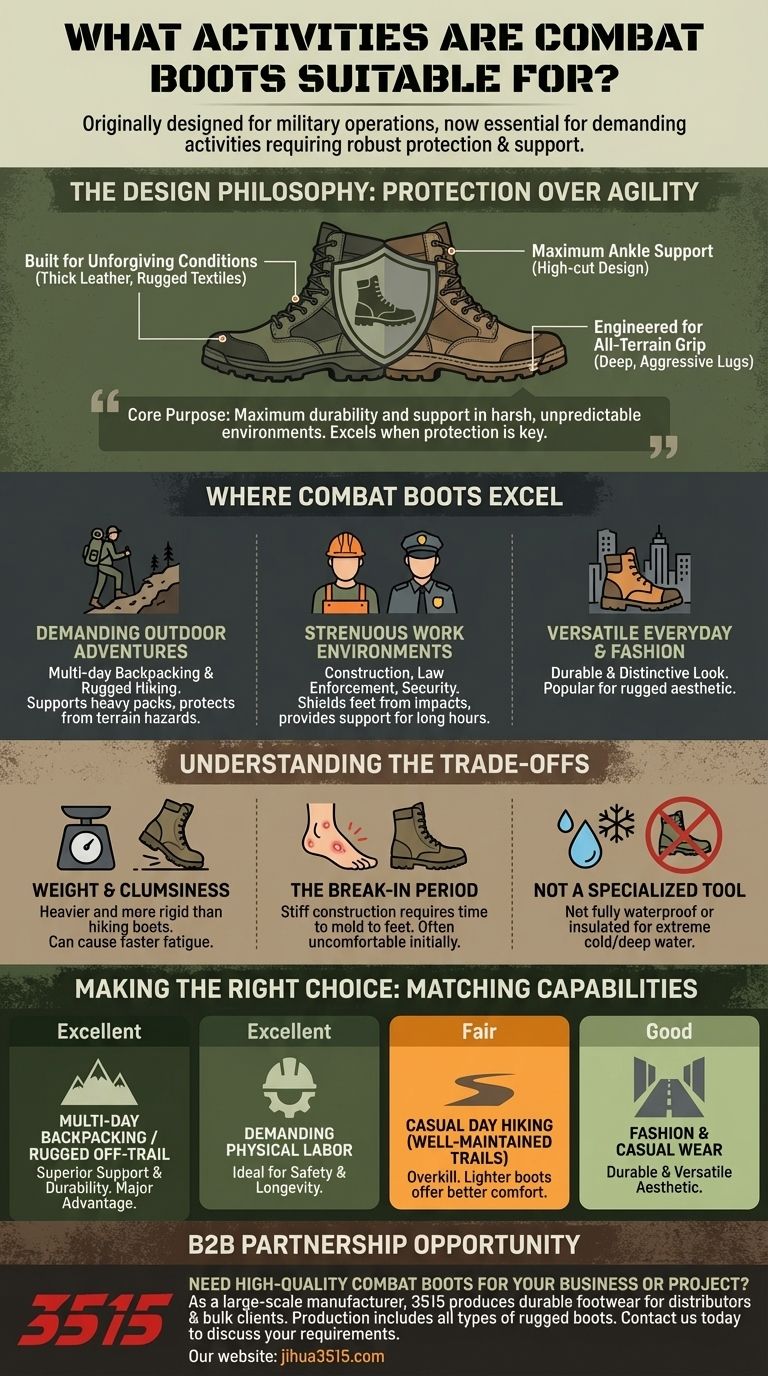
Combat boots prioritize durability above all else. They are constructed from thick leather and rugged textiles designed to withstand abrasion, impacts, and long-term wear in difficult environments.
Maximum Ankle Support
Their high-cut design is a defining feature. This provides crucial support for the ankle, reducing the risk of sprains and twists when navigating uneven ground or carrying heavy loads, such as a backpack or professional gear.
Engineered for All-Terrain Grip
The outsoles of combat boots feature deep, aggressive lugs. This tread pattern is designed to provide reliable traction on a variety of loose or challenging surfaces, from mud and gravel to rocky inclines.
Where Combat Boots Excel
The robust features of combat boots make them the ideal choice for specific scenarios where lesser footwear would fail.
Demanding Outdoor Adventures
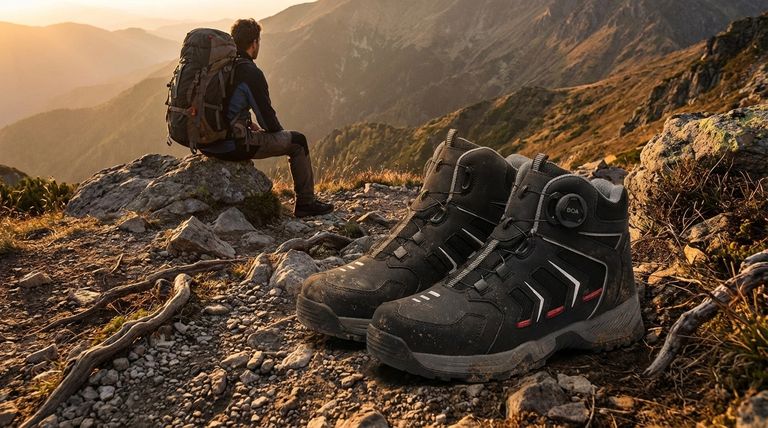
For multi-day backpacking or hiking through rugged, off-trail terrain, combat boots are an excellent choice. Their structure supports the added weight of a pack and protects the feet from rocks, roots, and other hazards.
Strenuous Work Environments
Professionals in construction, law enforcement, security, and even roles like truck driving or moving benefit from the protective qualities of combat boots. They shield the feet from potential impacts and provide the necessary support for long hours standing or walking.
Versatile Everyday and Fashion Wear
Beyond their functional purpose, the rugged aesthetic of combat boots has made them a popular choice for everyday fashion. They offer a durable and distinctive look that is highly versatile.
Understanding the Trade-offs
No single piece of footwear is perfect for every situation. The strengths of combat boots come with inherent compromises that make them unsuitable for certain activities.
Weight and Clumsiness
Combat boots are significantly heavier and more rigid than standard hiking boots or sneakers. This extra weight can lead to fatigue more quickly and can feel clumsy on simple, even terrain.
The Break-in Period
Due to their stiff construction, most combat boots require a significant break-in period. They are often not comfortable straight out of the box and can cause blisters until they have molded to your feet.
Not a Specialized Tool
While versatile, a combat boot is not a specialist. It is not fully waterproof like a Wellington boot, nor is it insulated for extreme cold like a dedicated snow boot. For activities in deep mud, water, or arctic conditions, a specialized boot is superior.
Overkill for Maintained Trails
For casual day hikes on well-marked and relatively flat paths, combat boots are often unnecessary. A lightweight, flexible walking boot will provide sufficient support while being far more comfortable and less fatiguing.
Making the Right Choice for Your Goal
To select the right footwear, you must match the boot's capabilities to your intended activity.
- If your primary focus is multi-day backpacking or rugged off-trail hiking: The superior support and durability of combat boots are a major advantage.
- If your primary focus is demanding physical labor: Their protective features and rugged construction make them an ideal choice for safety and longevity.
- If your primary focus is day hiking on well-maintained trails: A lighter, more flexible hiking or walking boot will provide better comfort and reduce fatigue.
- If your primary focus is fashion and casual wear: The timeless, rugged aesthetic of combat boots makes them a durable and versatile option.
Ultimately, choosing the right boot means honestly assessing your needs and matching them to the footwear's core design strengths.
Summary Table:
| Activity | Suitability | Key Benefit |
|---|---|---|
| Multi-day Hiking/Backpacking | Excellent | Ankle support & durability under heavy loads |
| Construction/Law Enforcement | Excellent | Foot protection & long-lasting wear |
| Rugged Off-Trail Terrain | Excellent | Aggressive grip & impact resistance |
| Casual Day Hiking (maintained trails) | Fair | Can be overkill; lighter boots may be better |
| Fashion/Everyday Wear | Good | Rugged aesthetic & general durability |
Need high-quality combat boots for your business or project?
As a large-scale manufacturer, 3515 produces a comprehensive range of durable footwear for distributors, brand owners, and bulk clients. Our production capabilities encompass all types of rugged boots, ensuring the durability, support, and traction your customers need.
Contact us today to discuss your specific requirements and discover how we can be your reliable manufacturing partner.
Visual Guide
Related Products
- Durable Military Combat Boots with Water Drainage for Wholesale & OEM
- Durable Leather Tactical Boots Wholesale & Custom Manufacturing for Brands
- High-Traction Suede Tactical Boots Wholesale & Custom Manufacturing
- Wholesale Lightweight Tactical Boots Custom Manufacturer for Desert & Combat Use
- Durable Mid-Cut Tactical Boots for Wholesale & Private Label
People Also Ask
- Why must gait validation for military applications be conducted in combat boots? Ensure Data Accuracy for Soldiers
- What are the common types of combat boots? Find the Right Boot for Your Mission
- What factors should be considered when choosing military boots for hiking? Durability vs. Weight for Your Terrain
- What are the key considerations when choosing military boots? Prioritize Compliance, Environment & Fit
- How should the midfoot and heel fit in military boots? Achieve a Snug, Secure Fit for Blister Prevention

















