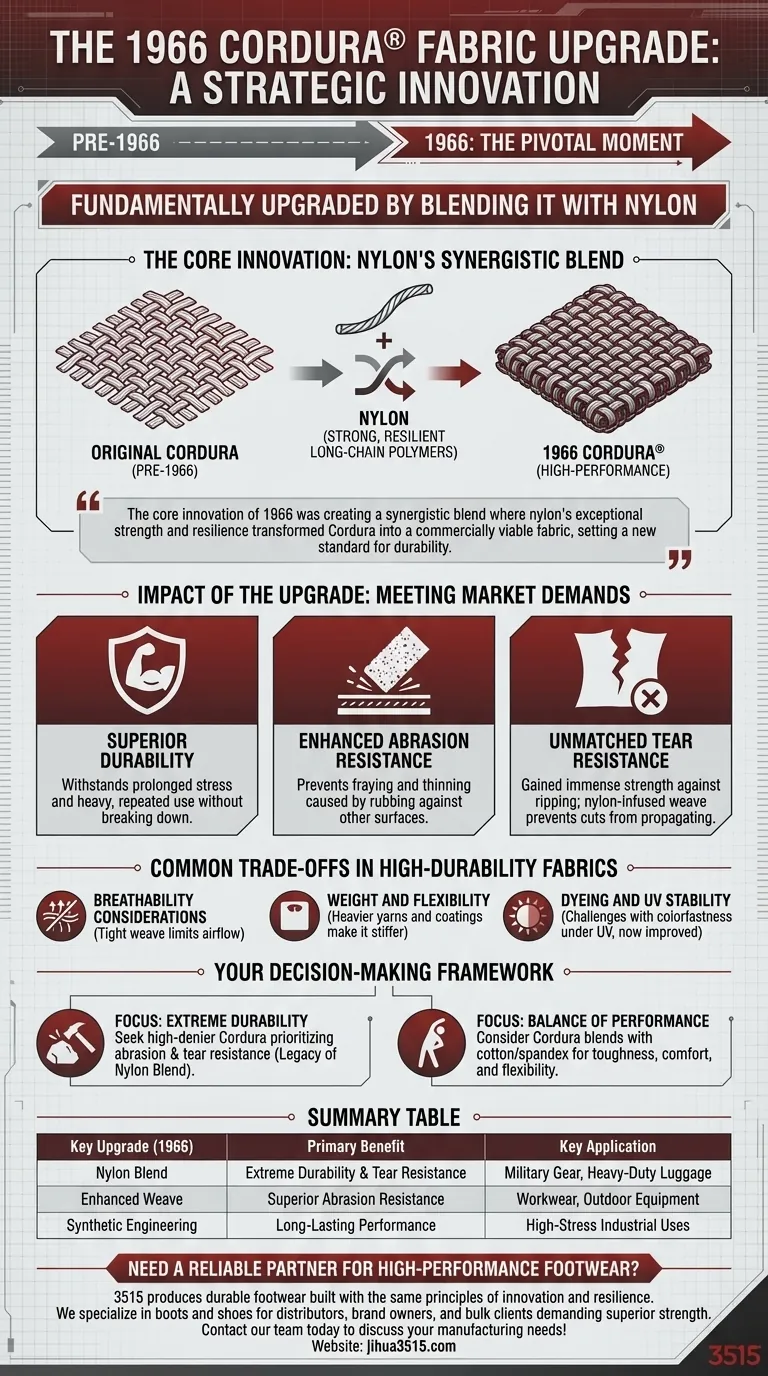
In 1966, Cordura fabric was fundamentally upgraded by blending it with nylon. This strategic innovation dramatically enhanced its strength, creating a new version of the fabric with significantly improved durability, tear resistance, and abrasion resistance that could meet growing market demands for high-performance textiles.
The core innovation of 1966 was creating a synergistic blend where nylon's exceptional strength and resilience transformed Cordura into a commercially viable fabric, setting a new standard for durability.
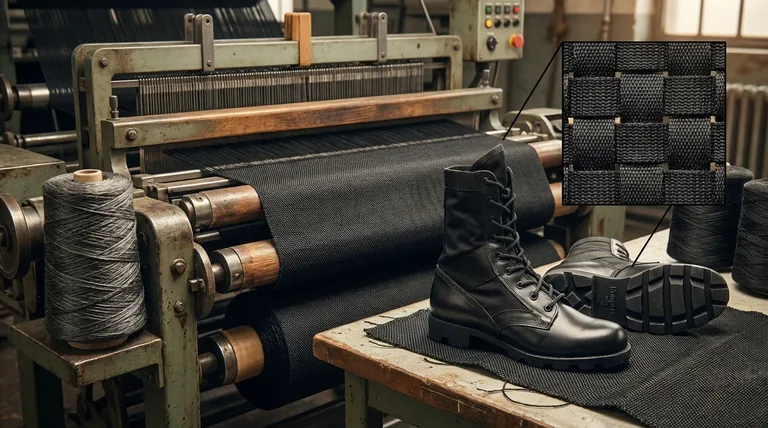
The Technical Leap of 1966
The 1966 upgrade was not a minor tweak; it was a complete re-engineering of the material that established Cordura's modern reputation. The key was leveraging a new, powerful synthetic fiber.
The Key Innovation: Introducing Nylon
The most critical change was the introduction of nylon into the fabric's composition. This specific blend created a material far superior to its predecessors.
Researchers effectively combined the properties of two different materials to create a composite with enhanced characteristics.
Why Nylon Was the Missing Piece
Nylon brought exceptional durability and resilience to the table. Its long-chain polymers are incredibly strong and resistant to damage from friction, pulling, and tearing.
This blend directly addressed the primary weaknesses of earlier fabrics, transforming Cordura into a material suitable for demanding applications.
Meeting a New Market Demand
By the mid-1960s, there was a clear commercial need for tougher, longer-lasting fabrics for everything from luggage to military gear.
The new nylon-blended Cordura perfectly met this demand, leading to its rapid adoption and increased commercial value. It solved a real-world problem for manufacturers who needed a more reliable textile.
Understanding the Impact of the Upgrade
The specific performance benefits of the nylon blend were immediate and significant, defining the characteristics that the Cordura brand is still known for today.
Superior Durability
The new fabric could withstand prolonged stress and use without breaking down. This made it ideal for products that see heavy, repeated use.
Enhanced Abrasion Resistance
One of the most notable improvements was its ability to resist surface wear. The nylon blend prevented fraying and thinning caused by rubbing against other surfaces.
Unmatched Tear Resistance
The fabric also gained immense strength against ripping and tearing. Once a small puncture or cut occurred, the nylon-infused weave helped prevent it from propagating further.
Common Trade-offs in High-Durability Fabrics
While the 1966 upgrade created an exceptionally tough material, it's important to understand the inherent trade-offs that come with such nylon-based, high-denier textiles. This context is crucial for any technical evaluation.
Breathability Considerations
Fabrics engineered for maximum durability often have a tight weave that can limit airflow. This makes them less breathable than natural fibers like cotton or wool, which is a key consideration for certain types of apparel.
Weight and Flexibility
Increasing tear and abrasion resistance often involves using heavier yarns and coatings. This can make the resulting fabric stiffer and heavier than less-durable alternatives.
Dyeing and UV Stability
Historically, synthetic fibers like nylon presented unique challenges for dyeing and long-term colorfastness, especially under prolonged UV exposure. While modern formulations have vastly improved this, it remains a fundamental area of innovation for all performance textiles.
How This Applies to Your Decision-Making
Understanding this pivotal moment in Cordura's history provides a framework for evaluating modern performance fabrics. The principles behind the 1966 upgrade still drive textile innovation today.
- If your primary focus is extreme durability: The legacy of the nylon blend is what you are seeking; look for high-denier Cordura fabrics that prioritize abrasion and tear resistance above all else.
- If your primary focus is a balance of performance: Recognize that the original innovation has spawned a family of fabrics, some of which blend Cordura with other materials like cotton or spandex to balance toughness with comfort and flexibility.
This strategic enhancement in 1966 was the pivotal moment that defined Cordura's legacy as a benchmark for toughness.
Summary Table:
| Key Upgrade (1966) | Primary Benefit | Key Application |
|---|---|---|
| Nylon Blend | Extreme Durability & Tear Resistance | Military Gear, Heavy-Duty Luggage |
| Enhanced Weave | Superior Abrasion Resistance | Workwear, Outdoor Equipment |
| Synthetic Engineering | Long-Lasting Performance | High-Stress Industrial Uses |
Need a Reliable Partner for High-Performance Footwear?
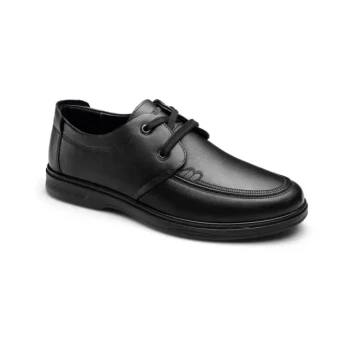
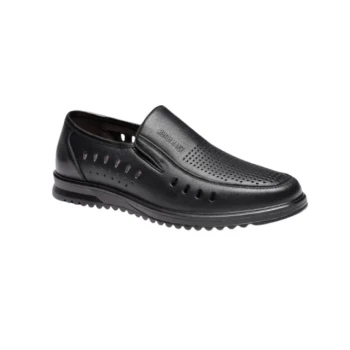
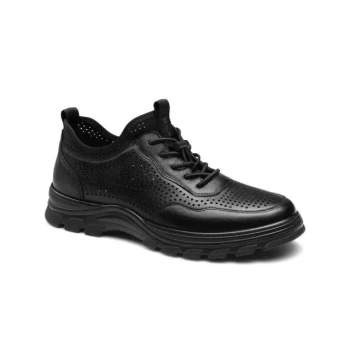
As a large-scale manufacturer, 3515 produces a comprehensive range of durable footwear built with the same principles of innovation and resilience that defined the 1966 Cordura upgrade. We specialize in creating boots and shoes for distributors, brand owners, and bulk clients who demand superior strength, abrasion resistance, and long-lasting performance.
Let us help you develop the perfect footwear solution for your market. Contact our team today to discuss your manufacturing needs!
Visual Guide
Related Products
- Lightweight Breathable Sneakers with Wet-Traction Grip for Wholesale & Private Label
- Wholesale Durable Safety Boots Manufacturer Customizable Steel Toe Work Boots
- Durable High-Ankle Tactical Boots Wholesale Manufacturer for Custom & Bulk Orders
- Wholesale Durable Camouflage Canvas Shoes with High-Traction Cleated Rubber Sole
- Lightweight Breathable Training Shoes for Wholesale & Custom OEM Manufacturing
People Also Ask
- Why are breathable sneakers necessary for tropical commuting? Stay Cool and Dry in High Humidity
- What role do lightweight training shoes play in urban traffic? Boost Agility and Reaction for Safer City Navigation
- How do lightweight shoes provide support? The Science of Efficient Cushioning & Stability
- How do lightweight shoes improve breathability? Discover the Science of Cool, Dry Feet
- How do lightweight shoes contribute to healthier feet? Reduce Fatigue & Prevent Foot Problems