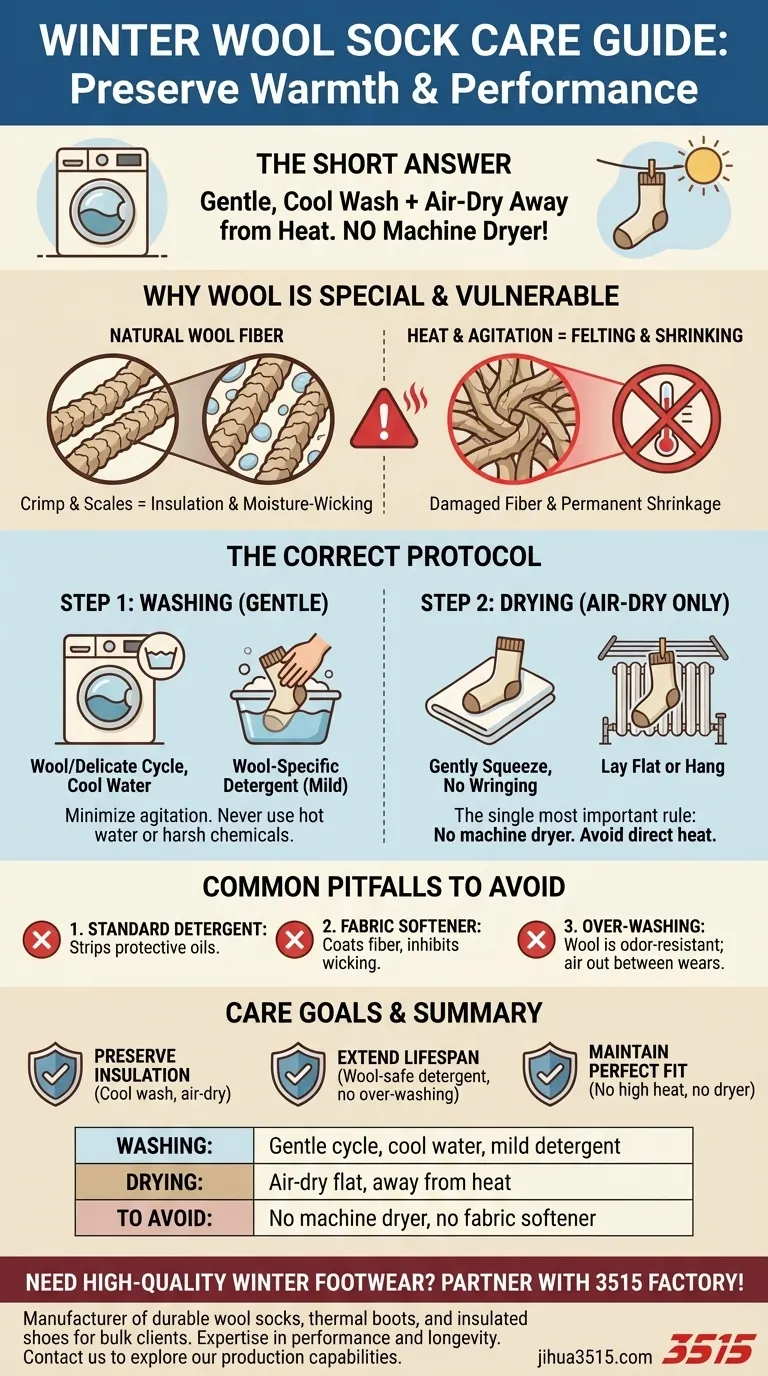
The short answer is: You must wash wool socks using a gentle, cool cycle with a mild detergent and, most importantly, air-dry them away from direct heat. Exposing wool to high heat from a machine dryer is the primary cause of shrinking and fiber damage, which ruins their performance.
Caring for wool socks is less about cleaning and more about preservation. The goal is to maintain the natural structure of the wool fiber, which is responsible for its exceptional warmth and moisture-wicking capabilities.
Why Wool Demands Special Care
Wool fibers are not like synthetic materials or cotton. They have a unique, complex structure with a natural crimp and a scaly outer layer. This structure is key to their performance.
The Role of Fiber Structure
The crimp in wool fibers creates tiny air pockets. These pockets are what trap body heat, providing excellent insulation even when the sock is thin.
The outer layer of the fiber, called the cuticle, is naturally water-repellent on the outside and moisture-absorbing on the inside. This allows wool to pull sweat vapor away from your skin, keeping you dry and warm.
How Heat and Agitation Cause Damage
High heat and aggressive agitation (like in a standard washer or dryer cycle) are the enemies of wool.
Heat causes the microscopic scales on the wool fibers to open up and interlock with each other. As they cool and dry, they lock into this new, tighter position. This process is called felting, and it's what causes wool to shrink permanently.
Aggressive spinning and tumbling also physically damages the delicate fibers, leading to pilling, stretching, and a loss of the natural loft that traps heat.
The Correct Washing and Drying Protocol
Follow these steps precisely to preserve the integrity of your wool socks and extend their lifespan.
Step 1: Washing
Use a gentle cycle on your washing machine. If available, a dedicated "wool" or "delicates" setting is ideal. This minimizes agitation.
Wash with cool or lukewarm water. Never use hot water, as it accelerates the shrinking process.
Use a wool-specific or pH-neutral detergent. Harsh, alkaline detergents can strip the natural lanolin from wool fibers, making them brittle.
For best results, you can also hand-wash the socks in a basin of cool water with a small amount of mild detergent. Gently squeeze the water through the socks; do not wring or twist them.
Step 2: Drying
Never put wool socks in a machine dryer. This is the single most important rule. The high, tumbling heat is guaranteed to shrink and damage them.
Gently squeeze out excess water. Do not wring the socks, as this stretches the fibers. You can roll them in a towel and press gently to absorb more moisture.
Lay them flat or hang them to air-dry. Keep them away from direct sunlight or heat sources like radiators, which can also cause damage and brittleness.
Common Pitfalls to Avoid
Understanding what not to do is just as important as knowing the correct method.
Mistake 1: Using Standard Detergent
Regular laundry detergents are often too harsh for wool. They can strip the fibers of their natural protective oils, reducing their softness and performance.
Mistake 2: Using Fabric Softener
Fabric softeners coat wool fibers, which can inhibit their natural ability to manage moisture and regulate temperature. It's an unnecessary step that harms performance.
Mistake 3: Over-washing
Wool is naturally odor-resistant and antimicrobial. Unless your socks are visibly soiled or have a strong odor, you can often wear them multiple times between washes. Simply airing them out overnight is often sufficient.
Making the Right Choice for Your Goal
Your approach to care ensures your socks continue to serve their primary purpose.
- If your primary focus is preserving maximum insulation: Strict adherence to cold water washing and air-drying is non-negotiable to maintain the fiber's heat-trapping loft.
- If your primary focus is extending the lifespan of your investment: Avoid over-washing and always use a wool-safe detergent to protect the fiber's natural integrity.
- If your primary focus is maintaining a perfect fit: You must never expose the socks to high heat, as shrinking from a machine dryer is irreversible.
Proper care ensures your wool socks will continue to provide the warmth and comfort you depend on all winter.
Summary Table:
| Step | Key Action | Why It Matters |
|---|---|---|
| Washing | Gentle cycle, cool water, mild detergent | Prevents fiber damage and felting (shrinkage) |
| Drying | Air-dry flat, away from heat | Preserves wool's natural loft and warmth |
| To Avoid | No machine dryer, no fabric softener | Maintains moisture-wicking and insulating properties |
Need High-Quality Winter Footwear? Partner with 3515 Factory!
As a large-scale manufacturer, 3515 produces a comprehensive range of durable and performance-driven footwear, including wool socks, thermal boots, and insulated shoes, for distributors, brand owners, and bulk clients. Our expertise ensures your products are built to last and perform in the toughest winter conditions.
Let’s discuss your needs: Contact our team today to explore our production capabilities and how we can support your business.
Visual Guide
Related Products
- Durable Leather Work Boots for Wholesale & Custom Manufacturing
- Durable Goodyear Welt Leather Work Boots for Wholesale & Private Label
- Lightweight Breathable Training Shoes for Wholesale & Custom OEM Manufacturing
- Wholesale Breathable Perforated Leather Derby Shoes with Modern Comfort Sole
- Custom Manufactured Air Cushion Leather Business Shoes for Wholesale
People Also Ask
- What is the difference between full-grain and top-grain leather? Premium Material Guide for Boot Manufacturers
- What are the common workplace hazards that can be mitigated with the right work boots? Protect Your Workforce
- What are the common foot issues workers face due to uncomfortable work boots? Prevent Pain & Deformities
- What are the advantages of leather versus synthetic work boots? A Guide to Choosing the Right Material
- What are the key components of modern work boots? Engineered for Ultimate Durability and Comfort