
Properly maintaining tactical or combat boots hinges on a consistent cycle of cleaning, conditioning, and drying. This routine involves wiping off debris daily, using appropriate brushes and cleaners for deep cleaning, conditioning leather to prevent cracking, and ensuring boots dry completely away from direct heat after exposure to moisture.
Your boots are a critical piece of equipment, and their maintenance is not about appearance—it is a discipline essential for preserving their protective features, performance, and longevity in the field.
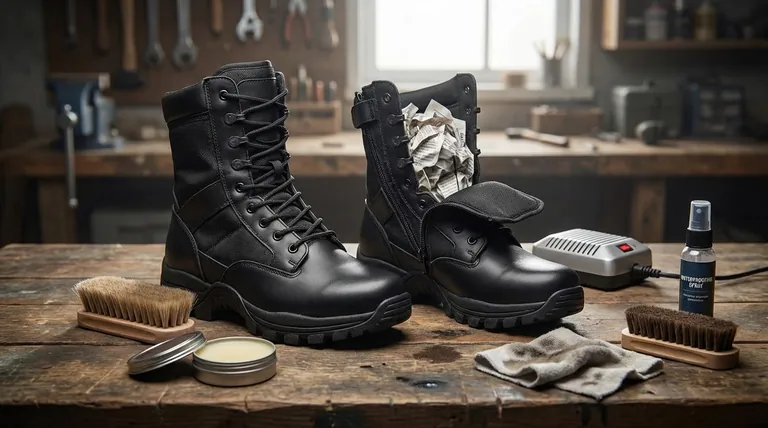
The Foundation: A Consistent Cleaning Routine
A disciplined cleaning schedule is the most important factor in extending the life of your boots. It prevents the slow degradation caused by abrasive dirt and moisture.
Why Daily Wiping Matters
Dirt, mud, and dust are abrasive. When left on boots, these particles grind into the materials with every step, slowly breaking down fibers and stitching.
A quick wipe-down with a cloth or soft brush at the end of the day removes these damaging particles before they can cause harm.
The Right Tools for the Job
For general cleaning, a damp cloth is sufficient. For dried mud or stubborn dirt, use a soft-bristled brush.
Avoid harsh chemical cleaners, as they can strip natural oils from leather and damage the adhesives and synthetic materials used in modern boot construction.
Handling Suede and Synthetics
Suede and nubuck require specialized tools like a suede brush or eraser to remove stains without damaging the texture.
Synthetic materials found on many tactical boots are generally easier to clean but still benefit from regular wiping with a damp cloth to maintain breathability and appearance.
Managing Moisture: The Critical Step
How you handle wet boots is arguably more important than how you clean them. Improper drying can permanently damage even the most durable footwear.
Why Proper Drying is Non-Negotiable
Trapped moisture weakens leather, degrades adhesives, and promotes the growth of bacteria, leading to odor and material breakdown.
Chronically damp boots lose their structural integrity and comfort, failing to provide the support your feet require.
The Dangers of Direct Heat
Never dry your boots near a fire, radiator, or other sources of intense, direct heat. This will crack leather, warp synthetics, and melt the glues holding the boot together.
This type of damage is irreversible and can quickly ruin a perfectly good pair of boots.
Safe Drying Techniques
The best method is to use a dedicated boot dryer, which circulates air at a low, consistent temperature.
Alternatively, remove the insoles and stuff the boots with crumbled newspaper. The paper will absorb the moisture and should be replaced every few hours until the boots are dry.
Conditioning and Protection: Preserving Material Integrity
Cleaning removes damaging elements, while conditioning and waterproofing restore the boot's defenses. This is especially critical for leather boots.
The Role of Conditioning for Leather
Leather is a natural skin that needs moisture to stay flexible. Conditioning with appropriate oils or creams replenishes these oils, keeping the material supple and preventing it from drying out and cracking.
When to Condition
Do not condition brand-new leather boots immediately. Allow for a break-in period of around 100 hours of wear before applying the first treatment.
After the break-in, condition the leather whenever it starts to look or feel dry, or after a particularly thorough cleaning.
Waterproofing Treatments
If your boots are not already made with a waterproof membrane, applying a waterproofing treatment can add a crucial layer of protection against the elements.
Always ensure boots are completely clean and dry before applying any treatment for maximum effectiveness.
Understanding the Common Pitfalls
Even with the best intentions, common mistakes can shorten the lifespan of your boots. Awareness is the first step to avoidance.
The Mistake of Over-Conditioning
While essential, using too much oil or conditioner can oversaturate the leather. This makes the material too soft, reducing the critical support and protection the boot is designed to provide.
Neglecting the Insoles
Insoles absorb a tremendous amount of sweat and impact. Remove them to allow proper drying and change them periodically to maintain hygiene, comfort, and foot support.
Improper Storage
Storing boots in a damp, unventilated space or in direct sunlight will degrade materials over time. Always store them in a cool, dry place away from UV light.
Tailoring Maintenance to Your Boot's Mission
Your specific maintenance focus should align with the primary function of your footwear.
- If you rely on tactical boots for agility and comfort: Prioritize daily cleaning and frequent insole checks to maintain their lightweight performance and prevent internal odor and breakdown.
- If you depend on combat boots for durability in harsh environments: Emphasize a disciplined leather conditioning and waterproofing routine to preserve the boot's structural integrity and protective qualities.
- If your boots frequently see wet or muddy conditions: Make a proper, gentle drying process your number one priority to prevent the rapid degradation caused by moisture.
Consistent care ensures your boots remain a reliable tool, not a point of failure.
Summary Table:
| Maintenance Step | Key Action | Why It's Important |
|---|---|---|
| Cleaning | Wipe off debris daily; deep clean with soft brush. | Removes abrasive particles that degrade materials. |
| Drying | Air dry away from direct heat; use boot dryer or newspaper. | Prevents leather cracking and adhesive failure. |
| Conditioning | Apply oil/cream after break-in period (≈100 hrs). | Keeps leather supple and prevents cracking. |
| Waterproofing | Apply treatment to clean, dry boots. | Adds crucial protection against the elements. |
Ensure your team's footwear is mission-ready with professional-grade tactical and combat boots from 3515.
As a large-scale manufacturer, we produce a comprehensive range of durable footwear designed for the demands of distributors, brand owners, and bulk clients. Our production capabilities encompass all types of tactical and combat boots, built to withstand harsh conditions while providing superior comfort and support.
Let us help you equip your personnel with reliable footwear that performs when it counts.
Contact our team today to discuss your specific needs and explore our catalog.
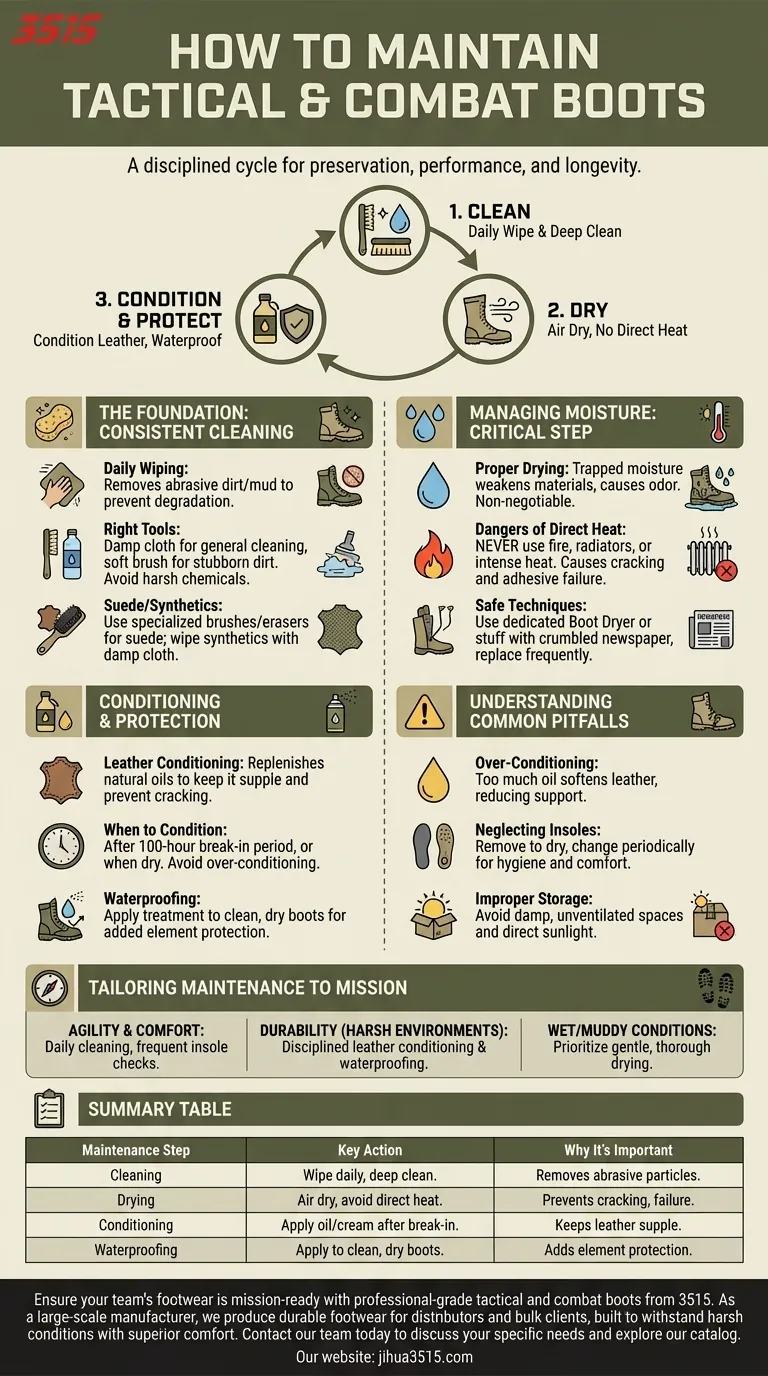
Visual Guide
Related Products
- Durable Leather Tactical Boots Wholesale & Custom Manufacturing for Brands
- High-Traction Suede Tactical Boots Wholesale & Custom Manufacturing
- Durable Leather High-Ankle Tactical Boots for Wholesale & Custom Manufacturing
- Durable Mid-Cut Tactical Boots for Wholesale & Private Label
- Wholesale Waterproof Tactical Boots Custom Suede & High-Traction Soles
People Also Ask
- What specialized protections do tactical boots offer? Maximize Endurance with High-Performance Footwear
- What features should law enforcement officers look for in tactical boots? Essential Guide for Safety & Performance
- Importance of Professional Tactical Boots in Loess Gully Regions: Ensure Safety and Precision for Field Monitoring
- What is rucking, and why are tactical boots suitable for it? Discover the Ultimate Footwear for Heavy Loads
- What makes the traction of tactical boots superior? Unlock the Science of Unbeatable Grip















