
Caring for suede and nubuck leather centers on two distinct actions: proactive protection with a waterproofing agent and routine cleaning with a soft brush. These leathers have a soft, velvet-like finish that is highly susceptible to moisture and dirt, making preventative care the most critical step.
Suede and nubuck's signature velvety texture comes from their napped, open-pored surfaces. Proper care isn't about aggressive cleaning but about creating a barrier to prevent moisture and dirt from ever setting into these delicate fibers.
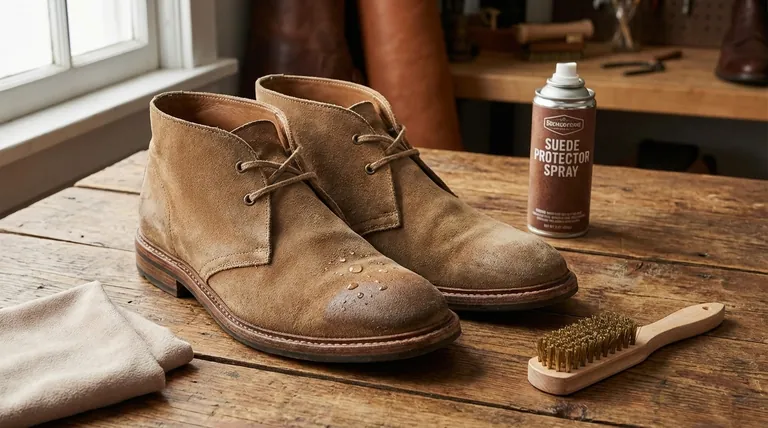
Understanding the Materials: Suede vs. Nubuck
To care for these materials properly, it's essential to understand what makes them unique. Though they look similar, they originate from different parts of the animal hide.
What is Suede?
Suede is made from the underside of the animal hide. This inner layer is softer and more pliable but also less durable and more absorbent than the outer layer. Its napped finish gives it a distinct, fuzzy texture ideal for casual footwear and accessories.
What is Nubuck?
Nubuck is created from the outer side of the hide, the same part used for traditional full-grain leather. The surface is then sanded or buffed to create a short, velvety nap. This process makes it more durable and water-resistant than suede, but it still requires similar protective care.
The Common Challenge: A Napped Surface
Despite their different origins, both materials share a fibrous, open-pored surface. This texture is what makes them so vulnerable. Unlike smooth leather, which can repel water, the nap on suede and nubuck acts like a sponge, readily absorbing liquids and trapping fine dirt particles.
The Two Pillars of Suede & Nubuck Care
An effective care routine is built on prevention and consistent, gentle maintenance.
Pillar 1: Proactive Protection
The single most important step is to treat the item with a waterproofing or stain-repellent spray specifically designed for suede and nubuck. This should be done before the first time you wear the item.
This spray creates an invisible shield over the fibers. It doesn't make the item completely waterproof, but it does cause water to bead up and roll off rather than immediately soaking in, giving you time to blot it away.
Pillar 2: Routine Maintenance
After each use, gently go over the surface with a soft-bristled suede brush. This simple action lifts away surface-level dust and dirt before it can become ground into the material's nap.
Brushing also helps restore the velvety texture by lifting any fibers that may have become flattened during wear.
Understanding the Trade-offs and Pitfalls
While beautiful, suede and nubuck are not without their inherent limitations. Understanding these will prevent costly mistakes.
Inherent Vulnerability to Water
Even when treated with a protective spray, suede and nubuck are not suitable for heavy rain or snow. Excessive moisture can lead to water spots, discoloration, and a permanent flattening of the material's texture.
The Challenge of Stains
Oil, grease, and dark liquids are the primary enemies of suede and nubuck. Once a stain sets deep into the fibers, it can be extremely difficult, if not impossible, to remove completely without professional assistance.
Contrast with Other Leathers
You cannot care for these materials like you would others. Applying a traditional leather conditioner meant for full-grain leather will ruin the nap and leave a greasy finish. Likewise, wiping them down like synthetic leather will only push dirt deeper into the fibers.
How to Apply This to Your Items
Your approach should be dictated by the condition of your item and your long-term goal.
- If your primary focus is preserving a new item: Apply a quality waterproofing spray before the first wear and reapply it periodically. Brush it gently after each use.
- If your primary focus is removing light, dry dirt: Use a dedicated suede brush or eraser to gently lift the soil from the surface without scrubbing.
- If your primary focus is dealing with a wet or heavily stained item: Blot any liquid immediately with a clean cloth. For set-in stains, it is safest to consult a professional leather cleaner.
Consistent, preventative care is the key to maintaining the unique character of your suede and nubuck goods for years to come.
Summary Table:
| Care Step | Purpose | Tool/Method |
|---|---|---|
| Proactive Protection | Creates a barrier against moisture and stains | Suede/nubuck waterproofing spray |
| Routine Maintenance | Removes surface dirt and restores nap texture | Soft-bristled suede brush |
| Key Limitation | Material is not suitable for heavy rain/snow | Avoid prolonged exposure to moisture |
As a leading manufacturer, 3515 produces a comprehensive range of high-quality footwear, including suede and nubuck styles, for distributors, brand owners, and bulk clients. Ensure your inventory is built to last with our expertly crafted products. Contact us today to discuss your footwear needs and discover how we can support your business with reliable, durable solutions.
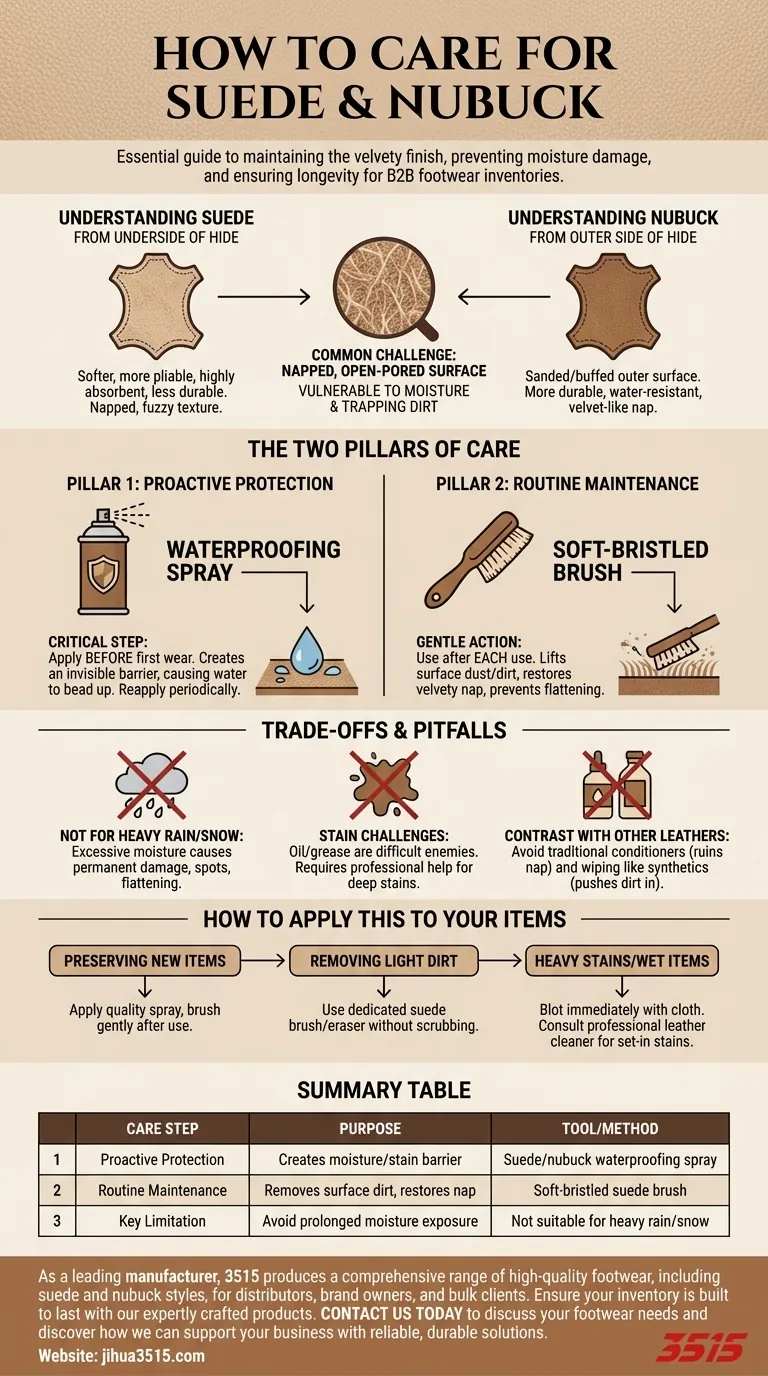
Visual Guide
Related Products
People Also Ask
- What kind of shoes do businessmen wear? Master the Dress Code for Professional Success
- What are the essential business shoes every man should own? Build a Professional Wardrobe Foundation
- What type of boots are suitable for challenging weather conditions in a business setting? | Durable & Professional Footwear
- How does leather compare to other shoe materials in terms of durability and comfort? A Material Guide for Footwear
- What are the options for waterproofing leather shoes? Protect Your Footwear for the Long Haul
