
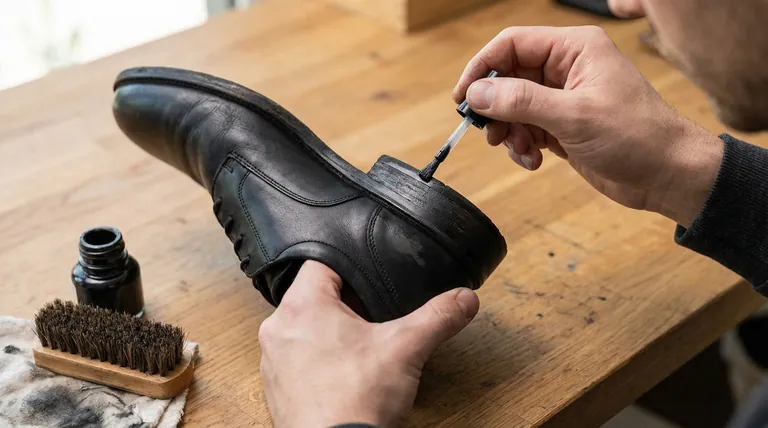
The specific product designed to restore the color and surface of leather on heels and soles is called a heel dressing. This is a specialized liquid formula, distinct from standard shoe polish, created to adhere to the hard, non-flexing edges of a shoe's sole and heel block. It provides a durable, uniform finish that renews the appearance of these high-wear areas.
Heel dressing functions more like a durable edge paint than a conditioning polish. Its purpose is to create a hard, protective, and cosmetically clean finish on the sole and heel edges, which endure constant scuffing and impact.
Why Heel Dressing is a Unique Solution
Standard shoe polishes are designed for the flexible leather uppers of a shoe. They contain waxes and oils to nourish the leather and allow it to bend without cracking. Using these on a heel edge would result in a soft finish that wears away almost immediately.
A Specialized Formula
Heel dressing is typically a water-based or alcohol-based liquid. It contains a higher concentration of dyes and pigments for deep color restoration.
Crucially, it also includes binders and resins that dry to a hard, scuff-resistant finish. This is essential for an area that makes direct contact with the ground.
How It Differs from Shoe Polish
The core difference lies in the end goal. Shoe polish is for conditioning and creating a flexible shine on the shoe's upper.
Heel dressing, in contrast, is for creating a hard, opaque, and long-lasting coating on a rigid surface. It does not provide nourishment to the leather.
The Correct Application Method
Applying heel dressing properly is key to achieving a clean, professional result that looks like it came from the factory. The process is straightforward but requires attention to detail.
Step 1: Preparation is Crucial
The heel and sole edge must be completely clean. Use a brush to remove any dirt, dust, or loose debris. If there is old, flaking dressing, you may need to use a cleaner or lightly sand the edge to create a smooth surface.
Step 2: Careful Application
Most heel dressings come with a built-in applicator, like a small dauber or brush. Apply a thin, even coat directly to the leather edge of the heel and sole. Work carefully to avoid getting the dressing on the upper part of the shoe.
Step 3: Drying and Finishing
Allow the dressing to dry completely, which usually takes 15-30 minutes. The finish will typically dry to a natural or semi-gloss sheen. Do not attempt to buff it while it is wet. For deeper scuffs, a second coat may be applied after the first has fully cured.
Common Pitfalls to Avoid
While effective, heel dressing is a specialized product that requires careful handling. Misuse can lead to undesirable results that are difficult to correct.
The Risk of Permanent Staining
The most common mistake is accidentally getting the dressing on the shoe's upper. Because it is a dye-based product, it can permanently stain the leather, especially on lighter-colored shoes. Always use a steady hand and protect the upper.
Not a Structural Repair
Heel dressing is a cosmetic solution. It covers scuffs and restores color beautifully, but it will not fill in deep gouges or repair separated heel blocks. Structural damage requires the attention of a professional cobbler.
Color Matching Limitations
Heel dressings are most commonly available in black and various shades of brown to match the vast majority of dress shoes. Finding a match for brightly colored or uniquely finished sole edges can be difficult.
Making the Right Choice for Your Goal
Using this product correctly is a fundamental step in comprehensive shoe care, bridging the gap between a simple polish and a professional restoration.
- If your primary focus is a quick cosmetic refresh: A single, careful coat of heel dressing is the fastest way to make worn shoes look sharp and well-maintained again.
- If your primary focus is a complete restoration: Use heel dressing as the final finishing touch after you have thoroughly cleaned, conditioned, and polished the shoe's uppers.
Applying the right product to the right part of the shoe is the key to achieving professional and long-lasting results.
Summary Table:
| Product | Primary Use | Key Feature | Best For |
|---|---|---|---|
| Heel Dressing | Restores color on rigid heel/sole edges | Dries to a hard, protective finish | Cosmetic refresh of scuffed edges |
| Standard Shoe Polish | Conditions and shines flexible leather uppers | Contains nourishing waxes and oils | Maintaining the shoe's main body |
Need High-Quality Footwear or Professional Restoration Supplies?
As a large-scale manufacturer, 3515 produces a comprehensive range of durable footwear and professional care products for distributors, brand owners, and bulk clients. Our production capabilities ensure you receive products built to last, from the uppers to the soles.
Let us be your reliable manufacturing partner. Whether you need robust shoes or the professional-grade products to maintain them, we can deliver.
Contact 3515 today to discuss your needs and explore our capabilities!
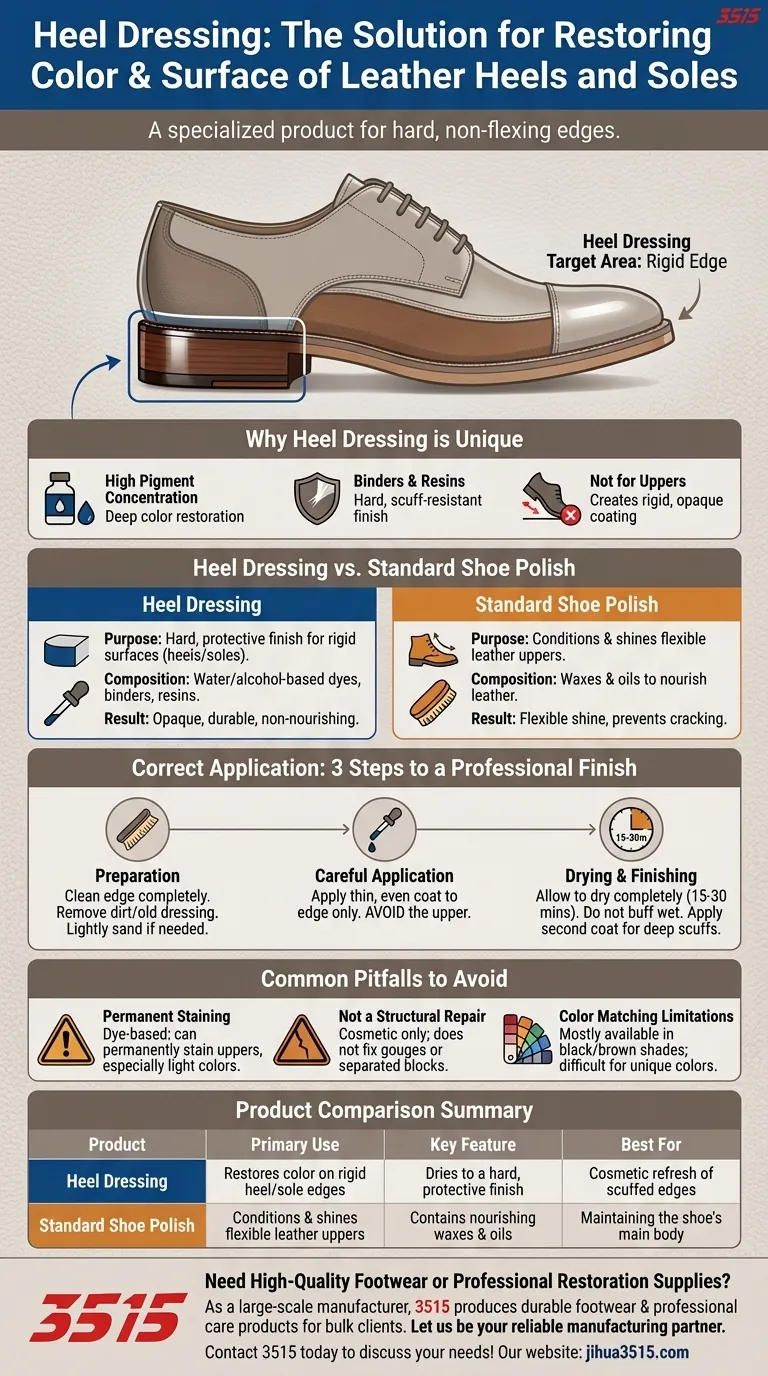
Visual Guide
Related Products
- Wholesale Comfort Dress Shoes with Dial Closure for Custom Manufacturing
- Classic Leather Derby Dress Shoes Wholesale & Custom Manufacturing
- Wholesale Leather Business Casual Shoes with Dial Closure - Manufacturer of Comfort Dress Sneakers
People Also Ask
- How do comfort dress shoes differ from traditional dress shoes? Discover the Ergonomic Advantage
- Which dress shoe styles are suitable for wearing with jeans? A Guide to Smart-Casual Style
- What features make dress shoes suitable for standing all day? Achieve All-Day Comfort with Anatomical Design
- What are the benefits of resoling dress shoes? Extend Life & Boost Comfort
- What recent trends have influenced traditional dress shoe designs? The Shift to Modern Comfort


