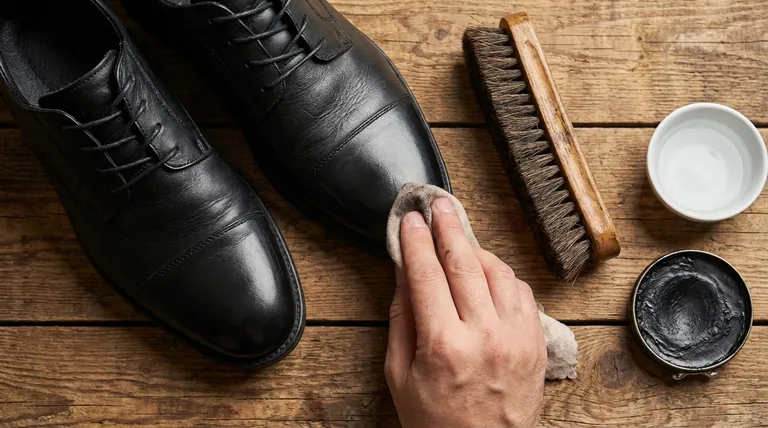
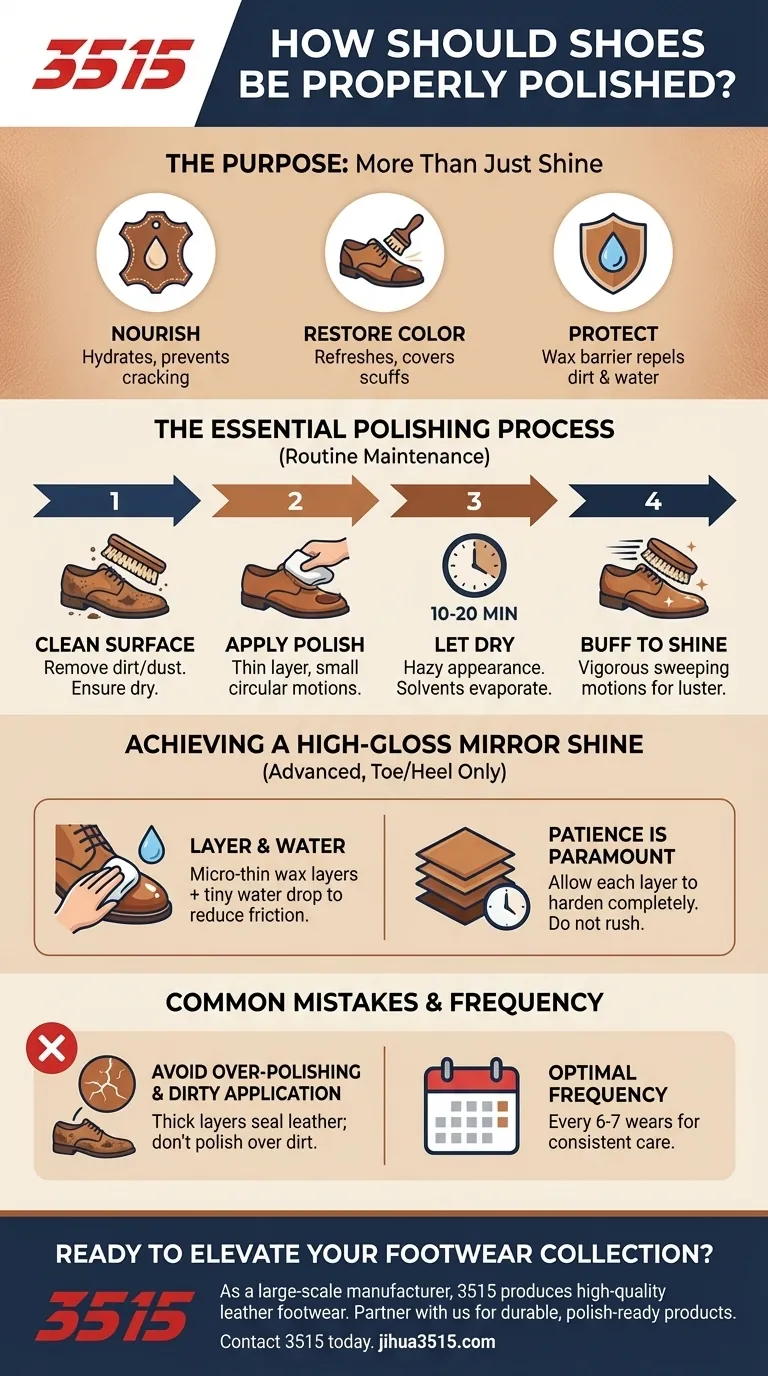
Properly polishing shoes involves applying a thin layer of polish with a brush or cloth in small circular motions, allowing it to dry for 10-20 minutes, and then buffing it with a clean horsehair brush or soft cloth to produce a shine. This process not only restores color and creates a protective barrier but also nourishes the leather, extending the life of your footwear.
The goal of polishing is not to cake on a thick, shiny layer. It's a maintenance ritual designed to nourish the leather with a thin, protective coat of wax and pigment, preserving its health and appearance over time.
The Purpose of Polishing: More Than Just Shine
Understanding why you polish your shoes is the first step to doing it correctly. It's a functional process of leather care, not just a cosmetic one.
Nourishing the Leather
High-quality shoe polish contains oils and nutrients that are absorbed by the leather. This process keeps the material hydrated, preventing it from drying out, becoming brittle, and cracking.
Restoring Color
Daily wear inevitably leads to minor scuffs and fading. The pigment in shoe polish restores color to these areas, providing a uniform and refreshed look across the entire shoe.
Creating a Protective Barrier
The wax component of shoe polish creates a thin, semi-permeable barrier on the surface of the leather. This helps repel water and prevent dirt from becoming ground into the material itself.
The Essential Polishing Process
For routine maintenance, a simple, effective process is all you need. This method will produce a clean, healthy-looking satin or matte finish.
Step 1: Clean the Surface
Before applying any polish, you must remove all surface dirt and dust. Use a horsehair brush to vigorously brush the entire shoe, paying special attention to the welt and seams. A damp cloth can be used for more stubborn dirt, but ensure the shoe is completely dry before proceeding.
Step 2: Apply the Polish
Using a horsehair brush or a soft cloth wrapped around your fingers, apply a thin, even layer of polish. Use small, circular motions to work the product into the leather across the entire shoe.
Step 3: Let the Polish Dry
Allow the polish to sit and dry on the leather for 10-20 minutes. The surface will develop a dull, hazy appearance. This brief period allows the solvents to evaporate and the waxes to harden slightly.
Step 4: Buff to a Shine
Using a separate, clean horsehair brush, use rapid side-to-side sweeping motions across the shoe. This action removes excess polish and heats the wax, creating friction that brings out a natural luster. For a slightly higher shine, follow the brush buff with a soft, lint-free cloth.
Achieving a High-Gloss Mirror Shine
For a formal, glass-like finish on the toe and heel, a more advanced technique is required. This should only be done on the hard, non-flexing parts of the shoe.
The Principle of Layering
A mirror shine is built by applying multiple, micro-thin layers of wax polish. Each subsequent layer fills in the microscopic pores of the previous one, creating an increasingly smooth surface that reflects light perfectly.
Using Wax and Water
Apply a tiny amount of wax polish to the toe cap. Then, add a single drop of cool water and work both into the leather with small, fast circles using a soft cloth. The water reduces friction and helps create a harder, smoother wax surface.
Patience is Paramount
Allow each layer to harden completely before attempting the next. Rushing this process will tear the previous layer and prevent you from achieving the desired glossy finish.
Understanding the Trade-offs and Common Mistakes
Proper technique prevents common problems and ensures you're helping, not harming, your shoes.
The Risk of Over-Polishing
Applying polish too frequently or in thick layers can be counterproductive. The heavy buildup can seal the leather, preventing it from breathing. Worse, this thick wax layer can trap dirt and crack, creating a messy appearance that is difficult to fix.
Polishing Is Not Cleaning
Never apply new polish over a dirty shoe. This simply grinds the dirt and old polish into the leather, creating a dull, caked-on layer.
Frequency Is Key
A good rule of thumb is to polish your shoes after every six to seven wears. This provides consistent nourishment and protection without leading to excessive buildup.
Making the Right Choice for Your Goal
Select your polishing method based on the desired outcome and the occasion.
- If your primary focus is routine maintenance and a healthy satin finish: Stick to the essential four-step process with a single, thin layer of cream or wax polish.
- If your primary focus is a formal, high-gloss appearance for an event: Use the layering technique with wax polish and water, but only on the rigid toe caps and heel counters.
Ultimately, treating shoe care as a deliberate act of maintenance, rather than a quick fix, will protect your investment and keep your footwear looking its best for years.
Summary Table:
| Aspect | Key Takeaway |
|---|---|
| Primary Goal | Nourish leather, restore color, and create a protective barrier. |
| Core Process | Clean, apply thin layer of polish, let dry for 10-20 min, buff. |
| Frequency | Polish after every 6-7 wears for optimal maintenance. |
| High-Gloss Shine | Achieved by layering micro-thin wax polish with water on the toe/heel. |
| Common Mistake | Avoid applying polish over dirt or using thick layers that can crack. |
Ready to Elevate Your Footwear Collection?
As a large-scale manufacturer, 3515 produces a comprehensive range of high-quality leather footwear for distributors, brand owners, and bulk clients. Our expert production capabilities ensure every pair is built to last, making proper care and polishing a valuable investment.
Partner with us to offer your customers durable, polish-ready footwear that stands the test of time.
Contact 3515 today to discuss your manufacturing needs and discover how we can help you build a superior product line.
Visual Guide
Related Products
- Custom Safety Shoe Manufacturer for Wholesale & OEM Brands
- Wholesale Modern Perforated Leather Derby Shoes with Chunky Sole for Custom Branding
- Durable Rubber Sole Outdoor Shoes Wholesale & Custom Manufacturing
- Wholesale Breathable Perforated Leather Derby Shoes with Modern Comfort Sole
- Wholesale Perforated Comfort Dress Shoes | Custom Derby Shoe Manufacturer
People Also Ask
- What are the advantages of water-based polyurethane spray coatings for safety shoe slip resistance? Enhanced Traction
- What makes a safety shoe a safety shoe? Essential Protection for Hazardous Work
- What additional features can a good safety shoe offer? Maximize Protection and Comfort
- What type of safety shoe is recommended for workers exposed to heavy machinery? Steel Toe Boots for Ultimate Protection
- What are the main materials used in steel toe safety shoes? A Guide to Protective Footwear Construction