
The choice between tactical boots and regular footwear is fundamentally a decision between specialized utility and general comfort. Tactical boots are engineered instruments designed for durability, rigorous ankle support, and protection in unpredictable or hostile environments. In contrast, regular footwear—ranging from sneakers to casual leather boots—is optimized for predictable terrain, specific sports, or aesthetic conformity in social settings.
To make the correct decision, assess the "failure consequence" of your footwear: if shoe failure means a minor annoyance, regular footwear is sufficient; if failure could result in injury or comprised performance in the field, tactical boots are required.
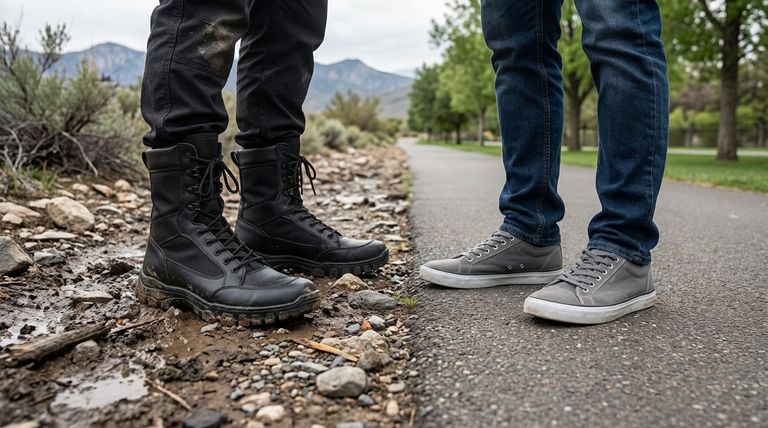
Defining the Operational Context
Assessing Environmental Demands
The primary driver for choosing tactical boots is the environment. If you are navigating rugged terrain, debris-strewn urban areas, or extreme weather, the reinforced construction of a tactical boot is necessary.
Regular footwear is designed for controlled surfaces like pavement, gym floors, or office carpets. It lacks the defensive exterior required to deflect sharp objects or resist abrasion.
Activity Intensity and Load
Consider what you are carrying. Tactical boots are built with rigid shanks and supportive uppers to stabilize your foot when you are carrying heavy packs or equipment.
Regular shoes often collapse under heavy loads, leading to foot fatigue and potential injury. If your activity involves high-intensity shifts or bearing weight, the structural integrity of a boot is superior.
Analyzing Construction and Materials
Durability and Longevity
Tactical boots utilize materials like full-grain leather and high-denier nylon. These materials are selected to withstand thousands of flexion cycles and resist tearing.
Regular footwear typically uses lighter, softer materials focused on immediate comfort and style. While initially comfortable, they degrade significantly faster under stress.
Traction and Stability
The outsole of a tactical boot is aggressive. It is designed to grip mud, slick concrete, and loose gravel simultaneously to prevent slips during critical movements.
Regular shoes offer traction for specific, singular contexts (e.g., a running shoe grips track, a dress shoe grips carpet). They rarely offer the multi-surface versatility required for field operations or hiking.
Understanding the Trade-offs
Weight vs. Agility
While modern tactical boots are becoming lighter, they are generally heavier than sneakers or casual shoes. This added weight can increase fatigue over long distances if the protection is not actually needed.
Breathability vs. Protection
Many tactical boots feature waterproofing or thick protective layers. While this keeps water out, it can also trap heat and moisture inside, potentially causing discomfort in hot, non-hazardous environments.
Social Versatility
Tactical boots are functional tools that often clash with formal or semi-formal attire. As noted in the references, styles like Chelsea or Chukka boots offer a middle ground for everyday wear, providing better aesthetics than tactical gear while offering more durability than a sneaker.
Making the Right Choice for Your Goal
To select the right footwear, you must match the gear to your primary objective.
- If your primary focus is field operations or hiking: Prioritize tactical boots with aggressive traction and ankle support to handle uneven terrain and heavy loads.
- If your primary focus is speed and agility: Look for "lightweight tactical" boots that bridge the gap, offering the flexibility of a sneaker with the durability of a boot.
- If your primary focus is daily office or casual wear: Choose regular footwear or versatile leather boots (like Chukkas) that prioritize breathability and aesthetic matching.
Your footwear is the foundation of your mobility; choose the tool that ensures you remain effective in your specific environment.
Summary Table:
| Feature | Tactical Boots | Regular Footwear |
|---|---|---|
| Primary Use | Rugged terrain, heavy loads, unpredictable environments | Controlled surfaces, casual wear, specific sports |
| Durability | High (full-grain leather, high-denier nylon) | Moderate (softer, style-focused materials) |
| Ankle Support | Reinforced for stability and injury prevention | Minimal to none |
| Traction | Aggressive multi-surface grip (mud, gravel, concrete) | Context-specific (e.g., running tracks, pavement) |
| Weight | Heavier for protection | Lighter for agility and comfort |
Need durable, high-performance footwear tailored to your demands? As a large-scale manufacturer, 3515 produces a comprehensive range of tactical and casual boots for distributors, brand owners, and bulk clients. Our expertise ensures superior durability, support, and traction—whether for field operations, hiking, or everyday wear. Contact us today to discuss custom solutions that keep you effective and safe in any environment!
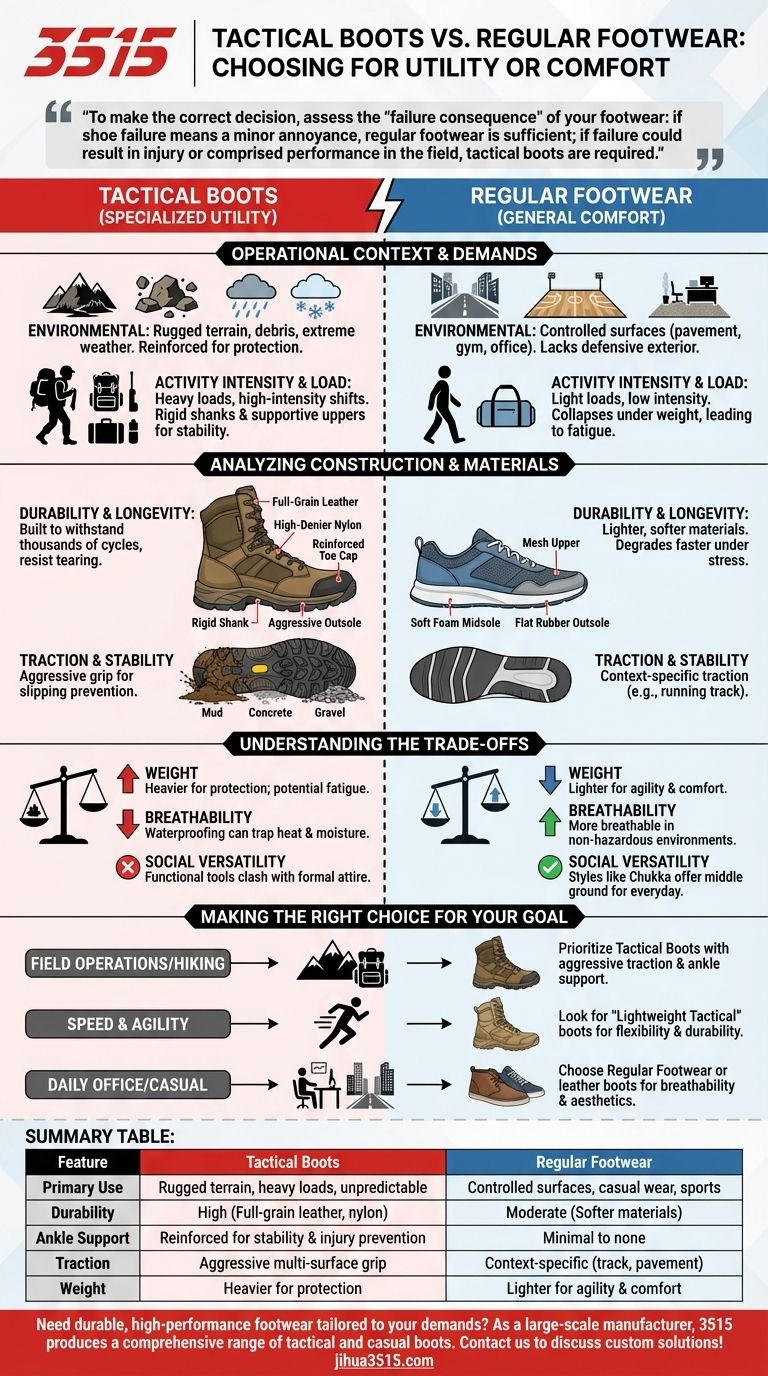
Visual Guide
Related Products
- Durable Leather Tactical Boots Wholesale & Custom Manufacturing for Brands
- High-Traction Suede Tactical Boots Wholesale & Custom Manufacturing
- Durable Leather High-Ankle Tactical Boots for Wholesale & Custom Manufacturing
- Durable Mid-Cut Tactical Boots for Wholesale & Private Label
- Wholesale Waterproof Tactical Boots Custom Suede & High-Traction Soles
People Also Ask
- What specialized protections do tactical boots offer? Maximize Endurance with High-Performance Footwear
- What features should law enforcement officers look for in tactical boots? Essential Guide for Safety & Performance
- Importance of Professional Tactical Boots in Loess Gully Regions: Ensure Safety and Precision for Field Monitoring
- What is rucking, and why are tactical boots suitable for it? Discover the Ultimate Footwear for Heavy Loads
- What makes the traction of tactical boots superior? Unlock the Science of Unbeatable Grip















