Properly caring for Chukka boots involves a routine tailored to their specific material—either leather or suede—and includes regular cleaning, conditioning, and protection. For true longevity, using cedar shoe trees to maintain shape and absorb moisture, along with rotating your boots to allow them to fully dry between wears, is just as critical as the products you apply.
The ultimate lifespan of your Chukka boots is determined by two key factors: the quality of their initial construction and the consistency of your care routine. A boot built with a Goodyear welt and high-grade leather can last for decades, but only if it is consistently maintained.
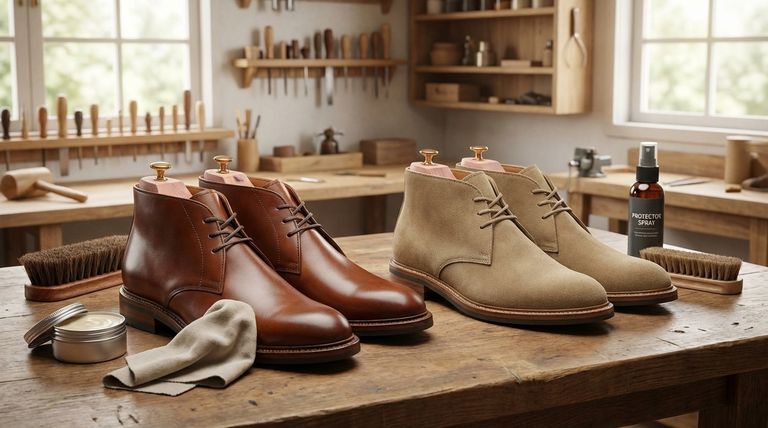
The Foundation of Longevity: What to Look For
Before you can care for a boot, it's helpful to understand what makes it last. The principles of longevity are built-in from the start.
Why Construction Matters: The Goodyear Welt
A Goodyear welt is a strip of leather stitched around the bottom edge of the boot, connecting the upper to the sole.
This method is the gold standard for high-quality footwear because it makes the boot exceptionally durable and, most importantly, easy to re-sole. This means a worn-out sole can be replaced by a cobbler without impacting the boot's upper, effectively giving the boot a new life.
The Role of Upper Material: Leather vs. Suede
Chukka boots are typically made from either smooth leather or suede, and your care routine must respect their distinct needs.
Full-grain leather, especially rare and durable types like Cordovan, is known for its resilience and ability to develop a rich patina over time. It is robust and can withstand years of use with proper conditioning.
Suede, on the other hand, is the underside of the hide, giving it a soft, napped texture. While comfortable and stylish, it is more porous and susceptible to water and stains, requiring a more specialized and protective approach to care.
The Core Care Routine: A Material-Specific Guide
Your maintenance plan should be dictated by whether your boots are leather or suede. Using the wrong products can cause irreversible damage.
For Leather Chukka Boots
Leather care is a straightforward three-step process: clean, condition, and protect.
- Clean: Use a horsehair brush to remove loose dirt and dust. For more stubborn grime, a slightly damp cloth is sufficient.
- Condition: Once clean and dry, apply a small amount of a quality leather conditioner with a soft cloth. This restores essential oils, preventing the leather from drying out and cracking.
- Protect: A final buff with a brush brings out the shine. For added weather resistance, especially in wet climates, a light application of a waterproofing spray can provide a protective barrier.
For Suede Chukka Boots
Suede care is primarily about protection and gentle cleaning.
- Protect First: Before you even wear them for the first time, apply a quality suede protector spray. This creates an invisible barrier against water and stains.
- Clean: Use a dedicated suede brush to gently remove dry dirt and restore the nap (the fuzzy texture). For scuffs and minor stains, a suede eraser can effectively lift the mark without damaging the material.
- Avoid Water: Never use water to clean a stubborn stain on suede, as it can create a permanent mark. Specialized suede cleaners are required for significant soiling.
Essential Practices for All Chukka Boots
Regardless of the material, these universal habits are non-negotiable for maximizing the life of any quality footwear.
Use Cedar Shoe Trees
This is the single most effective thing you can do for your boots. Cedar shoe trees absorb moisture from the lining, neutralize odor, and, most critically, help the boot retain its proper shape, preventing deep creasing.
Let Them Dry Naturally
If your boots get wet, resist the temptation to place them near a heater or direct heat source. This will dry out the leather too quickly, causing it to become brittle and crack. Stuff them with newspaper and let them air dry slowly at room temperature.
Rotate Your Boots
Avoid wearing the same pair of boots two days in a row. Giving them at least a full day of rest allows all moisture from perspiration to evaporate completely, which is vital for preserving the integrity of the leather inside and out.
Common Pitfalls to Avoid
Even with the best intentions, common mistakes can shorten the life of your boots.
Over-Conditioning Leather
More is not better. Applying too much conditioner can clog the leather's pores and make it feel greasy. A light coat every few months (or as needed) is all that's required.
Using the Wrong Products on Suede
Never apply leather cream, polish, or wax to suede. These products will instantly ruin the delicate nap, matting it down and creating a permanent dark spot. Stick to products specifically formulated for suede.
Neglecting the Sole and Welt
Even on a Goodyear welted boot, wait until the sole is worn but not compromised. If you wear through the sole and begin damaging the welt itself, the re-soling process becomes much more difficult and expensive.
Making the Right Choice for Your Goal
Your approach to boot care should align with your investment and intended use.
- If your primary focus is maximum durability: Invest in a Goodyear welted boot made from full-grain leather and commit to a disciplined routine of cleaning, conditioning, and using shoe trees.
- If your primary focus is casual style: A suede Chukka is an excellent choice, but be sure to proactively protect it with a quality spray before its first wear and keep a suede brush on hand for regular maintenance.
- If your primary focus is preserving an investment: Treat your boots like any other valuable asset by rotating them, storing them with cedar shoe trees, and having them serviced by a professional cobbler for re-soling when needed.
Ultimately, consistent care is a rewarding ritual that transforms a simple purchase into a lasting and personal possession.
Summary Table:
| Care Step | Leather Boots | Suede Boots |
|---|---|---|
| Clean | Horsehair brush, damp cloth | Suede brush, suede eraser |
| Condition/Protect | Leather conditioner, light buffing | Suede protector spray (apply before first wear) |
| Essential Habit | Use cedar shoe trees, rotate wears, air dry naturally | Use cedar shoe trees, rotate wears, avoid water |
| Key to Longevity | Goodyear welt construction for easy re-soling | Proactive stain and water protection |
Ready to build a durable footwear collection?
As a large-scale manufacturer, 3515 produces a comprehensive range of high-quality footwear for distributors, brand owners, and bulk clients. Our production capabilities encompass all types of durable shoes and boots, built with longevity in mind.
Contact us today to discuss your footwear needs and discover how we can deliver reliable, long-lasting products for your business.
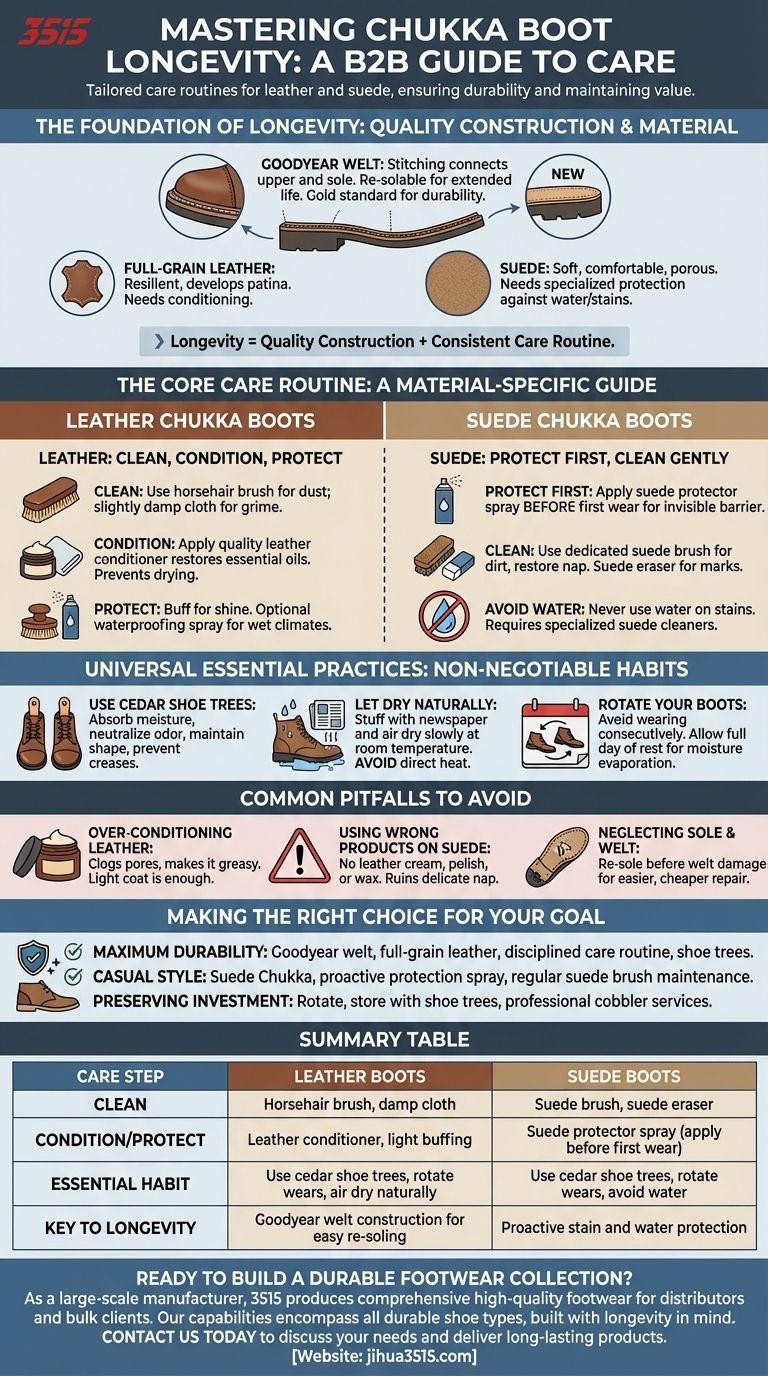
Visual Guide
Related Products
- Durable Spiked Camouflage Boots Wholesale & Factory Production
- Wholesale High-Traction Camo Boots - Custom Manufacturer for Brands
- High-Traction Suede Tactical Boots Wholesale & Custom Manufacturing
- Durable Leather High-Ankle Tactical Boots for Wholesale & Custom Manufacturing
- Premium Wholesale Tactical Style Safety Shoes Boots with Quick Lacing
People Also Ask
- How does boot height affect waterproofing? Choose the Right Height for Ultimate Protection
- What are the best types of shoes for different gardening conditions? Find Your Perfect Match.
- What role does camouflage play in hunting boots? It's More Than Just a Pattern
- What should you look for to ensure boots are fully waterproof? The Essential 2-Part System
- How does boot construction affect waterproofing? The Science Behind Truly Dry Feet