To properly care for your leather chukka boots, you must first remove all surface dirt with a soft brush, then clean the leather with a damp cloth and a mild soap solution. Once they are completely dry, apply a quality leather conditioner in small, circular motions to restore moisture and protect the material from cracking.
The key to extending the life of your chukka boots is treating the leather like skin. It requires regular, gentle cleaning to remove harmful grit and consistent conditioning to stay hydrated, supple, and resilient.
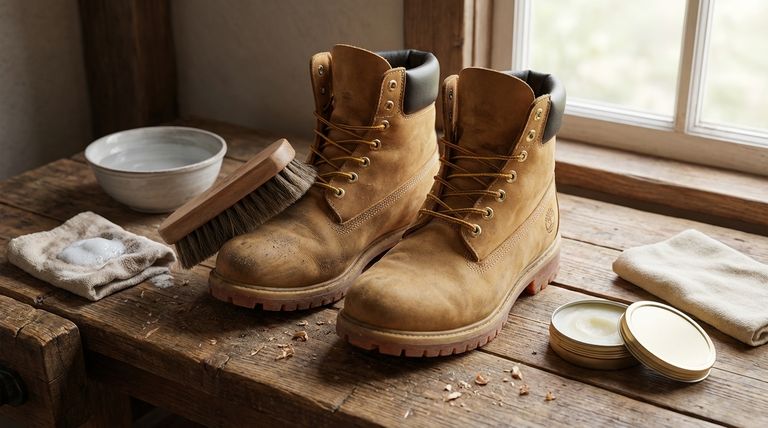
The Foundation: Your Leather Care Toolkit
Before you begin, gathering the right tools is essential. Using the wrong products can cause more harm than good, so it's wise to have a dedicated kit for your footwear.
The Right Brush
A horsehair brush is the industry standard. Its bristles are stiff enough to remove dust and caked-on dirt without scratching the surface of the leather.
The Cleaning Solution
For routine cleaning, a simple mixture of mild soap (like dish soap) and warm water is effective. For deeper stains, a dedicated leather-specific cleaner is the safest choice.
The Conditioning Agent
A quality leather conditioner is non-negotiable. Look for products containing natural oils and waxes that will penetrate and nourish the leather, rather than synthetic solutions that merely sit on the surface.
The Step-by-Step Maintenance Process
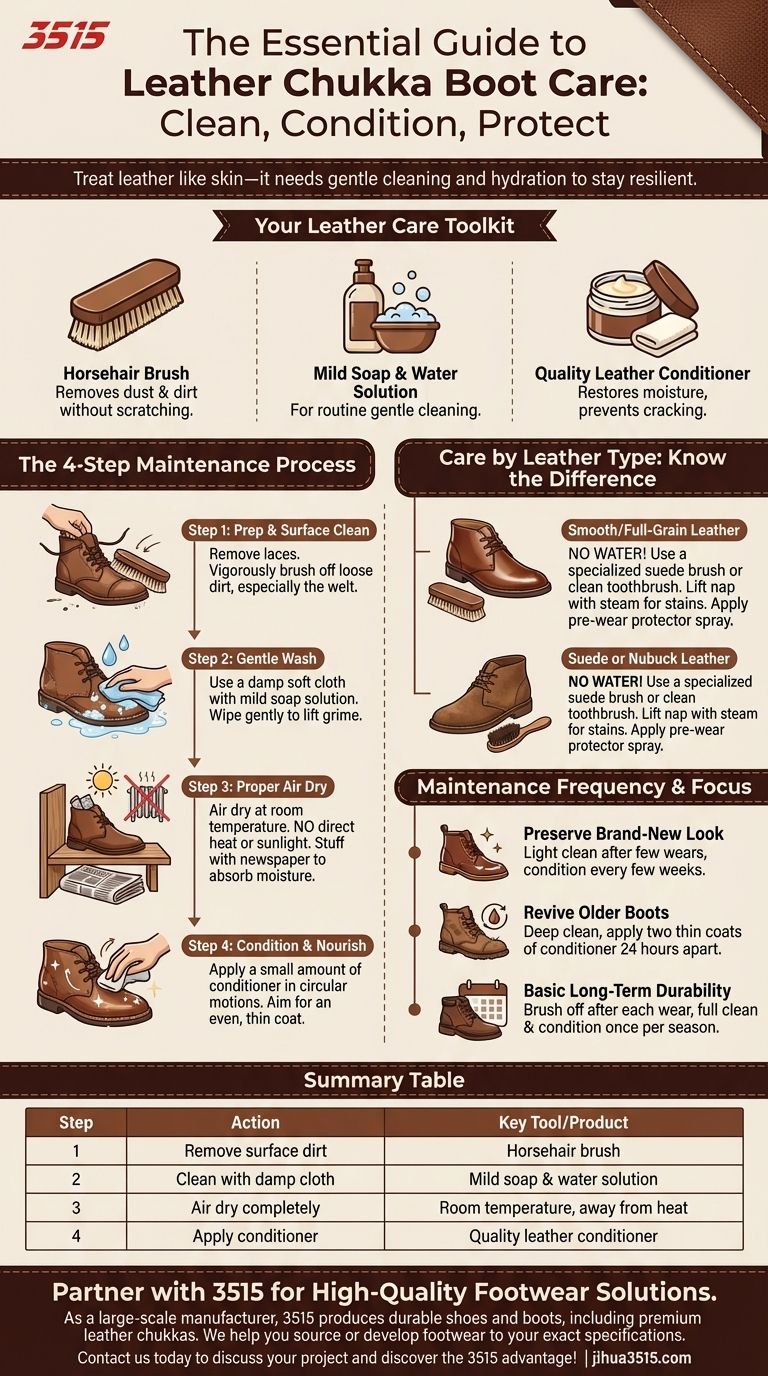
A consistent routine is the most effective way to protect your investment. Follow these steps to keep your chukka boots in prime condition.
Step 1: Preparation and Surface Cleaning
First, remove the laces to ensure you can access the entire boot. Use your horsehair brush to vigorously wipe away all loose dirt, paying special attention to the welt where the upper meets the sole.
Step 2: The Gentle Wash
Dip a soft cloth into your mild soap and warm water solution, wringing it out until it is just damp, not soaking wet. Gently wipe down the entire surface of the boot to lift away grime.
Step 3: Proper Air Drying
Allow the boots to air dry completely at room temperature. Never place them near a direct heat source like a radiator or in direct sunlight, as this can cause the leather to dry out too quickly, leading to cracks. Stuffing them with newspaper can help absorb excess moisture and maintain their shape.
Step 4: Conditioning and Nourishing
Once dry, apply a small, dime-sized amount of leather conditioner to a clean, soft cloth. Work it into the leather using small, circular motions. The goal is an even, thin coat. The leather should absorb the conditioner, not feel greasy.
Understanding the Trade-offs: Different Leather Types
Not all chukka boots are the same. The material dictates the care routine, and using the wrong method can cause irreversible damage.
For Smooth or Full-Grain Leather
This is the most common material. It benefits greatly from the clean-and-condition method described above. You can also apply a wax polish or shoe cream after conditioning to add an extra layer of protection and shine.
For Suede or Nubuck Leather
These materials are extremely sensitive to water. Never use soap and water on suede or nubuck. Instead, rely on a specialized suede brush or a clean toothbrush to gently scrub away marks. For stubborn stains, a brief exposure to steam (e.g., from a kettle) can help lift the nap before brushing. Always use a pre-wear protector spray to repel water and dirt.
How to Apply This to Your Project
Your maintenance frequency and focus should adapt to your boots' condition and your primary goal for them.
- If your primary focus is preserving a brand-new look: Clean them lightly after every few wears and apply a conditioner every few weeks to keep the leather pristine.
- If your primary focus is reviving older, worn boots: Perform a deep clean with a dedicated leather cleaner, followed by two thin coats of conditioner 24 hours apart to deeply re-hydrate the material.
- If your primary focus is basic, long-term durability: Brush off dirt after each wear and commit to a full clean-and-condition cycle at least once per season.
Ultimately, consistent care is what separates boots that last a year from those that last a decade.
Summary Table:
| Step | Action | Key Tool/Product |
|---|---|---|
| 1 | Remove surface dirt | Horsehair brush |
| 2 | Clean with damp cloth | Mild soap & water solution |
| 3 | Air dry completely | Room temperature, away from heat |
| 4 | Apply conditioner | Quality leather conditioner |
As a large-scale manufacturer, 3515 produces a comprehensive range of high-quality footwear for distributors, brand owners, and bulk clients. Our production capabilities encompass all types of durable shoes and boots, including premium leather chukkas built to last. Let us help you source or develop footwear that meets your exact specifications and quality standards.
Contact us today to discuss your project and discover the 3515 advantage!
Visual Guide
Related Products
- Wholesale Classic Leather Lace-Up Ankle Boots for Brand Manufacturing
- Durable Leather Work Boots Wholesale Manufacturer & Custom Factory
- Durable Leather High-Ankle Tactical Boots for Wholesale & Custom Manufacturing
- Durable Leather Work Boots for Wholesale & Custom Manufacturing
- Wholesale Leather Work Boots with Customizable Wedge Sole for Brands
People Also Ask
- How are oils used to waterproof leather boots? A Guide to Deep Conditioning & Protection
- Why is regular maintenance necessary for the performance of leather boots? Boost Durability & Brand Reputation
- Why might it be beneficial to pre-heat the boots before applying wax? Achieve Deeper, Longer-Lasting Protection
- How can leather boots maintain their water resistance? A Guide to Lasting Protection
- What is the biggest enemy of leather boots? Protect Your Investment from Water Damage