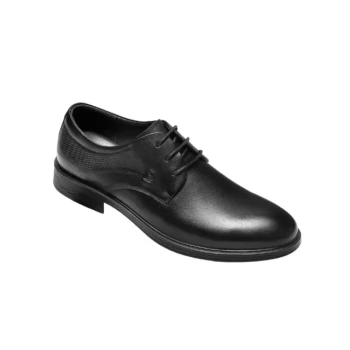
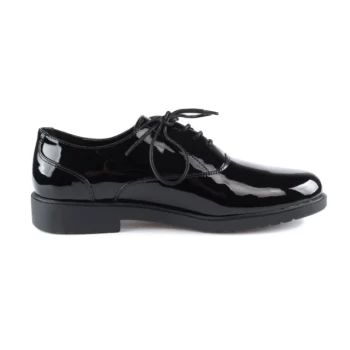
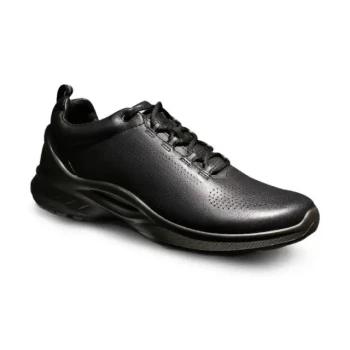
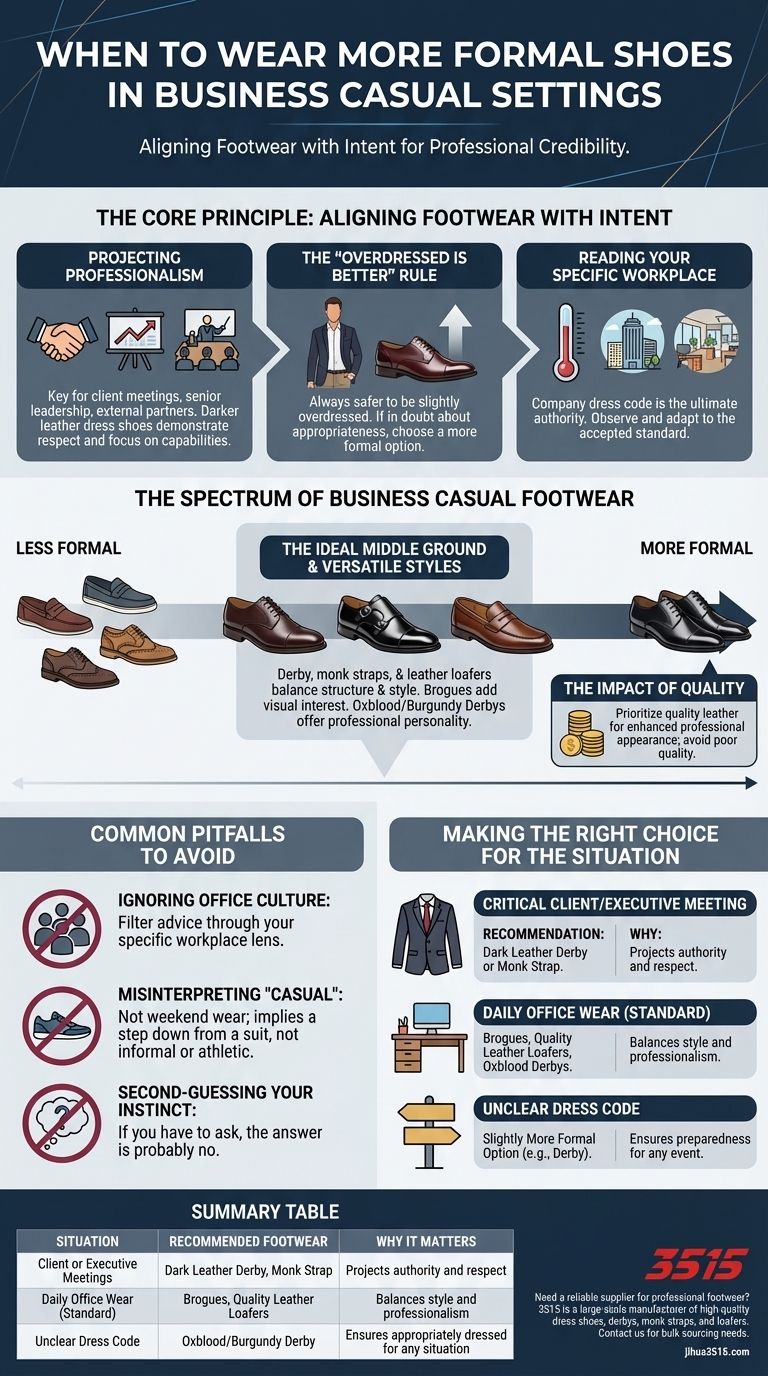
The decision to wear more formal shoes in a business casual setting is a strategic choice, not just a stylistic one. You should opt for more formal footwear, such as dark leather dress shoes, for any situation where you are representing the company, meeting with executives or clients, or attending important work events. This choice signals professionalism and respect for the occasion.
The core principle is simple: your footwear should align with the importance of the situation. While "business casual" offers flexibility, specific moments demand a higher level of formality to ensure your appearance reinforces your professional credibility. When in doubt, being slightly overdressed is always the safer and more strategic option.
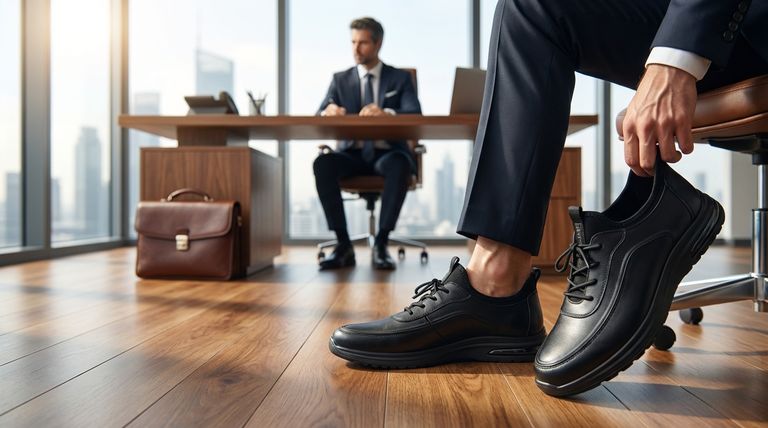
The Core Principle: Aligning Footwear with Intent
Navigating business casual is about understanding context. Your shoes are a key indicator of how seriously you take a given situation.
Projecting Professionalism in Key Moments
For important meetings with clients, senior leadership, or external partners, more formal shoes are non-negotiable.
Darker leather dress shoes help maintain a professional image and keep the focus on your capabilities, not your attire. They demonstrate respect for the people you are meeting and the business at hand.
The "Overdressed is Better" Rule
One of the most reliable rules in professional settings is that it is always better to be slightly overdressed than underdressed.
If you find yourself questioning whether a pair of shoes is appropriate, it's a strong signal that they probably aren't. Choosing a more formal option removes all doubt.
Reading Your Specific Workplace
While general rules are helpful, your company's specific dress code is the ultimate authority.
Some more relaxed offices may allow for peep-toe shoes or even sandals during warmer months. Always observe the environment and adapt accordingly.
The Spectrum of Business Casual Footwear
Not all dress shoes are created equal. The best choices for business casual strike a perfect balance between formal structure and versatile style.
The Ideal Middle Ground
Certain styles are perfectly suited for bridging the gap between casual and formal.
Derby shoes, monk straps, and leather loafers are timeless choices that are sophisticated without feeling overly rigid or stuffy.
Versatile and Recommended Styles
Brogues are another excellent option, offering visual interest and versatility that works well with a wide range of business casual trousers.
For a standout choice, oxblood or burgundy Derby shoes exist at the perfect level of formality, adding a touch of personality while remaining entirely professional.
The Impact of Quality
Always prioritize quality over quantity. A single pair of well-made shoes from high-quality leather will enhance every outfit you wear.
Conversely, poorly made or cheap-looking shoes can undermine an otherwise professional appearance.
Common Pitfalls to Avoid
The flexibility of business casual can also be a trap. Avoiding a few common mistakes will ensure your footwear choice is always an asset.
Ignoring Your Office Culture
General advice should always be filtered through the lens of your specific workplace. Pay attention to what managers and successful colleagues wear to gauge the accepted standard.
Misinterpreting "Casual"
The "casual" in business casual does not mean weekend wear. It implies a step down from a full suit, not an invitation to wear shoes that are overtly informal, athletic, or worn-out.
Second-Guessing Your Instinct
Trust your professional judgment. The simple rule—if you have to ask, the answer is probably no—is an incredibly effective guide for avoiding a poor choice.
Making the Right Choice for the Situation
Use the context of your day to guide your footwear selection.
- If your primary focus is a critical client or executive meeting: Opt for darker leather dress shoes like a classic Derby or monk strap to project authority and respect.
- If your primary focus is daily office wear in a standard environment: Choose versatile and stylish options like brogues, quality leather loafers, or oxblood Derbys.
- If your primary focus is navigating an unclear dress code: Always err on the side of being slightly more formal to ensure you are prepared for any unexpected meeting or event.
Ultimately, selecting the right shoe is a deliberate decision that communicates respect for your work, your colleagues, and yourself.
Summary Table:
| Situation | Recommended Footwear | Why It Matters |
|---|---|---|
| Client or Executive Meetings | Dark Leather Derby, Monk Strap | Projects authority and respect |
| Daily Office Wear (Standard) | Brogues, Quality Leather Loafers | Balances style and professionalism |
| Unclear Dress Code | Oxblood/Burgundy Derby | Ensures you are appropriately dressed for any situation |
Need a reliable supplier for professional footwear? As a large-scale manufacturer, 3515 produces a comprehensive range of high-quality dress shoes, derbys, monk straps, and loafers for distributors, brand owners, and bulk clients. Our production capabilities ensure you receive durable, stylish footwear that meets the demands of any business casual environment. Contact us today to discuss your sourcing needs and elevate your professional footwear collection!
Visual Guide
Related Products
- Wholesale Leather Derby Dress Shoes Custom Manufacturer for Brands
- Wholesale Patent Oxford Dress Shoes | Custom & Bulk Manufacturing
- Wholesale Leather Derby Shoes Manufacturer | Customizable Business & Dress Footwear
- Wholesale Comfortable Business Casual Shoes Custom Manufacturing
- Custom Manufactured Air Cushion Leather Business Shoes for Wholesale
People Also Ask
- What is the main difference between Derby Shoes and Oxford Shoes? It's All in the Lacing.
- What are the features and appropriate occasions for wearing derby shoes? A Guide to Versatile Style
- How do Derby shoes fit into business casual attire? Master the Perfect Balance of Professional Style
- What historical figure is associated with the Derby shoe? The Earl of Derby's Comfort Revolution
- What is the difference between Derby and Oxford shoes? A Guide to Choosing the Right Shoe