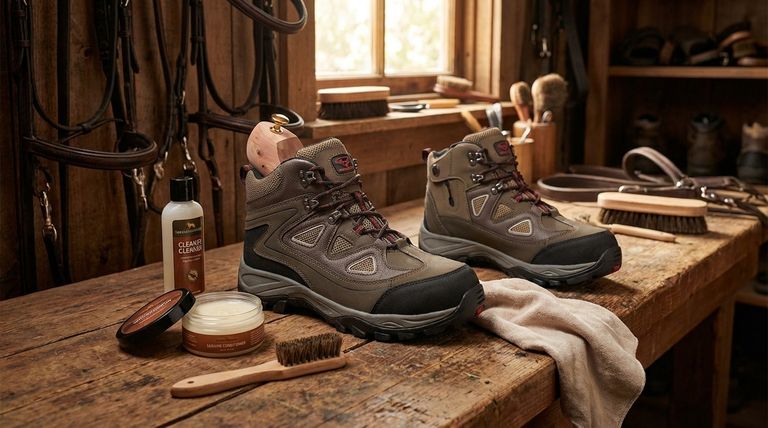
To properly maintain genuine leather riding boots, you must adopt a consistent routine of cleaning, conditioning, and correct storage. This involves a quick wipe-down after every ride to remove sweat and grime, a deeper cleaning as needed with a pH-balanced leather cleaner, and regular application of a conditioner to keep the leather supple and prevent it from cracking.
The goal of boot maintenance is not just cosmetic; it is about preserving the structural integrity of the leather. Proper care ensures your boots remain comfortable, provide necessary protection, and last for years, protecting your significant investment.
The Core Maintenance Routine: A Three-Step Process
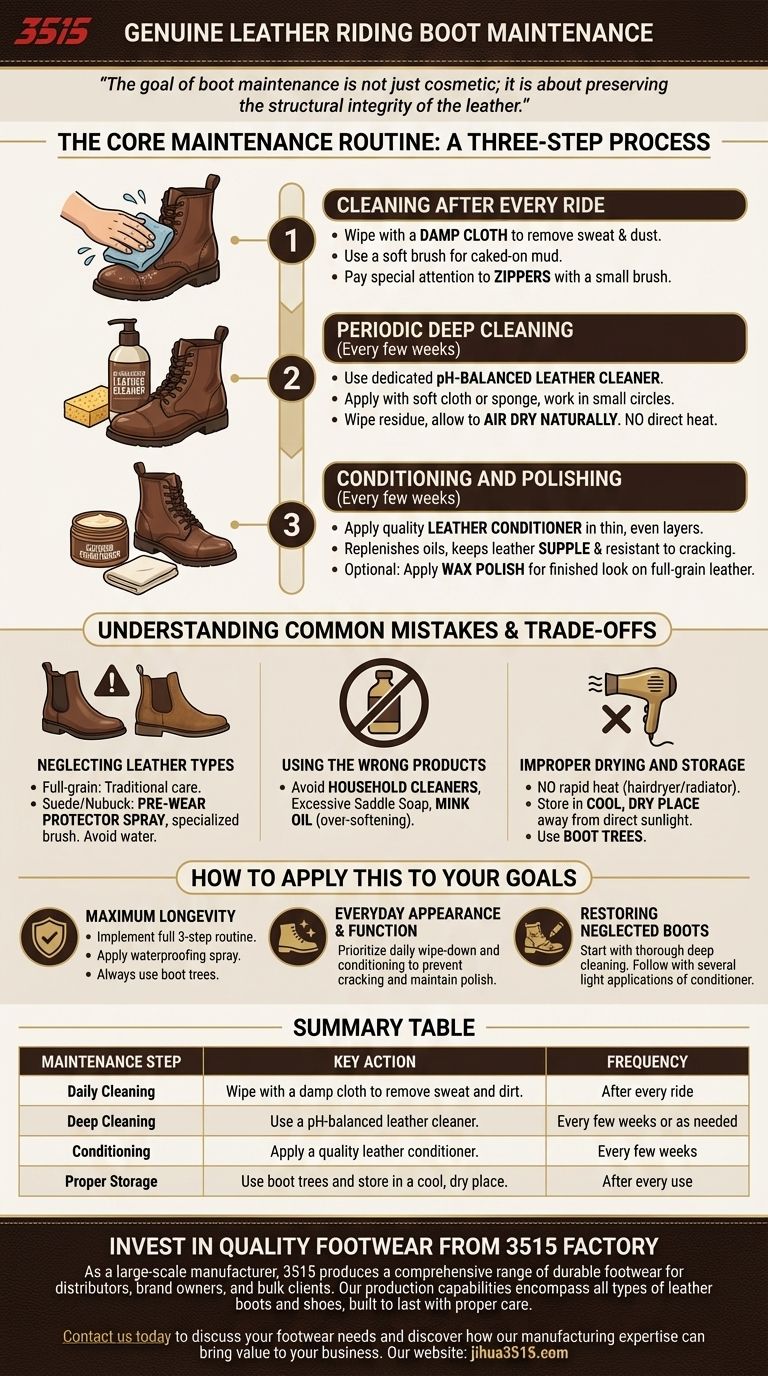
A disciplined approach to boot care can be broken down into three fundamental stages: daily cleaning, periodic deep cleaning, and essential conditioning.
Step 1: Cleaning After Every Ride
After each use, take a moment to wipe your boots with a damp cloth. This simple action removes sweat, dust, and arena footing before they can damage the leather's finish.
For more caked-on mud or dirt, use a soft brush to gently remove the debris first. This prevents you from grinding abrasive particles into the leather with your cloth.
Pay special attention to the zippers. A small brush, like a toothbrush, is ideal for clearing any debris that could cause the zipper to jam or break over time.
Step 2: Periodic Deep Cleaning
Every few weeks, or whenever your boots look particularly grimy, perform a deep clean. This requires a dedicated, pH-balanced leather cleaner.
Apply the cleaner with a soft cloth or sponge, working in small circles to lift embedded dirt. Avoid using harsh soaps or all-purpose cleaners, which can strip the leather of its essential oils.
Once clean, wipe away any residue with a fresh, damp cloth and allow the boots to air dry naturally. Never use a direct heat source like a hairdryer or radiator, as this will cause the leather to shrink and crack.
Step 3: Conditioning and Polishing
Conditioning is the most critical step for longevity. Leather is a natural material that needs moisture to stay flexible; think of it as a thirsty material that requires regular hydration.
Apply a quality leather conditioner every few weeks using a clean, soft cloth. Work it into the leather in thin, even layers. This replenishes the oils in the hide, keeping it supple and resistant to cracking.
For a finished look on full-grain leather, you can apply a wax polish or shoe cream after conditioning. This adds a layer of protection and restores the boot's shine.
Understanding the Trade-offs and Common Mistakes
Effective maintenance is as much about avoiding bad practices as it is about following good ones. Certain common mistakes can actively shorten the life of your boots.
Neglecting Different Leather Types
Not all leather is the same. Full-grain leather benefits from traditional cleaners, conditioners, and polishes.
Suede or nubuck, however, requires different care. These materials should be treated with a pre-wear protector spray to repel water and dirt. Use a specialized suede brush or a clean toothbrush for cleaning and avoid water, which can harm the color and texture.
Using the Wrong Products
Household cleaners, saddle soap used excessively, or mink oil can do more harm than good. Mink oil, for example, can over-soften the leather, causing it to lose its shape, and may interfere with the breathability of modern boot designs.
Improper Drying and Storage
The biggest enemy of wet leather is rapid heat. As mentioned, always let boots air dry slowly. When storing them, keep them in a cool, dry place away from direct sunlight, which can fade and dry out the leather.
Using boot trees or stuffing the boots with newspaper is essential. This helps them maintain their shape, prevents the ankle from dropping, and absorbs any residual moisture.
How to Apply This to Your Goals
Your maintenance routine can be tailored to your specific needs and how you use your boots.
- If your primary focus is maximum longevity: Implement the full three-step routine diligently, apply a waterproofing spray for added protection, and always use boot trees for storage.
- If your primary focus is everyday appearance and function: Prioritize the daily wipe-down and conditioning every few weeks to prevent cracking and maintain a polished look.
- If your primary focus is restoring neglected boots: Start with a thorough deep cleaning, followed by several light applications of conditioner over a few days to slowly rehydrate the leather without oversaturating it.
A consistent care routine is the single best way to protect your investment and ensure your boots serve you well for years to come.
Summary Table:
| Maintenance Step | Key Action | Frequency |
|---|---|---|
| Daily Cleaning | Wipe with a damp cloth to remove sweat and dirt. | After every ride |
| Deep Cleaning | Use a pH-balanced leather cleaner. | Every few weeks or as needed |
| Conditioning | Apply a quality leather conditioner. | Every few weeks |
| Proper Storage | Use boot trees and store in a cool, dry place. | After every use |
Invest in Quality Footwear from 3515 Factory
As a large-scale manufacturer, 3515 produces a comprehensive range of durable footwear for distributors, brand owners, and bulk clients. Our production capabilities encompass all types of leather boots and shoes, built to last with proper care.
Contact us today to discuss your footwear needs and discover how our manufacturing expertise can bring value to your business.
Visual Guide
Related Products
- Wholesale Classic Leather Lace-Up Ankle Boots for Brand Manufacturing
- Durable Leather High-Ankle Tactical Boots for Wholesale & Custom Manufacturing
- Durable Leather Work Boots Wholesale Manufacturer & Custom Factory
- Durable Leather Work Boots for Wholesale & Custom OEM Manufacturing
- Durable Leather Work Boots for Wholesale & Custom Manufacturing
People Also Ask
- How are oils used to waterproof leather boots? A Guide to Deep Conditioning & Protection
- Why is regular maintenance necessary for the performance of leather boots? Boost Durability & Brand Reputation
- Why might it be beneficial to pre-heat the boots before applying wax? Achieve Deeper, Longer-Lasting Protection
- How can leather boots maintain their water resistance? A Guide to Lasting Protection
- What is the biggest enemy of leather boots? Protect Your Investment from Water Damage