
Proper boot care is a simple, three-step process. To ensure a long lifespan, you should first wipe your boots clean with a damp cloth and cold water, then allow them to dry naturally away from any direct heat sources. Finally, for leather boots, you must regularly condition them to keep the material supple and prevent cracking.
The primary goal of boot maintenance is not just cleanliness, but moisture management. Removing abrasive dirt, avoiding harsh chemicals, and preventing the material from rapidly drying out are the core principles that protect your investment.
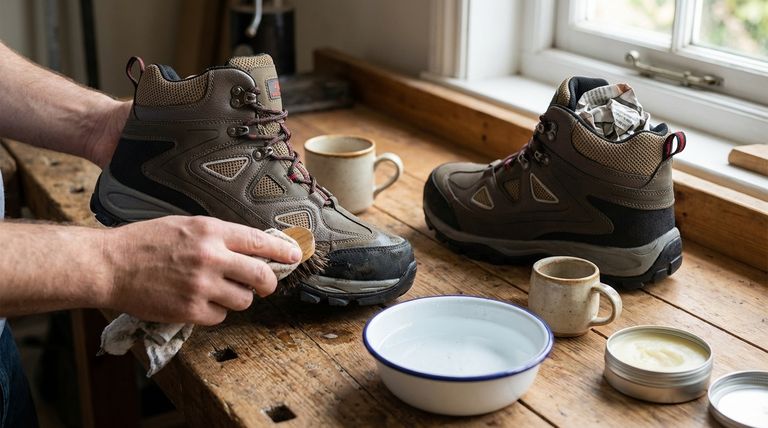
Why Regular Cleaning is Non-Negotiable
Failing to clean your boots is the fastest way to accelerate their decline. Dirt and chemicals are not passive; they actively work to break down the materials over time.
Removing Abrasive Materials
Dirt, gravel, ash, and other debris act like sandpaper. As you walk, these fine particles grind away at the leather or synthetic fabric, especially in the flex points and along the seams, leading to premature wear and tear.
Preventing Material Degradation
Caked-on mud is especially damaging to leather. As the mud dries, it pulls the natural oils and moisture out of the leather, causing it to become brittle and eventually crack. Similarly, workplace chemicals can permanently damage a boot's protective qualities.
The Correct Cleaning and Drying Protocol
Aggressive cleaning can be just as harmful as no cleaning at all. The key is to be gentle and patient, particularly during the drying phase.
Step 1: Remove Surface Debris
After each use, use a soft brush or a damp cloth to remove all loose dirt and debris. Pay close attention to the seams and the area where the upper connects to the sole.
Step 2: Use Only Cold Water
If more cleaning is needed, use a cloth dampened with cold water. Avoid soaps, detergents, or solvents unless they are specifically designed for footwear, as harsh chemicals can strip essential oils from leather and damage adhesives.
Step 3: Dry Naturally and Slowly
This is the most critical step. Never place boots near a direct heat source like a radiator, campfire, or in direct sunlight. This forces moisture out too quickly, causing leather to shrink and crack and potentially weakening the glues used in construction.
Stuff your boots with newspaper to help them maintain their shape and absorb internal moisture. Allow them to air-dry completely in a cool, well-ventilated area.
The Critical Role of Conditioning
For any boot made primarily of leather, cleaning is only half the battle. You must also restore the oils that cleaning and general wear remove.
What is Conditioning?
Conditioning, or oiling, is like applying moisturizer to your skin. A proper boot conditioner penetrates the leather to restore its flexibility, prevent it from drying out, and bolster its natural water resistance.
How and When to Condition
After your boots are completely clean and dry, apply a suitable conditioner according to the product's instructions. Work boots used in harsh environments or fire boots may need conditioning monthly, while hiking or casual boots may only need it every few months.
Common Pitfalls to Avoid
Understanding what not to do is as important as knowing what to do. Many well-intentioned owners ruin their boots by making one of these common mistakes.
The Mistake of Using Direct Heat
Again, this cannot be overstated. Applying artificial heat is the single most common and destructive mistake in boot care. It causes irreversible damage to leather and compromises the boot's entire structure.
Forgetting About Storage
When not in use, store your boots in a cool, dry place. A damp garage or a hot car trunk can promote mildew or cause materials to break down. Using shoe trees will also help your boots maintain their proper shape between wears.
Using the Wrong Products
Avoid using any cleaners or conditioners with harsh chemicals or solvents. Always use products specifically formulated for the material of your boots, whether it's full-grain leather, suede, or a synthetic fabric.
Making the Right Choice for Your Goal
Your boot care routine should match the intensity of its use.
- If your primary focus is heavy-duty work or fire boots: Prioritize frequent cleaning to remove corrosive chemicals and abrasive debris, followed by regular conditioning to maintain heat resistance and prevent cracking.
- If your primary focus is hiking or outdoor boots: Clean them after every trip to prevent mud from drying out the leather, and reapply waterproofing treatments as needed to maintain performance on the trail.
- If your primary focus is casual leather boots: A simple wipe-down and periodic conditioning every few months is sufficient to maintain their appearance and prevent the leather from drying out.
Consistent, gentle care is the single most effective way to protect your investment and ensure your boots are ready for any task.
Summary Table:
| Key Step | Core Action | Why It Matters |
|---|---|---|
| 1. Gentle Cleaning | Wipe with cold water; avoid harsh chemicals. | Removes abrasive dirt that wears down materials. |
| 2. Natural Drying | Air-dry away from direct heat; stuff with newspaper. | Prevents leather from cracking and glue from weakening. |
| 3. Regular Conditioning | Apply conditioner to clean, dry leather boots. | Restores oils, maintains flexibility, and prevents cracking. |
Need durable boots built to last? As a large-scale manufacturer, 3515 produces a comprehensive range of high-performance footwear for distributors, brand owners, and bulk clients. Our boots are designed with quality materials that respond well to proper care, ensuring long-term value for your customers. Let's discuss your specific needs—contact our team today to explore our full catalog and customization options.
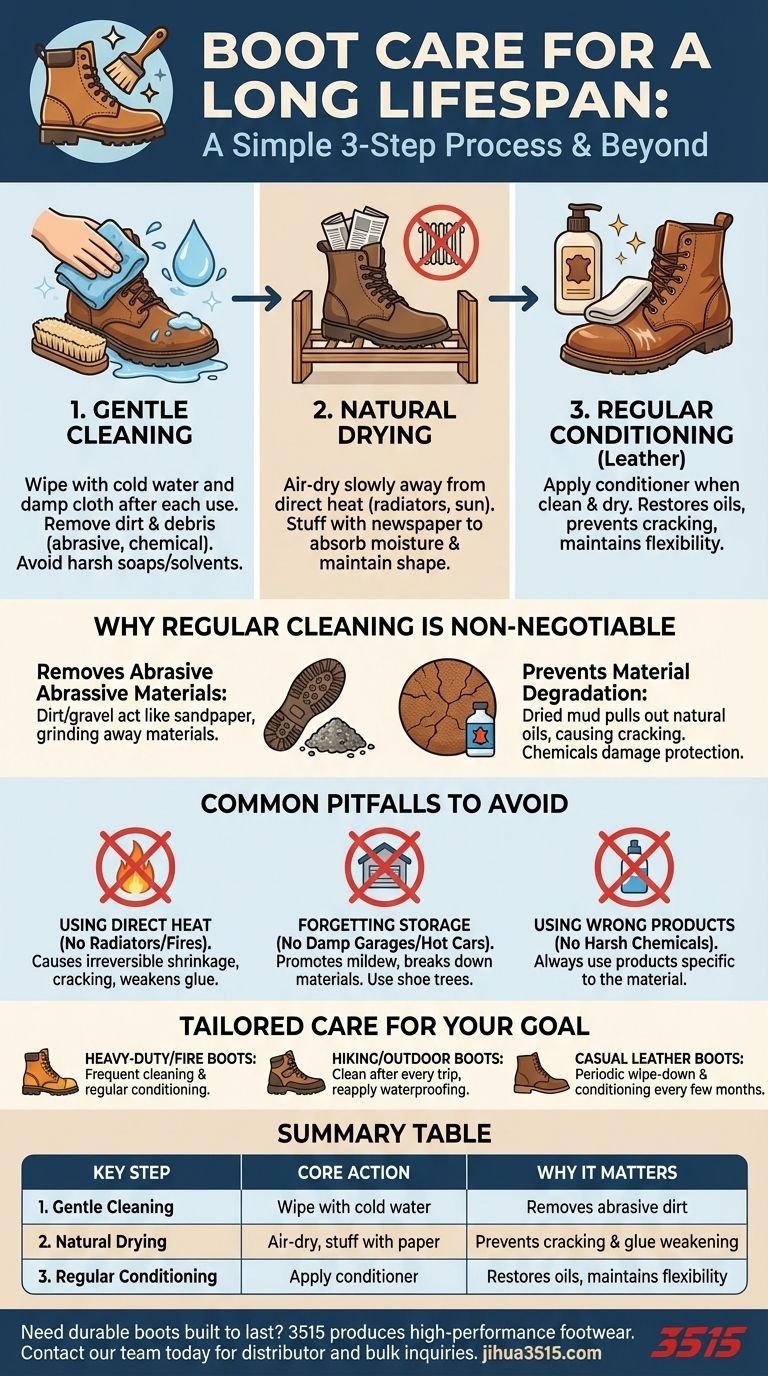
Visual Guide
Related Products
- High-Traction Suede Tactical Boots Wholesale & Custom Manufacturing
- Durable Leather Work Boots Wholesale Manufacturer & Custom Factory
- Durable Leather Work Boots for Wholesale & Custom Manufacturing
- Durable Leather Work Boots for Wholesale & Custom OEM Manufacturing
- Durable Leather Tactical Boots Wholesale & Custom Manufacturing for Brands
People Also Ask
- Why is sequential analysis utilized to evaluate tactical boots? Master Dynamic Boot Development and Ergonomic Performance
- How does the material of tactical boots affect their performance? Choose the Right Material for Your Mission
- How do tactical boots differ from regular boots? Performance, Durability & Design Explained
- How do military uniforms and tactical boots impact the prediction of thermal risk? Essential Safety Insights
- What are the benefits of integrating FES and sEMG into tactical boots? Safety, Reliability & Field-Ready Performance


















