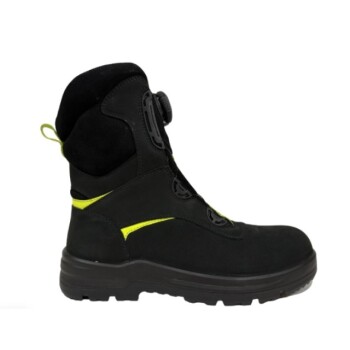
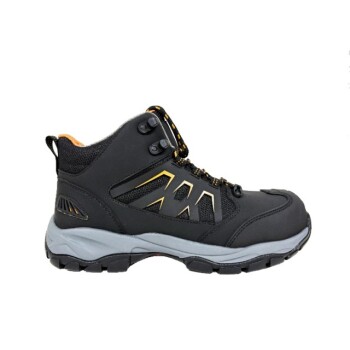
Determining the correct fit for safety and tactical boots requires more than matching a standard shoe size; it necessitates a precise evaluation of the boot’s internal dimensions against the wearer's foot geometry. To achieve an optimal fit, the boot must feel snug across the midfoot and heel while providing sufficient room for the toes to splay without touching the front or sides of the protective cap. This balance ensures maximum stability, safety, and comfort during high-intensity missions or long-duration industrial shifts.
A professional fit is achieved when the boot secures the heel and ankle to prevent slippage while allowing enough toe box volume for natural foot expansion. Because high-performance manufacturing utilizes specialized lasts and reinforcements, standardized sizing is often unreliable, requiring distributors to prioritize precise measurement and brand-specific sizing guides.
The Engineering Behind the Fit
The Role of the Manufacturing Last
Since 1951, elite manufacturers have refined anatomical lasts—the physical molds that define a boot's internal volume. These molds are engineered to account for protective reinforcements like steel toes or puncture-resistant midsoles. Because these elements do not stretch, the internal dimensions are fixed, making the manufacturer's specific last more important than a generic size label.
Precision Measurement Protocols
Wearers should measure their feet at the end of the day when feet are at their maximum volume due to natural swelling. It is also critical to wear the specific technical socks intended for the job, as their thickness significantly impacts the final fit. A boot that feels perfect with thin socks may become dangerously tight when paired with heavy-duty thermal options.
Consistency Through State-of-the-Art Equipment
Large-scale manufacturers utilize automated cutting and lasting equipment to ensure that every "Size 10" produced is identical. For distributors, this supply chain stability is vital; it ensures that a bulk order delivered today fits exactly like the one delivered a year ago. Consistent sizing reduces return rates and strengthens the reputation of the brand in the eyes of the end-user.
How Material and Design Impact Fit
Ankle Support and Heel Lockdown
A tactical boot must provide a secure heel cup to prevent vertical slippage during running or climbing. Excessive movement in the heel leads to friction, blisters, and energy loss. Proper ankle support should feel like a "firm hug," providing lateral stability without restricting the forward flex required for a natural gait.
Toe Box and Protection Zones
In safety boots, the toe box must be deep and wide enough to prevent the toes from rubbing against the hard protective cap. There should be approximately a half-inch of space between the longest toe and the front of the boot. Unlike leather-only footwear, reinforced safety toes will never "break in" or stretch, so the fit must be perfect from the first wear.
Breathability and Moisture Management
A proper fit is compromised if the foot becomes damp, leading to skin softening and slippage. High-quality boots utilize breathable membranes and moisture-wicking liners to maintain a stable internal environment. For B2B resellers, offering boots with international certifications for breathability ensures the product performs in extreme climates.
Navigating the Trade-offs of Specialized Designs
Mobility vs. Maximum Protection
Heavy-duty boots with full-grain leather and thick rubber outsoles provide superior protection but increase weight and reduce agility. Conversely, lightweight, nylon-blend tactical boots offer speed and flexibility but may lack the structural rigidity needed for carrying heavy loads over uneven terrain.
Waterproofing vs. Heat Dissipation
Waterproof liners like Gore-Tex are essential for wet environments but can trap heat in desert or high-temperature industrial settings. Choosing a waterproof boot for a hot, dry mission can lead to excessive sweating, which changes the friction dynamics inside the boot and can cause the foot to slide.
Side-Zippers vs. Traditional Lacing
Side-zipper models offer rapid "on-off" capability, which is a major selling point for first responders. However, traditional lacing systems allow for more granular tension adjustment across different parts of the foot. A wearer with a high instep may find traditional laces provide a more customizable and secure fit than a fixed-zipper entry.
Making the Right Choice for Your Goal
When selecting or stocking safety and tactical boots, the choice must be dictated by the specific demands of the environment and the physiological needs of the workforce.
- If your primary focus is heavy industrial or construction contracts: Prioritize boots with high-volume lasts and reinforced toe caps that accommodate orthotic insoles and provide maximum impact protection.
- If your primary focus is rapid-response or tactical law enforcement: Source lightweight designs with precision heel lockdown and athletic-inspired midsoles to ensure maximum agility and shock absorption during high-speed movement.
- If your primary focus is extreme climate or specialized terrain: Select boots with specific international certifications for slip resistance, waterproofing, or thermal insulation to ensure fit integrity remains constant regardless of external conditions.
By partnering with a manufacturer that combines a 70-year heritage with massive production scale and rigorous international certifications, you ensure a consistent, professional-grade fit that protects the wearer and bolsters your brand's market position.
Summary Table:
| Fit Factor | Technical Requirement | Performance Benefit |
|---|---|---|
| Heel & Ankle | Secure heel cup with firm lateral support | Prevents slippage, blisters, and energy loss |
| Midfoot | Snug fit with granular tension adjustment | Ensures stability and customizable comfort |
| Toe Box | ~0.5 inch clearance from protective cap | Allows natural toe splay; prevents rubbing |
| Last Design | Anatomically engineered internal molds | Guarantees consistent sizing across bulk orders |
Partner with a Legacy of Manufacturing Excellence
As a large-scale manufacturer serving distributors and brand owners since 1951, 3515 provides the supply chain stability and consistent large-volume delivery your business demands. Our comprehensive production capabilities cover our flagship Safety Shoes series, tactical boots, outdoor shoes, and formal footwear—all backed by international certifications and state-of-the-art OEM/ODM support.
Ready to elevate your inventory with professional-grade footwear? Contact 3515 today to discuss your bulk requirements.
Related Products
- Premium Wholesale Tactical Style Safety Shoes Boots with Quick Lacing
- Wholesale Durable Mid-Cut Tactical Boots for Custom & Private Label Brands
- Durable Leather Tactical Boots Wholesale & Custom Manufacturing for Brands
- Wholesale Waterproof Tactical Boots Custom Suede & High-Traction Soles
- High-Traction Suede Tactical Boots Wholesale & Custom Manufacturing
People Also Ask
- How are gait analysis research findings applied to the functional design of safety shoes and tactical boots?
- How do quality certification standards for safety shoes reduce perceived risk? Buy Online with Technical Certainty
- How does anthropomorphic design influence material selection? Enhance Footwear Performance through Biological Alignment
- Why is the synchronization of craftsmanship and UX development emphasized for bulk customization of safety shoes?
- How can specialized footwear mitigate safety risks? High-Volume OEM/ODM Solutions since 1951