The short answer is: your work boots should be cleaned daily if you work in muddy or corrosive conditions, and at least once a week for routine wear. The goal is not just appearance, but preventing the breakdown of materials that protect your feet and your investment.
The frequency and method of cleaning your work boots are not about aesthetics; they are critical maintenance practices. Proper, consistent cleaning directly prevents material degradation, extends the functional life of your boots, and ensures they continue to provide necessary support and protection.
Why Consistent Cleaning is Non-Negotiable
Failing to clean your work boots is like failing to change the oil in an engine. Contaminants like mud, dirt, and chemicals actively work to break down the materials of your boots, leading to premature failure.
Preventing Material Breakdown
Dirt and grime draw moisture out of leather, causing it to become dry, brittle, and eventually crack. Caked-on mud can trap moisture against the boot, leading to rot in the stitching and weakening the bond between the sole and the upper.
Maintaining Water Resistance
Most work boots rely on a combination of treated leather and specialized membranes for water resistance. A layer of dirt compromises these barriers, allowing water to saturate the material and seep through to your feet.
Ensuring Safety and Support
Clean boots are safer boots. A clean tread provides better traction, reducing the risk of slips and falls. Furthermore, as materials degrade from neglect, the boot loses its structural integrity and its ability to support your ankle and foot.
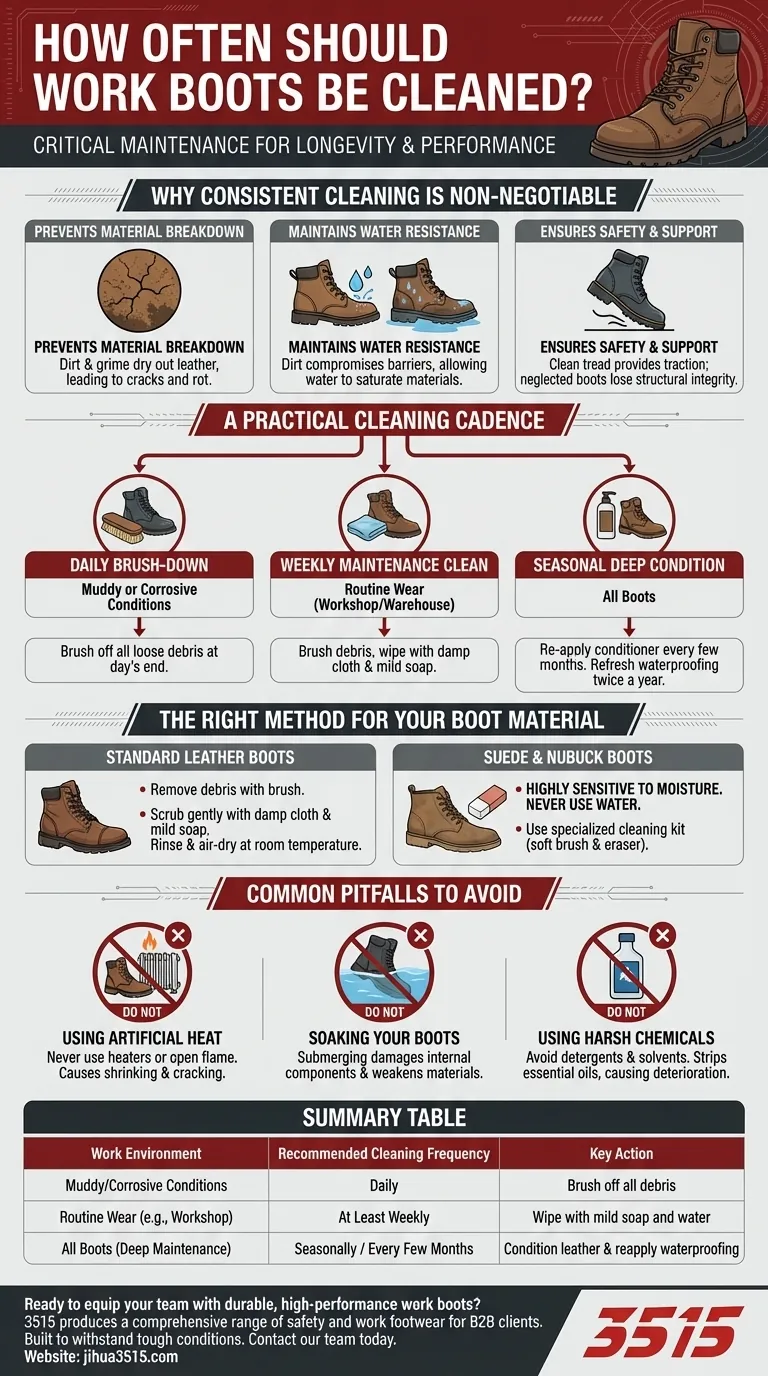
A Practical Cleaning Cadence
Your cleaning schedule should adapt to your work environment. A one-size-fits-all approach is not effective.
The Daily Brush-Down
If you work in outdoor conditions with significant mud, muck, or exposure to chemicals, a daily cleaning is mandatory. Use a stiff boot brush to remove all loose and caked-on debris from the uppers and the soles at the end of each day.
The Weekly Maintenance Clean
For those in workshops, warehouses, or less demanding environments, a thorough weekly cleaning is sufficient. This involves brushing off debris and then wiping the boots down with a damp cloth and a mild soap solution.
The Seasonal Deep Condition
Beyond regular cleaning, you should plan for deeper maintenance. Re-applying a leather conditioner every few months restores the oils that keep the material flexible. Waterproofing treatments should be refreshed at least twice a year or whenever you notice water is no longer beading on the surface.
The Right Method for Your Boot Material
Using the wrong cleaning technique can cause more damage than not cleaning at all. Always identify your boot's primary material before you begin.
Standard Leather Boots
Start by removing loose debris with a brush. Use a damp cloth with a small amount of mild soap to gently scrub the surface. Rinse with a clean, damp cloth and allow the boots to dry naturally at room temperature.
Suede and Nubuck Boots
These materials are highly sensitive to moisture. Never use water or liquid cleaners. You must use a specialized suede or nubuck cleaning kit, which typically includes a soft-bristled brush and an "eraser" to lift stains and restore the nap.
Common Pitfalls to Avoid
Simple mistakes can drastically shorten the lifespan of your work boots. Being aware of these common errors is as important as knowing the right way to clean.
Using Artificial Heat to Dry
Never place wet boots near a radiator, heater, or open flame. Rapid, intense heat will shrink and crack the leather, permanently damaging the boot's structure and fit. Always let them air-dry naturally.
Soaking Your Boots
Submerging or soaking your boots in water is counterproductive. This can damage the internal components, ruin the adhesives that bond the sole, and oversaturate the leather, making it weak.
Using Harsh Chemicals
Avoid household detergents, solvents, or chemical cleaners not specifically designed for footwear. These products can strip the essential oils from leather, causing it to dry out and deteriorate quickly.
Making the Right Choice for Your Goal
Your cleaning routine should be tailored directly to your daily work demands and the materials of your boots.
- If your primary focus is heavy-duty outdoor work: Daily brushing to remove mud and contaminants is the single most important habit to protect your boots.
- If your primary focus is general indoor or workshop use: A thorough weekly cleaning with mild soap and water is sufficient to prevent long-term material damage.
- If your primary focus is protecting suede or nubuck boots: Invest in a material-specific cleaning kit and prioritize dry cleaning methods to avoid water damage.
Ultimately, treating your work boots as a critical piece of equipment will ensure they serve you well for years to come.
Summary Table:
| Work Environment | Recommended Cleaning Frequency | Key Action |
|---|---|---|
| Muddy or Corrosive Conditions | Daily | Brush off all debris |
| Routine Wear (e.g., Workshop) | At Least Weekly | Wipe with mild soap and water |
| All Boots (Deep Maintenance) | Seasonally / Every Few Months | Condition leather and reapply waterproofing |
Ready to equip your team with durable, high-performance work boots?
As a large-scale manufacturer, 3515 produces a comprehensive range of footwear for distributors, brand owners, and bulk clients. Our production capabilities encompass all types of safety and work shoes and boots, built to withstand the toughest conditions and rigorous cleaning schedules.
Let us help you protect your most valuable asset—your workforce. Contact our team today to discuss your specific needs and discover how our durable footwear solutions can support your business.
Visual Guide
Related Products
- Durable Leather Work Boots for Wholesale & Custom Manufacturing
- Durable Leather Work Boots for Wholesale & Custom OEM Manufacturing
- Durable Leather Work Boots Wholesale Manufacturer & Custom Factory
- Durable Leather Moc Toe Work Boots for Wholesale & Custom Manufacturing
- Wholesale Leather Work Boots with Customizable Wedge Sole for Brands
People Also Ask
- What is the difference between full-grain and top-grain leather? Premium Material Guide for Boot Manufacturers
- What are the common workplace hazards that can be mitigated with the right work boots? Protect Your Workforce
- What are the common foot issues workers face due to uncomfortable work boots? Prevent Pain & Deformities
- What are the advantages of leather versus synthetic work boots? A Guide to Choosing the Right Material
- What are the key components of modern work boots? Engineered for Ultimate Durability and Comfort