The most reliable indicator for reapplying waterproofing is performance, not a calendar. While a general guideline is to treat your boots every few months, the actual frequency depends entirely on how often you use them and in what conditions. The definitive test is observing how water interacts with your boot's surface.
Your boots tell you when they need care. Instead of following a rigid schedule, learn to spot the visual cue: when water stops beading up and starts soaking into the outer material, it is time to reapply your waterproofing treatment.
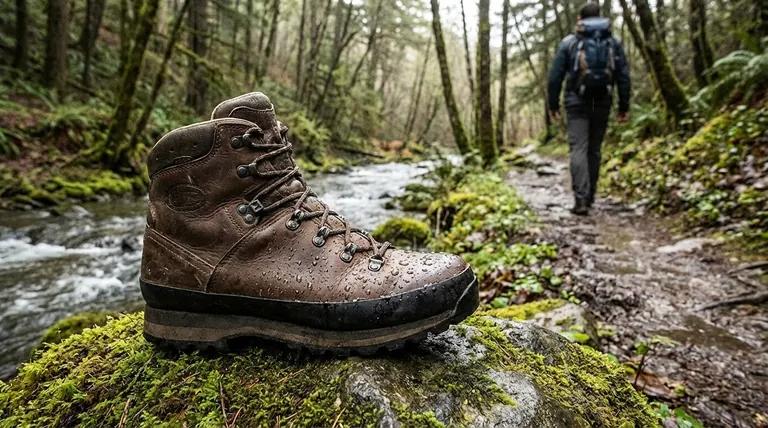
The Definitive Sign: Beading vs. "Wetting Out"
The most important skill for boot maintenance is learning to identify when the factory or previous water-repellent treatment has worn off.
When Boots Are Protected: Water Beading
A well-treated boot will exhibit hydrophobic properties. This means water will visibly bead up into droplets and roll off the surface of the leather or fabric, much like water on a freshly waxed car.
Your boots are properly protected and do not need a new treatment application.
When Treatment Is Needed: "Wetting Out"
Over time, with exposure to moisture, dirt, and abrasion, the treatment will degrade. You will notice that water no longer beads up and rolls off.
Instead, it will begin to absorb into the outer layer of the boot, causing the material to darken and feel saturated. This phenomenon is called "wetting out." While your waterproof membrane (like Gore-Tex) may still keep your foot dry, the saturated outer material becomes heavy, cold, and loses its breathability.
The Correct Waterproofing Process
Simply applying a new treatment is not enough. Proper preparation is essential for the treatment to bond effectively and provide lasting protection.
Step 1: Choose the Right Product
The type of waterproofing treatment must match your boot's material. Using the wrong product can damage the material or be completely ineffective.
Full-grain leather typically requires wax-based treatments. Suede or nubuck leathers require specialized sprays that won't mat down their textured surface. Fabric or synthetic boots also use spray-on formulas.
Step 2: Clean Your Boots Thoroughly
Never apply waterproofing to a dirty boot. Dirt, mud, and grime create a barrier that prevents the treatment from properly absorbing into and bonding with the boot's materials.
Use a boot brush and, if necessary, a specialized boot cleaner to remove all surface contaminants. Let them dry partially before the next step.
Step 3: Apply the Treatment
Follow the product’s specific instructions carefully. For most treatments, application to slightly damp boots helps with absorption.
For sprays, hold the can about six inches away and apply thin, even coats, paying special attention to seams, creases, and around hardware like lace eyelets.
For wax-based products, gently warming the wax can make it easier to rub into the leather, ensuring deeper penetration.
Step 4: Allow Proper Drying Time
Resist the temptation to wear your boots immediately. Waterproofing treatments need time to cure and set properly.
Let your boots air-dry naturally away from direct heat sources like fires or radiators, which can damage leather and adhesives. This process typically takes 24 hours.
Understanding the Trade-offs: Wax vs. Sprays
Different waterproofing methods offer distinct advantages and disadvantages. Choosing the right one is about balancing durability with convenience and breathability.
Wax-Based Treatments
These are primarily for full-grain leather boots. They offer the most durable and long-lasting water protection by conditioning the leather and creating a robust barrier.
The main trade-off is that waxes can slightly reduce the breathability of the boot and may darken the color of the leather.
Spray-On Treatments
Sprays are versatile and the only suitable option for suede, nubuck, and fabric boots. They are easy to apply and do a great job of preserving the original look and breathability of the material.
The downside is that they are generally less durable than wax treatments and will require more frequent reapplication, especially after use in abrasive or consistently wet conditions.
Making the Right Choice for Your Goal
Your reapplication strategy should be guided by your boot material and how you use them.
- If your primary focus is maximum durability for full-grain leather boots: A wax-based treatment provides the most robust protection, though it requires more effort to apply.
- If your primary focus is preserving the look of suede or nubuck boots: A silicone-based spray designed for these materials is your only safe and effective choice.
- If you are a frequent hiker in wet or muddy terrain: Get in the habit of visually inspecting for "wetting out" after every major trip instead of relying on a time-based schedule.
Proactive maintenance based on observation is the key to ensuring your boots protect you on every adventure.
Summary Table:
| Key Factor | Indicator | Action Required |
|---|---|---|
| Water Behavior | Water beads up and rolls off | Boots are protected, no treatment needed |
| Water Behavior | Water soaks in, darkening material ("wetting out") | Reapply waterproofing treatment |
| Boot Material | Full-grain leather | Use wax-based treatment for durability |
| Boot Material | Suede, nubuck, or fabric | Use specialized spray-on treatment |
| Usage Frequency | Frequent hiking in wet/muddy conditions | Inspect after every major trip |
Need Durable, Waterproof Hiking Boots for Your Customers? Partner with 3515!
As a large-scale manufacturer, 3515 produces a comprehensive range of high-performance footwear for distributors, brand owners, and bulk clients. Whether you need full-grain leather boots ideal for wax-based treatments or versatile synthetic options perfect for spray-on protection, our production capabilities cover all types of shoes and boots. Let us help you deliver reliable, long-lasting footwear that meets the demands of every adventure.
Contact us today to discuss your manufacturing needs and elevate your product line!
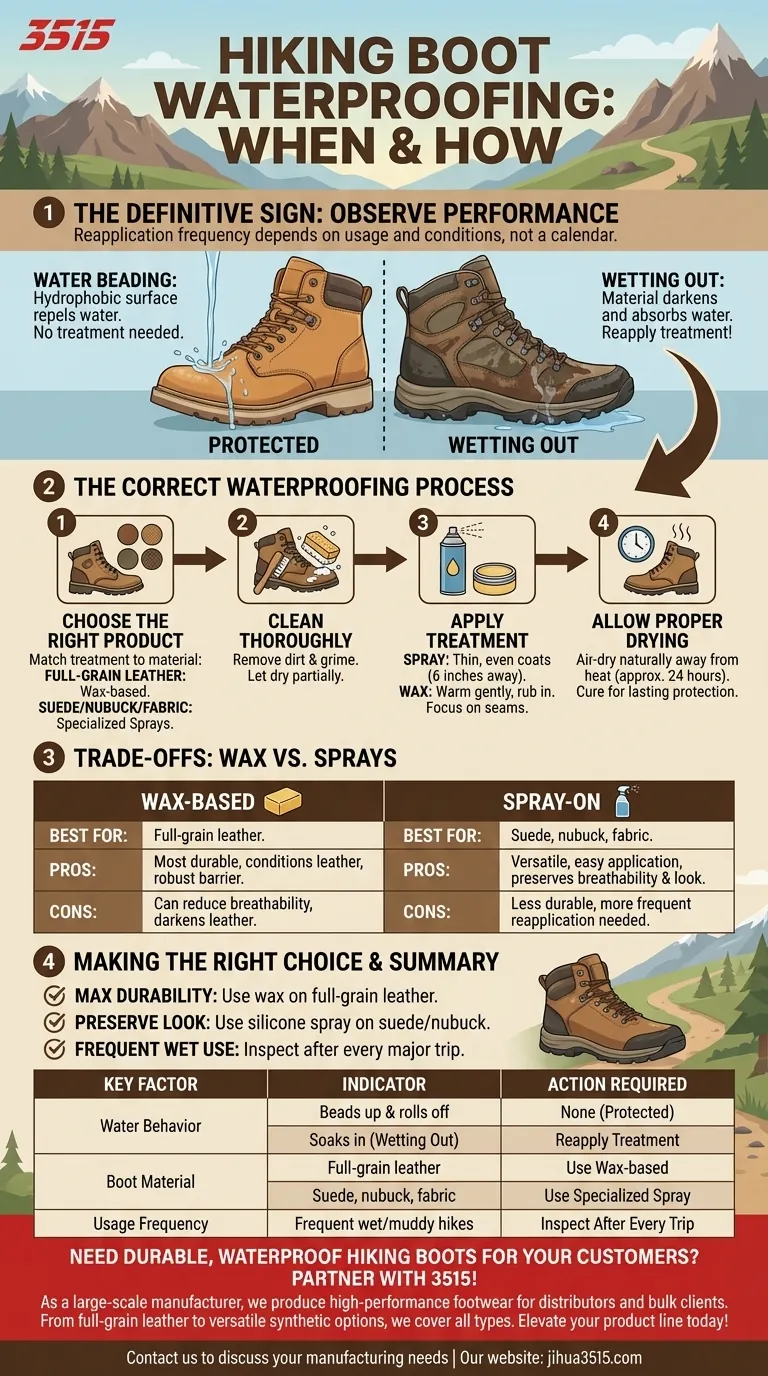
Visual Guide
Related Products
- Wholesale High-Traction Camo Boots - Custom Manufacturer for Brands
- Durable Rubber Sole Outdoor Shoes Wholesale & Custom Manufacturing
- Durable Spiked Camouflage Boots Wholesale & Factory Production
- Wholesale Lightweight Tactical Boots Custom Manufacturer for Desert & Combat Use
- Wholesale Waterproof Tactical Boots Custom Suede & High-Traction Soles
People Also Ask
- What is the technical logic behind using closed-eye testing for tactical boots? Unlocking Peak Footwear Stability
- What are the advantages of custom-made work boots? Unlock Perfect Fit & Superior Durability
- What should be considered when choosing between standard and air CAM boots? A Guide to Injury Recovery
- What are the key features of the new line of camo boots? Built for Extreme Cold & Rugged Terrain
- Are camo boots necessary for hunting success? Prioritize Performance Over Pattern