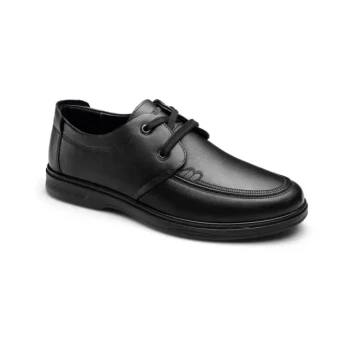
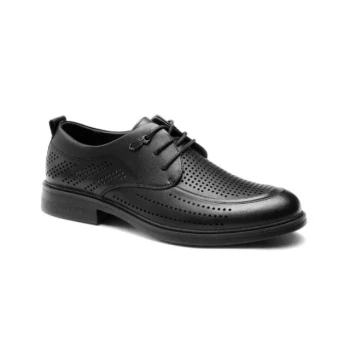
In a direct comparison for work shoes, genuine leather offers superior durability, breathability, and long-term comfort by molding to your foot. Vegan leather serves as a more affordable, low-maintenance, and cruelty-free alternative, but it sacrifices the longevity and adaptive fit of its genuine counterpart.
The decision between vegan and genuine leather is not about which is universally "better," but which material's specific strengths—durability and custom comfort versus affordability and low maintenance—align with your work environment, budget, and personal values.
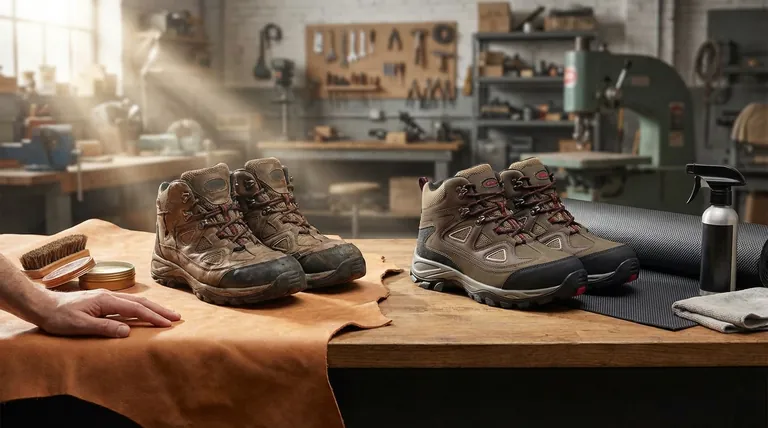
The Case for Genuine Leather: Durability and Comfort
Genuine leather has long been the standard for high-quality work footwear for several key reasons. Its properties make it an investment in long-term performance.
Unmatched Durability
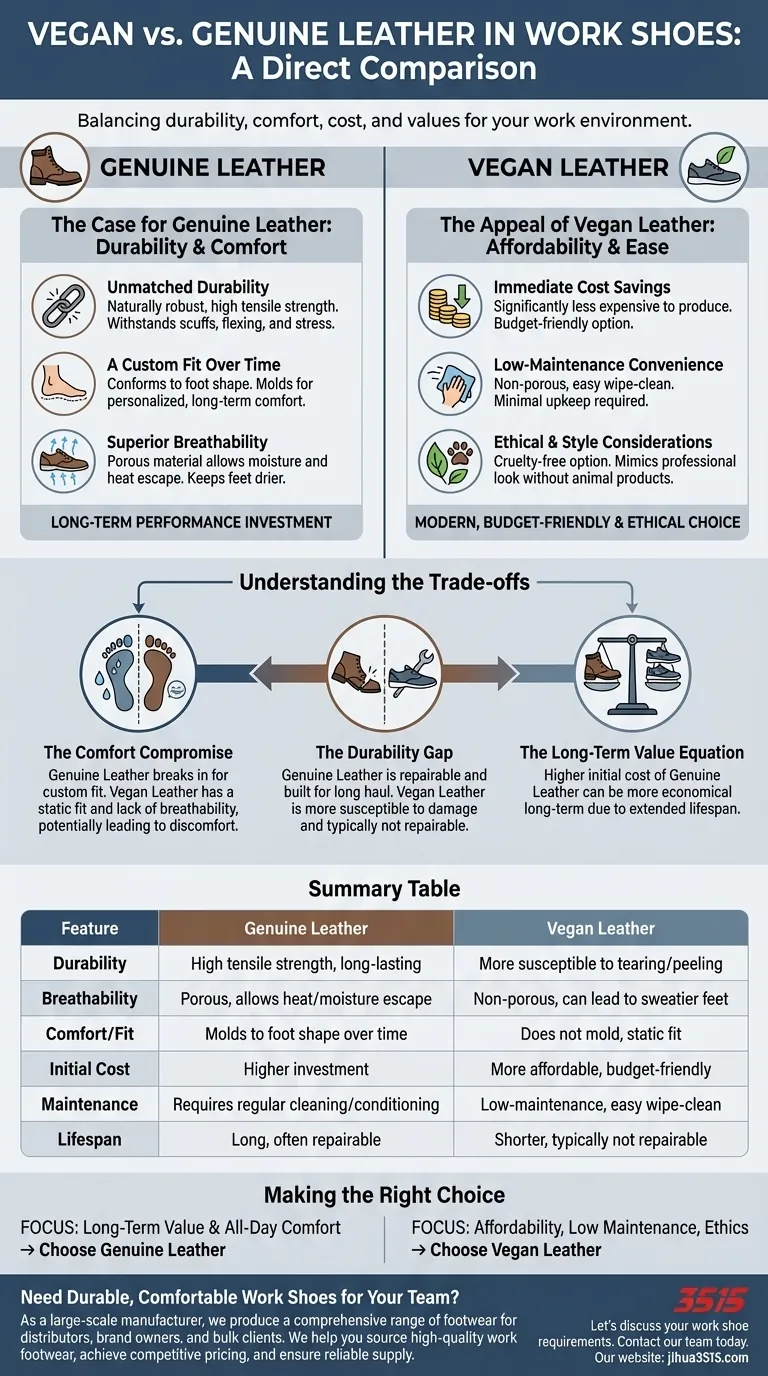
Genuine leather is a naturally robust material. Its fibrous structure provides high tensile strength, allowing it to withstand the daily scuffs, flexing, and stresses of a demanding work environment far better than synthetic alternatives.
A Custom Fit Over Time
Perhaps the most significant advantage of genuine leather is its ability to conform to the shape of your foot. Over time, it stretches and molds to create a personalized fit, which is critical for comfort during long workdays.
Superior Breathability
As a natural material, leather is porous. This allows it to breathe, letting moisture and heat escape. This natural ventilation helps keep your feet drier and more comfortable over an extended shift.
The Appeal of Vegan Leather: Affordability and Ease
Vegan leather, typically made from plastics like polyurethane (PU) or polyvinyl chloride (PVC), presents a compelling modern alternative driven by cost, convenience, and ethics.
Immediate Cost Savings
Synthetic materials are significantly less expensive to produce than genuine leather. This makes vegan leather work shoes a more budget-friendly option for immediate purchase.
Low-Maintenance Convenience
Unlike genuine leather, which requires regular cleaning and conditioning to prevent it from drying out and cracking, vegan leather is non-porous. It can typically be wiped clean with a damp cloth, requiring minimal upkeep.
Ethical and Style Considerations
For those who object to using animal products, vegan leather provides a cruelty-free option that successfully mimics the professional look of real leather.
Understanding the Trade-offs
Choosing one material over the other involves accepting a specific set of compromises. Objectively weighing these is crucial to avoiding disappointment.
The Comfort Compromise
While genuine leather breaks in for a custom fit, vegan leather does not. It will never mold to your foot, and its lack of breathability can lead to hotter, sweatier feet, potentially causing discomfort during long hours of wear.
The Durability Gap
Genuine leather is built for the long haul and can often be repaired. Vegan leather is more susceptible to tearing and peeling over time, and once the surface is compromised, it is typically not repairable. This means you may need to replace vegan leather shoes more frequently.
The Long-Term Value Equation
While genuine leather shoes have a higher initial cost, their extended lifespan can make them a more economical choice over the long term. A single pair of leather shoes may outlast multiple pairs of synthetic ones.
Making the Right Choice for Your Workday
Your decision should be based on a clear understanding of your priorities and the demands of your job.
- If your primary focus is long-term value and all-day comfort: Genuine leather is the superior investment for its durability, breathability, and ability to create a custom fit.
- If your primary focus is affordability, low maintenance, or ethical concerns: Vegan leather provides an accessible and cruelty-free option suitable for less physically demanding roles.
Ultimately, the right material for your work shoe is the one that best supports the unique demands of your profession.
Summary Table:
| Feature | Genuine Leather | Vegan Leather |
|---|---|---|
| Durability | High tensile strength, long-lasting | More susceptible to tearing/peeling |
| Breathability | Porous, allows heat/moisture escape | Non-porous, can lead to sweatier feet |
| Comfort/Fit | Molds to foot shape over time | Does not mold, static fit |
| Initial Cost | Higher investment | More affordable, budget-friendly |
| Maintenance | Requires regular cleaning/conditioning | Low-maintenance, easy wipe-clean |
| Lifespan | Long, often repairable | Shorter, typically not repairable |
Need Durable, Comfortable Work Shoes for Your Team?
As a large-scale manufacturer, 3515 produces a comprehensive range of footwear for distributors, brand owners, and bulk clients. Our production capabilities encompass all types of shoes and boots, ensuring you get the right footwear—whether you prioritize the long-term value of genuine leather or the affordability of vegan alternatives.
We help you:
- Source high-quality work footwear tailored to your specific industry demands.
- Achieve competitive pricing through our efficient large-scale production.
- Ensure reliable supply for your inventory needs.
Let's discuss your work shoe requirements. Contact our team today for a quote and discover how we can support your business!
Visual Guide
Related Products
- Durable Leather Work Boots for Wholesale & Custom OEM Manufacturing
- Durable Leather Work Boots for Wholesale & Custom Manufacturing
- Wholesale Durable Leather Work Boots | 8-Inch Goodyear Welt Manufacturer
- Durable Goodyear Welt Leather Work Boots for Wholesale & Private Label
- Durable Leather Work Boots Wholesale Manufacturer & Custom Factory
People Also Ask
- What is the difference between full-grain and top-grain leather? Premium Material Guide for Boot Manufacturers
- What should you do when your work boots no longer serve their purpose? Don't Gamble with Your Safety
- What are the key benefits of high-quality work boots? Unlock Safety, Comfort & Long-Term Value
- Why perform macrofoam swab sampling on work boots? Ensure Site Safety & Prevent Hazardous Cross-Contamination
- What features distinguish work boots from other types of cowboy boots? A Guide to Safety vs. Riding Performance