
The protective advantage of a tall PVC boot is a direct function of its extended physical coverage. By rising higher up the leg, these boots create a significantly larger barrier that protects not only the foot but also the ankle and lower leg from deep water, splashes, and various environmental hazards that would easily overwhelm shorter footwear.
The height of a PVC boot is not merely a stylistic choice; it is a critical safety specification. The appropriate height is determined by the specific risks of an environment, directly correlating the level of protection to the potential depth of liquid or debris you may encounter.
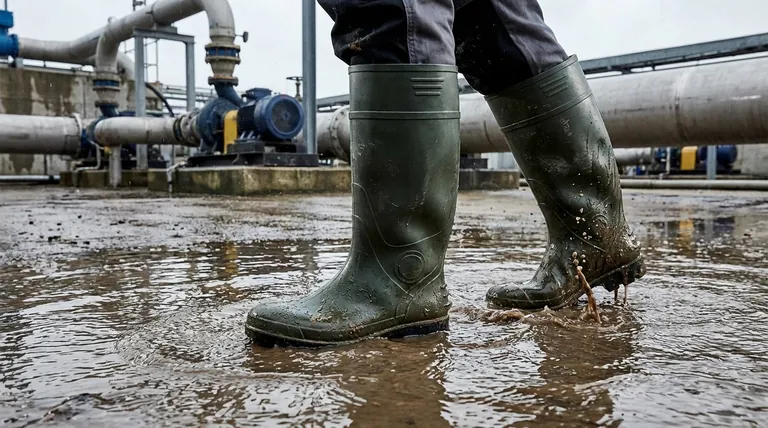
The Principle of Vertical Coverage
The core value of a tall boot lies in its ability to extend the zone of protection vertically. This simple geometric advantage has profound implications for safety in hazardous environments.
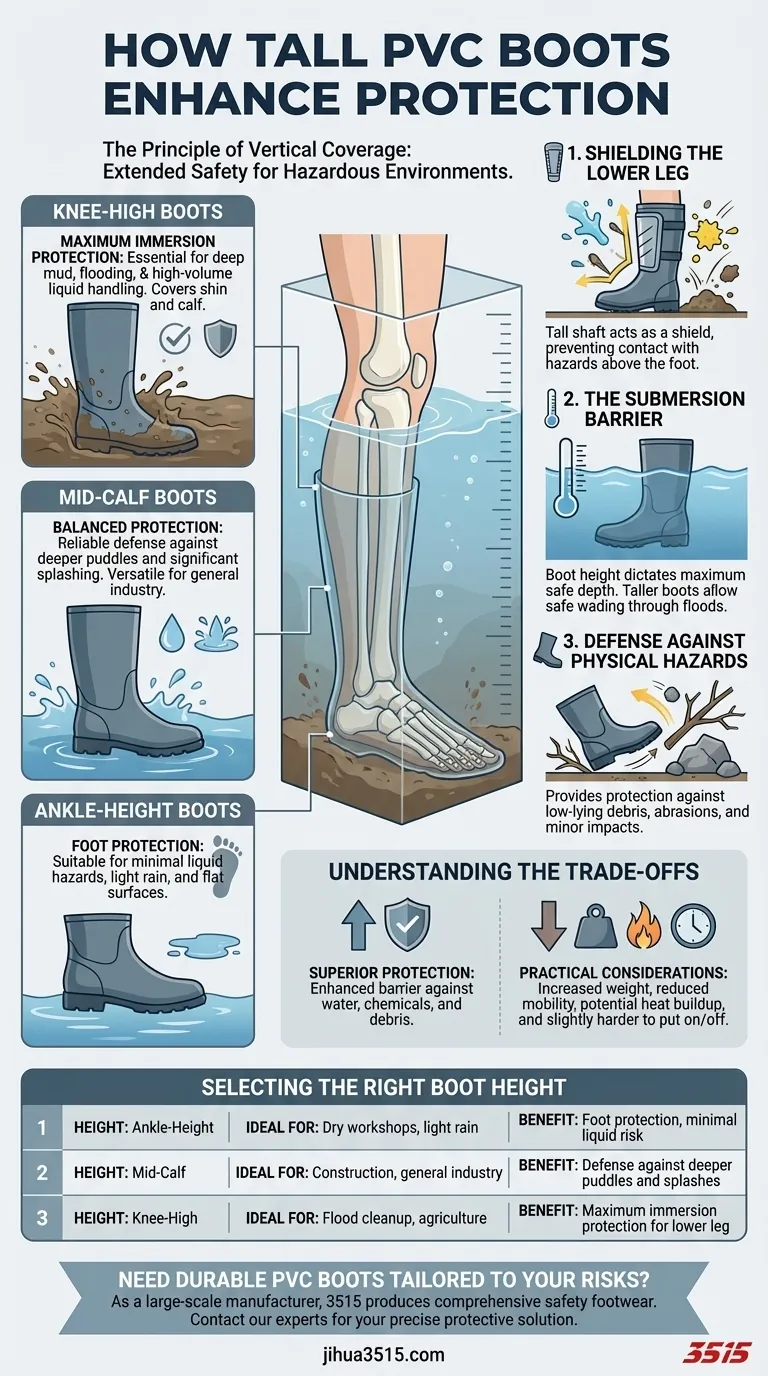
Shielding the Lower Leg
A taller boot shaft acts as a shield for the shin and calf. This is critical in environments where hazards are not confined to the ground surface.
This extended coverage protects against splashes from chemicals, mud, or contaminated water that would otherwise make contact with skin or soak into clothing.
The Submersion Barrier
The most obvious benefit is protection against deep liquids. The boot's height dictates the maximum depth one can step into before water or other fluids breach the opening.
Ankle-height boots offer protection for only a few inches, while knee-high boots allow for safe wading through deep puddles, flooded areas, or worksite spills.
Defense Against Physical Hazards
Beyond liquids, the tall shaft provides a degree of protection against physical impacts. It can deflect low-lying debris, prevent abrasions from rough foliage, or guard against minor bumps and scrapes in a cluttered workspace.
Matching Boot Height to Environmental Risk
Selecting the correct boot height is a process of risk assessment. The choice depends entirely on the hazards you anticipate facing.
Ankle-Height Boots
These models typically only protect the foot itself. They are suitable for environments with minimal liquid hazards, such as light rain or shallow spills on a predictable, flat surface.
Mid-Calf Boots
This is a common, versatile height for many industrial and agricultural settings. It offers a solid balance, providing adequate protection against deeper puddles and significant splashing without being overly restrictive.
Knee-High Boots
For maximum protection, knee-high boots are the standard. They are essential for any task involving wading, deep mud, or high-volume liquid handling where complete immersion of the lower leg is a possibility.
Understanding the Trade-offs
While taller boots offer superior protection, this comes with practical considerations that must be balanced against the needs of the task.
Protection vs. Mobility
Increased height and material can lead to a heavier, more rigid boot. This can slightly restrict ankle flexibility and may contribute to fatigue over a long workday compared to shorter, lighter options.
Heat and Breathability
PVC is a non-breathable material. A taller boot covers more skin, trapping more heat and moisture. In hot climates or during strenuous physical activity, this can lead to discomfort and potential skin issues if not managed properly.
Ease of Use
Taller boots are inherently more difficult and time-consuming to put on and take off. While a minor point, this can be a factor in work environments that require frequent changing of footwear.
Making the Right Choice for Your Task
Ultimately, the goal is to select the tool that is precisely suited for the job. Consider your most common operational environment to make an informed decision.
- If your primary focus is maximum immersion protection (e.g., flood cleanup, agriculture): Knee-high boots are the only appropriate choice to ensure your lower legs remain dry and shielded.
- If your primary focus is general-purpose work with moderate splash and puddle risk (e.g., construction, industrial cleaning): A mid-calf boot provides a reliable balance of substantial protection and all-day wearability.
- If your primary focus is foot protection with minimal liquid exposure (e.g., landscaping on a dry day, workshop use): Ankle-height boots offer sufficient safety for the foot without the unnecessary weight and heat of a taller design.
Choosing the correct boot height is a fundamental step in effective risk assessment and personal safety.
Summary Table:
| Boot Height | Ideal For | Key Protective Benefits |
|---|---|---|
| Ankle-Height | Dry workshops, light rain | Foot protection, minimal liquid risk |
| Mid-Calf | Construction, general industry | Defense against deeper puddles and splashes |
| Knee-High | Flood cleanup, agriculture, deep mud | Maximum immersion protection for the lower leg |
Need durable PVC boots tailored to your specific risks?
As a large-scale manufacturer, 3515 produces a comprehensive range of safety footwear for distributors, brand owners, and bulk clients. Our production capabilities encompass all types of PVC boots and work shoes, ensuring you get the precise height and protection your team requires.
Contact our experts today to discuss your needs and discover the right protective footwear solution for your business.
Visual Guide
Related Products
- Premium Wholesale Waterproof Safety Boots High Performance Protection for Industrial Markets
- High-Traction Suede Tactical Boots Wholesale & Custom Manufacturing
- High Performance Fire-Retardant Waterproof Safety Boots
- Premium Waterproof High-Cut Industrial Safety Boots for Wholesale and Bulk Orders
- Wholesale Waterproof Tactical Boots Custom Suede & High-Traction Soles
People Also Ask
- What weather and chemical protections do premium boots offer? Your Complete Guide to Safety & Performance
- Why are waterproof safety boots recommended for certain work environments? Essential Protection for Wet & Hazardous Jobs
- What are the primary protective functions of industrial safety boots in oil palm plantations? Master Rough Terrain Safety
- Why are oil-resistant and anti-slip properties critical for industrial safety boots? Expert Outsole Engineering Guide
- What are the best types of shoes for different gardening conditions? Find Your Perfect Match.



















