
While not a perfect guarantee, the price of a boot is often a reliable indicator of its underlying quality. A higher price tag typically reflects the use of superior materials, more durable and labor-intensive construction methods, and a higher degree of craftsmanship. Consequently, investing more upfront often results in a boot that lasts significantly longer, provides better comfort, and proves more cost-effective over its lifespan.
The core issue isn't the initial price, but the long-term "cost-per-wear." A well-made, expensive boot that lasts for a decade is a far better value than a cheap boot that must be replaced every year. Understanding what drives the cost empowers you to distinguish true quality from a simple brand markup.
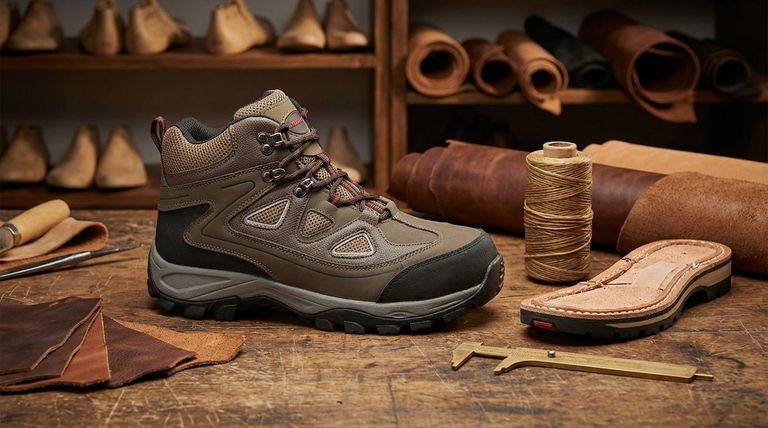
What You're Actually Paying For in a Quality Boot
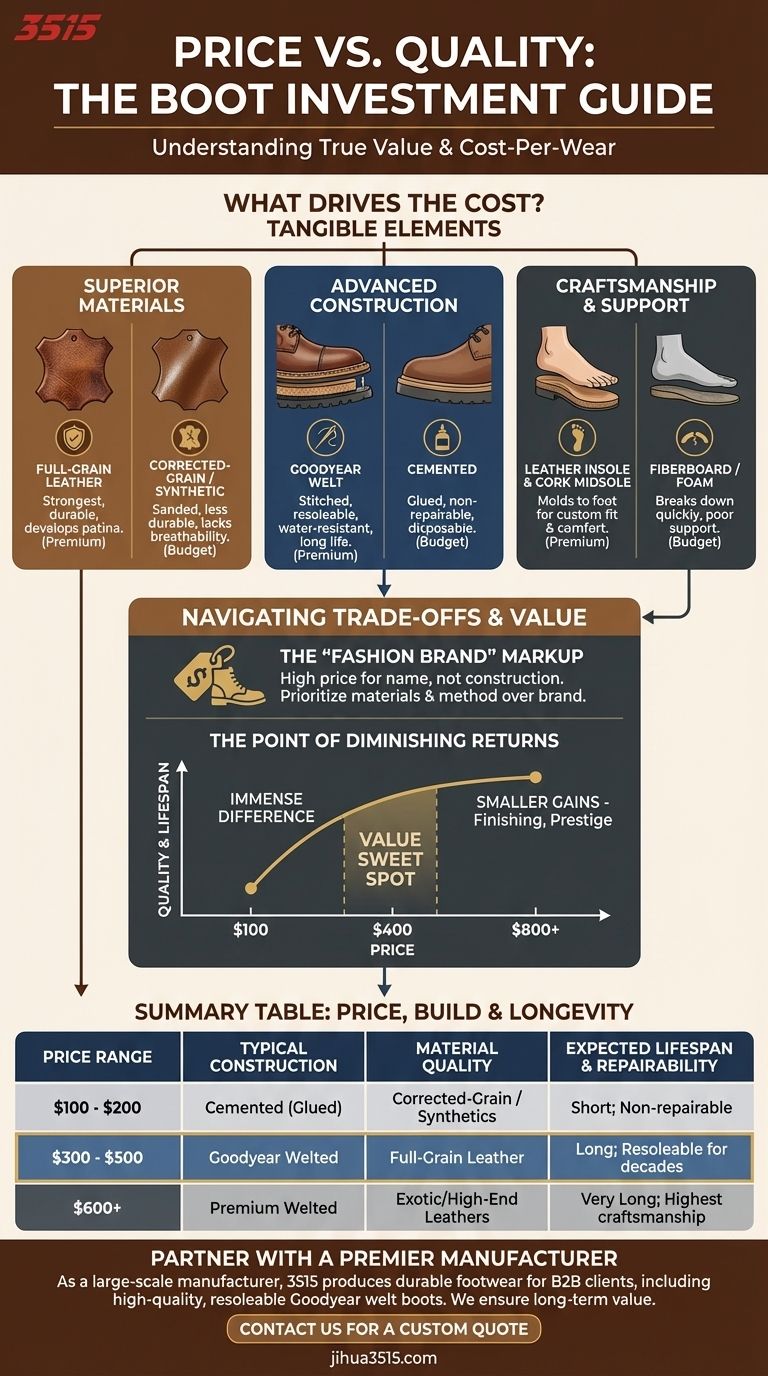
When you see a significant price difference between two pairs of boots, it's rarely arbitrary. The cost is directly tied to tangible elements that determine how the boot will perform and how long it will last.
Superior Materials: The Foundation of Durability
The single biggest factor is the quality of the leather. High-end boots use full-grain leather, the strongest and most durable part of the hide, which develops a unique patina over time.
Cheaper boots often use "corrected-grain" leather, which has been sanded down to remove imperfections, or synthetic materials. These alternatives lack the durability, breathability, and comfort of their premium counterparts.
Advanced Construction: The Key to Longevity
How a boot's sole is attached to its upper is critical. This is a primary driver of both cost and lifespan.
Most inexpensive footwear uses cemented construction, where the sole is simply glued on. This method is fast and cheap, but once the sole detaches or wears out, the boot is typically not repairable and must be discarded.
Expensive boots almost always feature a welted construction, such as a Goodyear welt. This involves stitching the upper, insole, and a strip of leather (the welt) together, and then stitching the outsole to the welt. This labor-intensive process makes the boot far more water-resistant and, most importantly, allows it to be resoled multiple times, potentially extending its life for decades.
Craftsmanship and Support
Quality boots incorporate better internal components. This includes a leather insole and a cork midsole that gradually mold to the shape of your foot, creating a custom fit.
Cheaper boots use cardboard or fiberboard insoles and foam fillers that break down quickly, leading to poor support and discomfort.
Understanding the Trade-offs
A higher price is a strong signal, but it requires scrutiny. Not all expensive boots are created equal, and it's essential to know where the point of diminishing returns lies.
The "Fashion Brand" Markup
Some brands command a high price based on their name and marketing rather than superior construction. You might find a fashion-branded boot with cheap, cemented construction priced similarly to a heritage boot with a Goodyear welt.
Always prioritize the construction method and material quality over the brand name on the box.
The Point of Diminishing Returns
The quality difference between a $100 boot and a $400 boot is immense and immediately noticeable in its lifespan and comfort.
However, the difference between a $400 boot and an $800 boot is often much smaller. At this level, you are paying for finer finishing, more exotic leathers, or the prestige of a specific maker, not a monumental leap in core durability.
Making the Right Choice for Your Goal
Your decision should be guided by your intended use and long-term expectations.
- If your primary focus is long-term value and durability: Invest in a boot with a Goodyear welt (or similar resoleable construction) and full-grain leather uppers.
- If your primary focus is occasional, light use: A less expensive, cemented boot may suffice, but accept that it has a finite, non-repairable lifespan.
- If your primary focus is a specific style from a fashion brand: Be prepared for a potential markup, but still inspect the materials and construction to ensure you are receiving a reasonable level of quality for the price.
By learning to identify the markers of quality construction, you can make an informed investment that will serve you well for years to come.
Summary Table:
| Price Range | Typical Construction | Material Quality | Expected Lifespan & Repairability |
|---|---|---|---|
| $100 - $200 | Cemented (Glued) | Corrected-Grain Leather / Synthetics | Short; Non-repairable |
| $300 - $500 | Goodyear Welted | Full-Grain Leather | Long; Resoleable for decades |
| $600+ | Premium Welted | Exotic/High-End Leathers | Very Long; Highest craftsmanship |
As a large-scale manufacturer, 3515 produces a comprehensive range of durable footwear for distributors, brand owners, and bulk clients. Our production capabilities encompass all types of boots, including those with high-quality materials and resoleable construction methods like Goodyear welts. We ensure that your investment in footwear translates to long-term value and customer satisfaction. Contact us today to discuss your specific needs and receive a custom quote.
Visual Guide
Related Products
- Wholesale Durable Safety Boots | Custom Steel Toe & Puncture-Resistant Manufacturing
- Premium Wholesale Tactical Style Safety Shoes Boots with Quick Lacing
- Durable Leather Work Boots for Wholesale & Custom Manufacturing
- Premium Wholesale Waterproof Safety Boots High Performance Protection for Industrial Markets
- Durable Goodyear Welt Leather Work Boots for Wholesale & Private Label
People Also Ask
- What are the key features of safety boots? Essential Protection for Hazardous Workplaces
- What makes durable safety boots? The Ultimate Guide to Long-Lasting Work Footwear
- What are the consequences of not wearing safety boots? Protect Your Finances and Career
- Why is proper storage important for safety boots? Preserve Protection and Extend Lifespan
- How should safety boots be cleaned to avoid damage? A Gentle Guide to Preserve Your Boots



















