
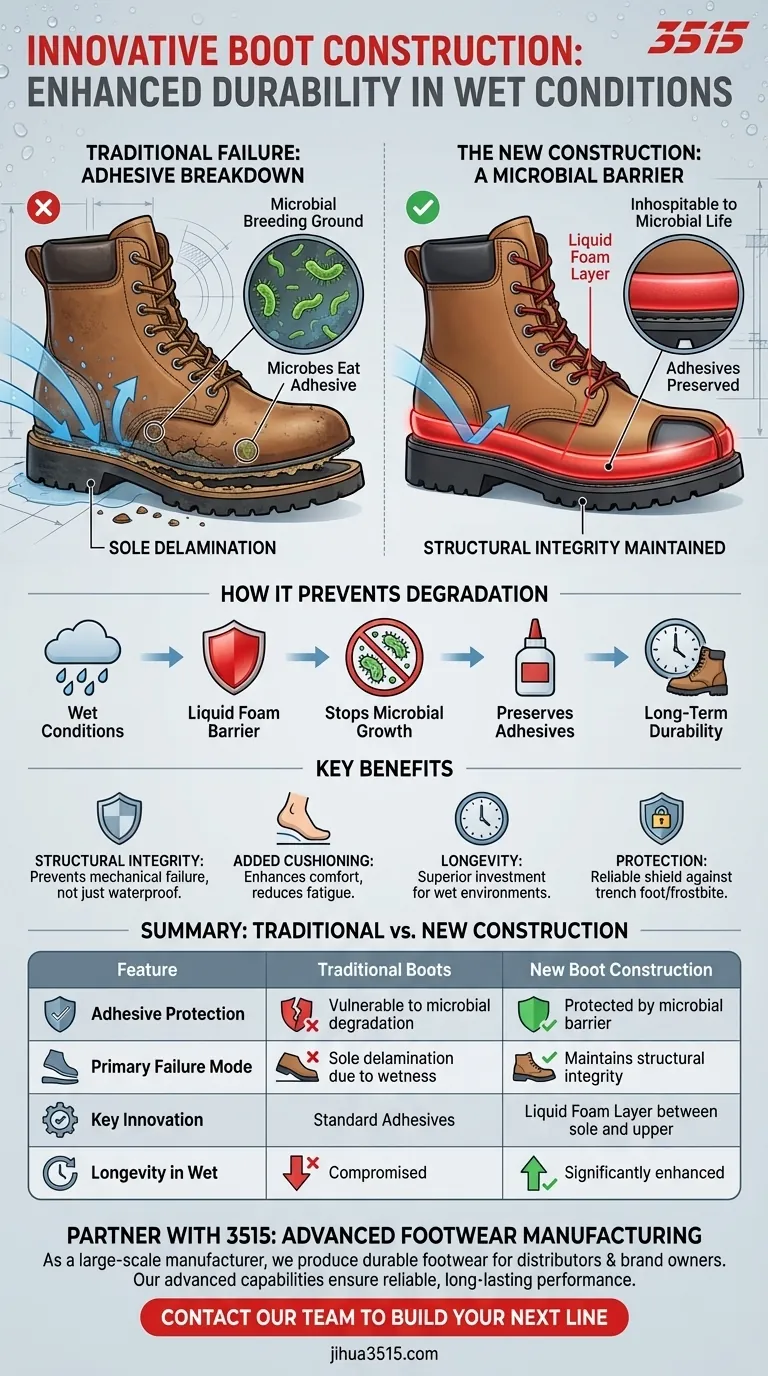
At its core, the new boot's construction improves durability by using a specialized liquid foam layer between the sole and the upper. This foam creates a barrier that prevents the growth of microbes, which are the primary cause of adhesive degradation and structural failure in traditional boots exposed to wet conditions.
The critical innovation isn't just about blocking water; it's about eliminating the root cause of boot separation. By preventing microbial growth, this new construction preserves the adhesives that hold the boot together, ensuring structural integrity in persistently damp environments.
The Traditional Point of Failure: Adhesive Breakdown
How Moisture Compromises a Boot
In conventional bootmaking, high-strength adhesives are used to bond the rubber sole to the upper part of the boot. This seam is a natural weak point.
When moisture inevitably penetrates or becomes trapped in this area, it doesn't just make your feet wet. It creates an ideal environment for boot-destroying microorganisms.
The Role of Microbial Growth
Microbes thrive in dark, damp spaces. In a traditional boot, the seam between the sole and the upper becomes a breeding ground.
These microbes feed on the organic compounds within the adhesives, literally eating away at the glue. This process, known as microbial degradation, is what causes the sole to peel away from the boot—a common failure known as delamination.
The New Construction: A Microbial Barrier
Introducing the Liquid Foam Layer
The new design integrates a liquid foam layer directly between the rubber sole and the boot's upper. This is not just another layer of padding; it's a functional, protective component.
How It Prevents Degradation
This foam material is inhospitable to microbial life. It acts as an inert, sealed barrier that prevents moisture from creating the conditions necessary for microbes to grow and attack the boot's structural adhesives.
By stopping the biological process of degradation before it can start, the boot's core structure remains sound even after prolonged exposure to wetness.
The Added Benefit: Cushioning
While its primary purpose is durability, the liquid foam also provides an extra layer of cushioning. This enhances comfort during long periods of wear, reducing foot fatigue without compromising the boot's structural integrity.
Understanding the Practical Implications
Durability vs. Waterproofing
It's crucial to distinguish between waterproofing and this new construction. Waterproofing is about keeping water out. This technology is about ensuring the boot does not fall apart when it gets wet.
A boot can be perfectly waterproof but still delaminate if the adhesives fail. This construction addresses the mechanical failure, not just the moisture barrier.
Protecting the Wearer
A boot that maintains its structural integrity is one that can continue to do its job: protecting you. By preventing delamination, this design ensures the boot remains a reliable shield against the elements.
This is essential for preventing dangerous conditions like trench foot or frostbite, which can occur when a boot fails and allows prolonged moisture exposure.
Making the Right Choice for Your Goal
This technology is a direct solution for a specific and common problem.
- If your primary focus is longevity in chronically wet environments: This construction directly targets the most common failure mode, making it a superior long-term investment for outdoor professionals.
- If your primary focus is reliability for critical tasks: The peace of mind that your boot will not structurally fail in harsh conditions is the core benefit here.
Ultimately, this innovation shifts the focus from simply resisting water to resisting the destructive effects of water over time.
Summary Table:
| Feature | Traditional Boots | New Boot Construction |
|---|---|---|
| Adhesive Protection | Vulnerable to microbial degradation | Protected by a microbial barrier |
| Primary Failure Mode | Sole delamination due to wetness | Maintains structural integrity |
| Key Innovation | Standard adhesives | Liquid foam layer between sole and upper |
| Longevity in Wet Conditions | Compromised | Significantly enhanced |
Ready to upgrade to boots that won't fail when wet?
As a large-scale manufacturer, 3515 produces a comprehensive range of durable footwear for distributors, brand owners, and bulk clients. Our advanced production capabilities, including this innovative microbial-barrier construction, ensure your customers get reliable, long-lasting performance in the toughest conditions.
Let's discuss how we can build your next line of high-durability boots. Contact our team today to get started!
Visual Guide
Related Products
- Premium Wholesale Tactical Style Safety Shoes Boots with Quick Lacing
- High Performance Fire-Retardant Waterproof Safety Boots
- Premium Waterproof High-Cut Industrial Safety Boots for Wholesale and Bulk Orders
- Durable Leather Work Boots for Wholesale & Custom OEM Manufacturing
- Durable Leather Work Boots for Wholesale & Custom Manufacturing
People Also Ask
- How are gait analysis research findings applied to the functional design of safety shoes and tactical boots?
- How can specialized footwear mitigate safety risks? High-Volume OEM/ODM Solutions since 1951
- How does anthropomorphic design influence material selection? Enhance Footwear Performance through Biological Alignment
- Why is the synchronization of craftsmanship and UX development emphasized for bulk customization of safety shoes?
- How do quality certification standards for safety shoes reduce perceived risk? Buy Online with Technical Certainty



















